Need this roof reviewed?
Plan self-storage roof repair in Hollywood, FL, with leak mapping, unit protection, drainage review and phased work that preserves customer access.
A leak over one storage row can put customer property at risk even when the entry point is several bays away. Self-storage roofs need a measured water path, a protected work area and clear access between units. In Hollywood, FL, June and September precipitation normals each exceed eight inches, so drains, seams and penetrations need inspection before repeated rainfall tests a weak detail. We map the affected area, identify which units need protection and define the repair boundary before opening the roof.
Locate the unit exposure
We record the unit numbers or interior grid supplied by the manager and compare them with the roof layout. Water may move along a deck flute, insulation joint or framing member before it reaches a storage unit. The nearest penetration is one clue, not a confirmed source. Roof photographs, moisture indications and selective openings help locate the entry and determine whether material beyond the stain is affected.
Access planning matters because customers may need to reach units during the repair. We map the lift, material staging and waste route, then mark the aisle or entry that needs temporary control. A roof inspection records the current assembly and condition, while a leak repair scope identifies temporary protection separately from the permanent detail. The manager can notify customers about the work area and keep unaffected routes available. We also plan for lock schedules, gate controls and a contact who can authorize temporary changes if a customer needs access during the shift. For a facility along Johnson Street between 56th Avenue and US-441, or near Hollywood Boulevard downtown, we confirm gate hours and delivery routes with the manager before the crew arrives.
Inspect the drainage plane
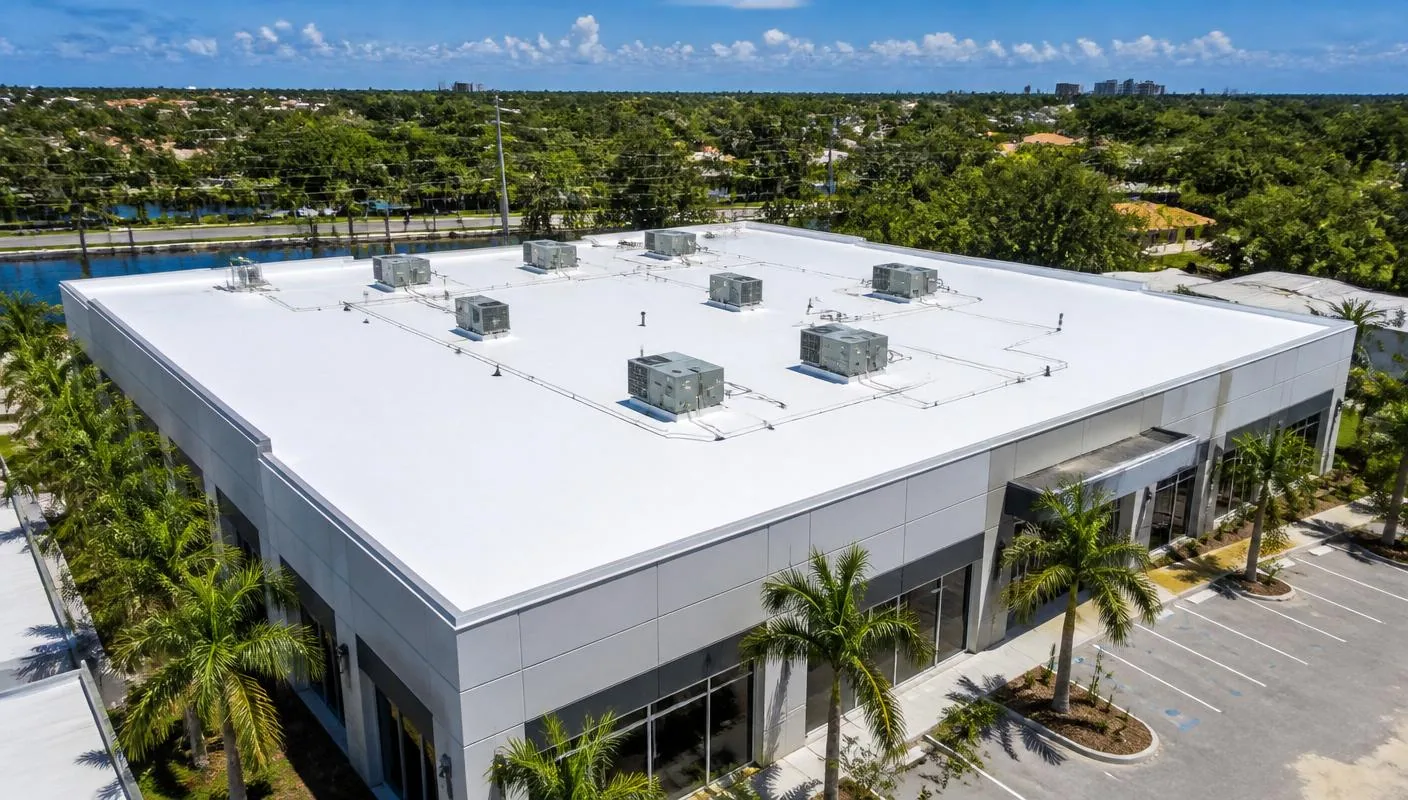
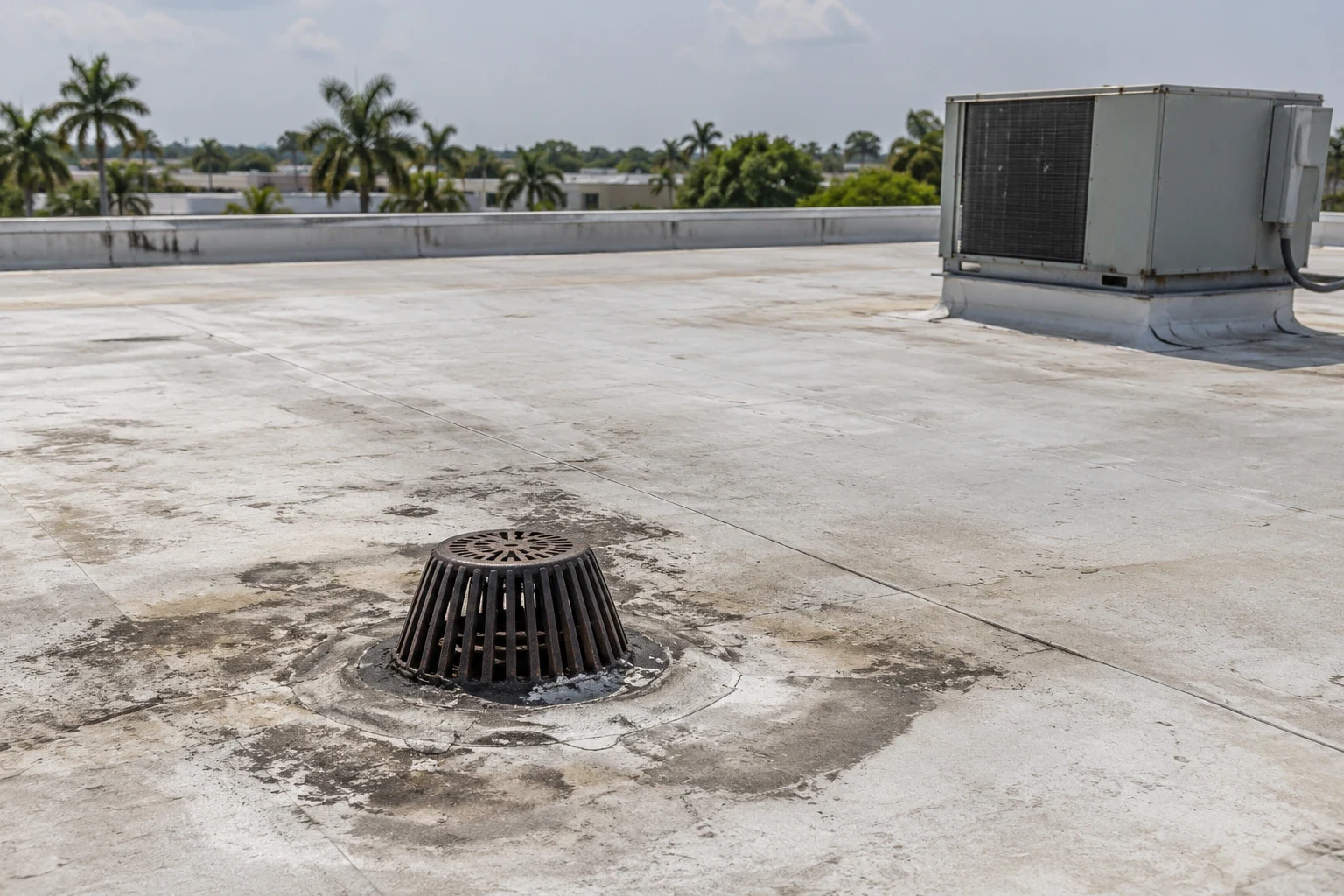
Self-storage buildings often have long roof runs where a blocked outlet or low area can affect more than one unit. We inspect drain bowls, scuppers, overflow paths and the slope feeding each outlet. If standing water remains after normal drainage time, we document depth, extent and nearby seams or penetrations. The finding may point to maintenance, a local correction or a design question that should be reviewed before replacement.
Hollywood's stormwater program models rainfall and tides together in citywide flood-risk work. Parcel designation is a map question, so we keep the roof's own drainage observations separate and identify any map question for the owner to review through current parcel information. A drain and scupper review can address a confirmed outlet issue. A storage facility in the Washington Park industrial area is read the same way, on its own roof and not on the district around it.
Protect contents during removal
Before opening a roof, we identify which units sit beneath the work and whether contents need relocation or temporary covering. The manager provides access boundaries and a contact for customer concerns. We stage tarps or interior protection where appropriate, then restrict the roof opening to the area that can be closed securely that shift. That limit is especially important when several unit rows share one continuous roof field.
If insulation is wet, we mark the removal boundary and check whether dry material can remain. A surface patch over damp board may leave the underlying condition in place. We compare repair, recover and replacement after confirming attachment, layer count and deck condition. A moisture survey can help select test areas, and a recover assessment states which layers are suitable to retain.
Account for recurring heat and rain
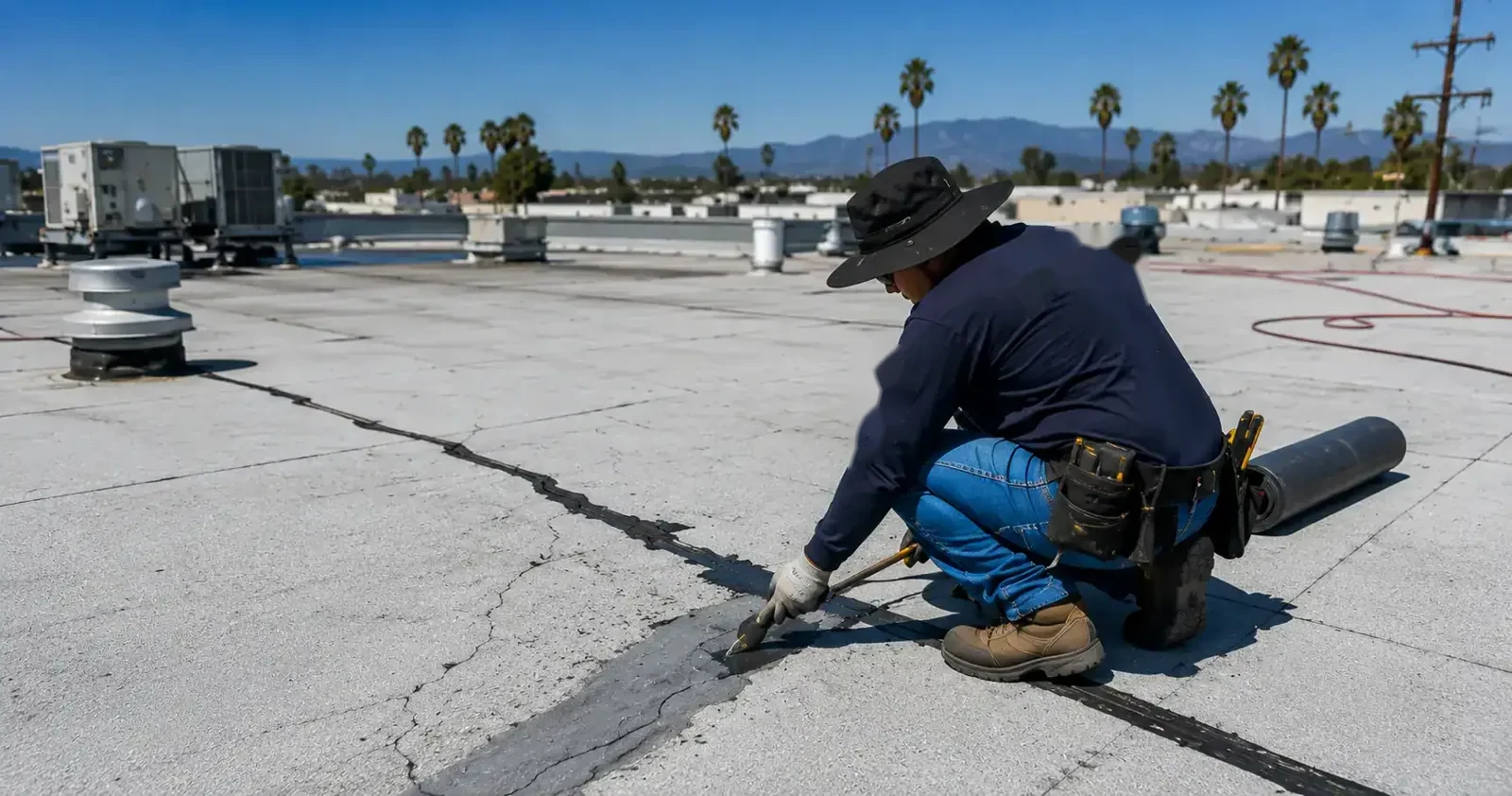
NOAA normals for Hollywood put August average daily maximum temperature at 89.9 degrees. Roof surfaces receive recurring heat exposure, and thermal movement can work on seams, perimeter edges and equipment flashings. We look for open laps, displaced metal, brittle sealant and repairs that have separated, then connect each observation to a roof location. The climate number informs the inspection lens; the actual membrane condition drives the recommendation.
Rainfall normals at the Hollywood station reach 8.84 inches in June and 8.67 inches in September. We stage material and temporary protection before removal, then set a daily dry-in limit. When a tropical system or heavy rain changes the work window, the sequence shifts to securing exposed edges. A post-storm roof review documents actual changes before a permanent repair is priced.
Choose a repair or capital phase
A localized seam failure with dry surrounding insulation may support a repair. Repeated leaks across several bays or wet material beneath a broader area can require more removal. We price immediate protection and permanent repair distinctly, showing the owner what is confirmed and what needs an opening. That creates a decision path before the roof work reaches stored contents.
If a replacement is indicated, the proposal identifies the assembly, drain transitions, edge details, staging and customer-access plan. A replacement scope can be phased by roof zone when temporary tie-ins are suitable. A capital recommendation compares condition and disruption across properties. Storage buildings are not assumed to share construction. A warehouse has different operations, and public building work carries its own access review.
Keep repairs traceable
The closeout record identifies the repair location, material used, photographs and any area that remains under observation. A manager can compare the next leak report with the roof map and determine whether the same path returned or a different section is involved. Preserve the date and weather with each note, because those details help distinguish a recurring leak from a separate event. Drain cleaning, new equipment or later trade work should be added to the roof history because each can change drainage or membrane details.
Emergency response is available around the clock, including weekends and holidays, when active water threatens stored contents. We protect the interior first, trace the roof path and then state what permanent correction is supported. Share the affected unit row, roof plan, access rules and prior repair notes. We will identify the immediate protection, repair boundary and any larger capital decision that follows.