Need this roof reviewed?
Coordinate college roof work in Hollywood, FL with access windows, drainage checks and condition records for active buildings and facilities.
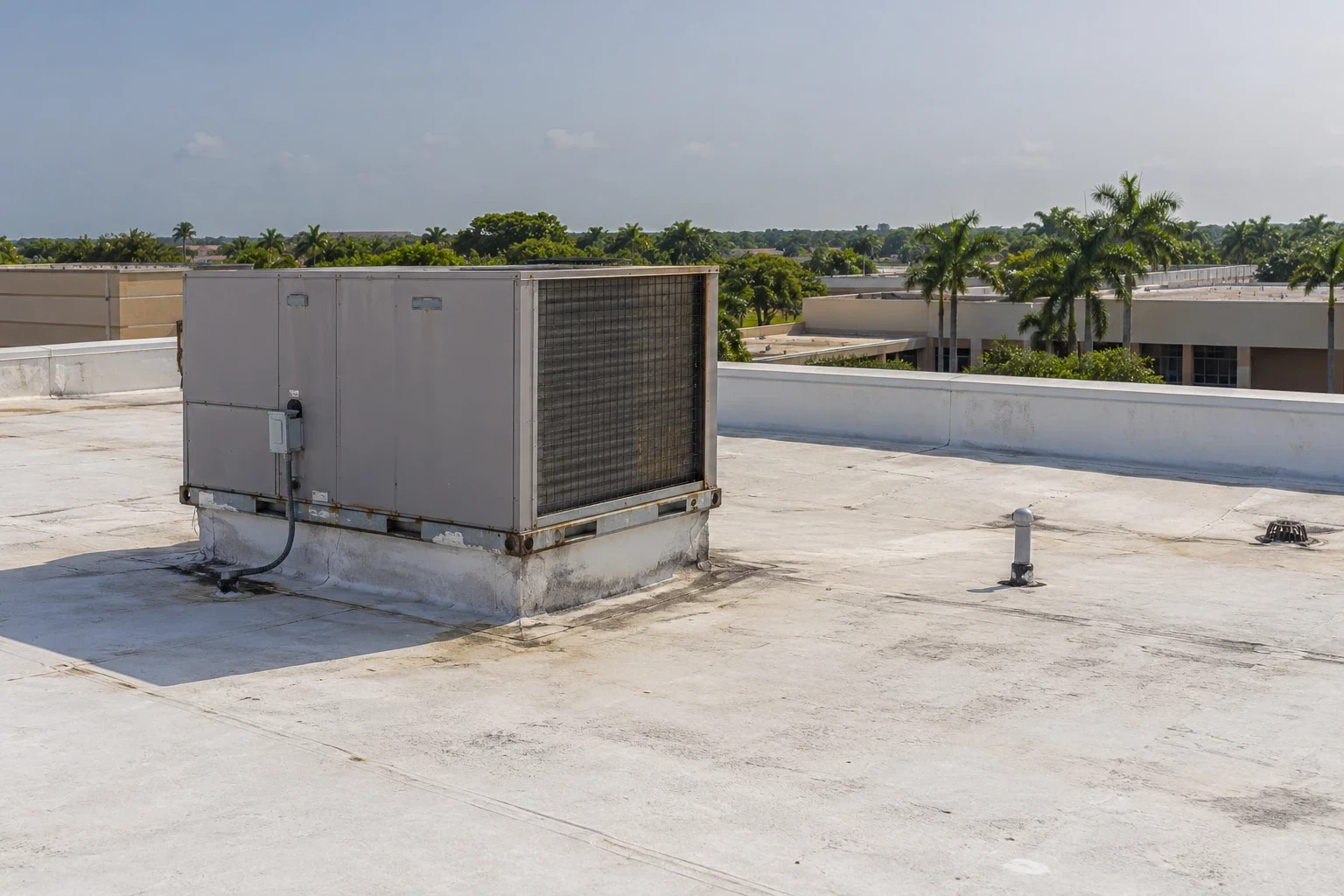
Heat and rainfall work the same roof through different parts of the year. In Hollywood, FL, NOAA climate normals show high summer temperatures and heavy June and September rain, so a college facilities team needs to see how the membrane, drainage plane and edge details respond as conditions shift. We inspect the actual building, then tie each observation to a roof section and the activity below it. A classroom block, dining facility and lab do not share the same access needs, even when they sit within one campus. We document water paths, transition condition and repair limits so ownership can schedule work without confusing one roof with another.
Identify layers before changing the roof
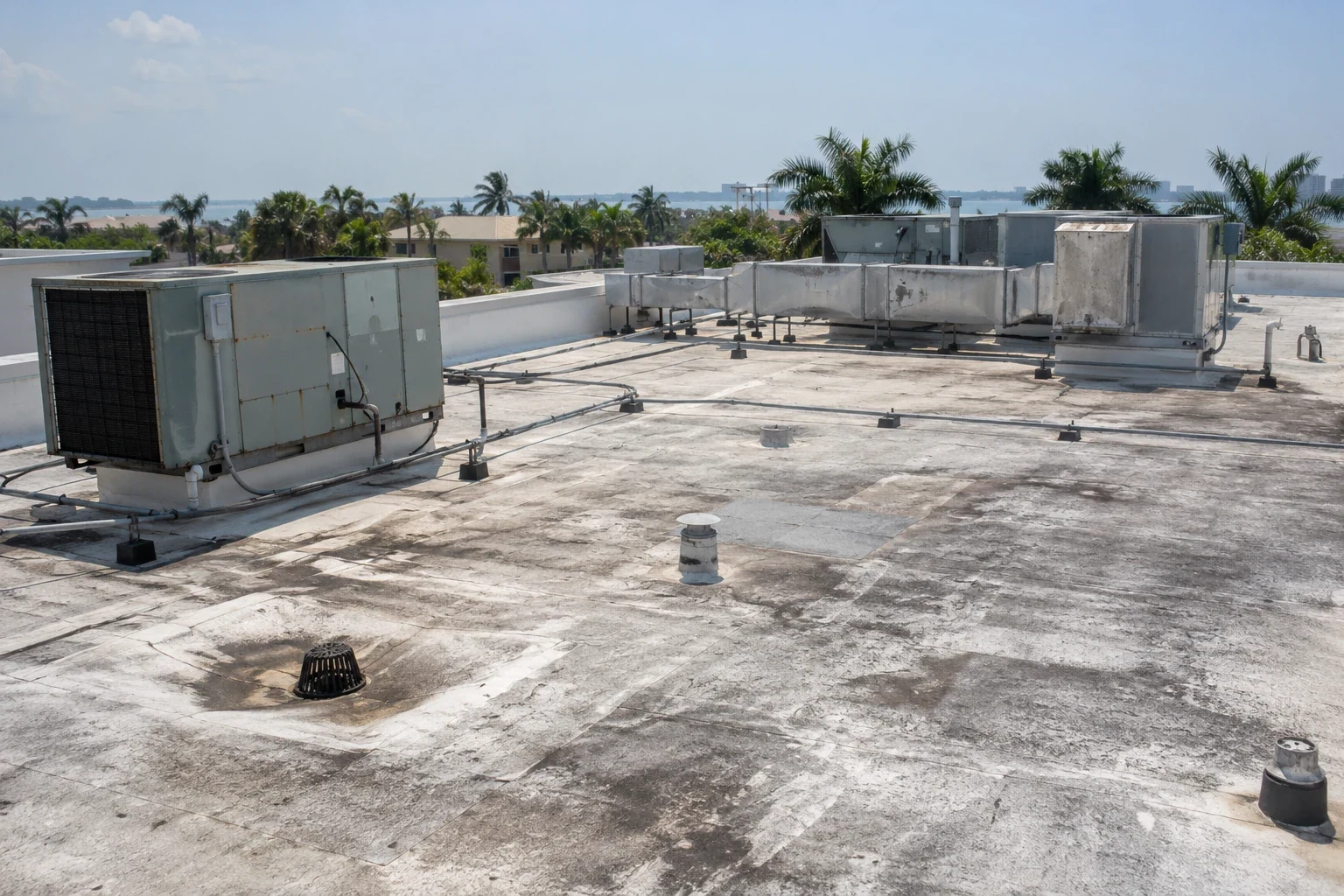
Campus roofs may include several membrane types, insulation profiles and details from different project phases. We record what can be confirmed at the surface, including seams, penetrations, drains, coping, patches and transitions between sections. A prior coating or recover may conceal a different lower assembly, so the visible surface alone does not establish every layer. Where a proposed repair would bond to an existing membrane, we check compatibility and preparation requirements before recommending materials.
Moisture changes the options. We look for soft areas, persistent ponding, open laps, recurring interior stains and signs that water may have moved below the membrane. An infrared moisture survey can identify candidate areas for direct verification, while a hands-on roof inspection examines details the scan cannot assess. The resulting condition report should separate observed conditions, tests completed and questions still open.
For a portfolio that includes K-12 buildings as well as postsecondary facilities, a school roof review can retain the schedule and assembly differences between the two building groups. If student housing is managed separately, multifamily roof planning can account for residential access and notice requirements without treating those roofs as campus academic space.
Set the work boundary around campus activity
Before mobilization, we confirm roof hatch rules, escort needs, loading locations, restricted areas and the facility contact who can approve field decisions. A small repair may require only a short roof closure, while replacement can affect walkways, service roads, mechanical access and rooms directly below. The work plan should name each zone, the materials path and any interior protection needed. That gives campus operations a chance to align the work with classes, events, dining service or equipment shutdowns.
Along Hollywood Boulevard between US-1 and 21st Avenue, the city's 2026 business resource guide says event closures can affect employee access, deliveries and parking, which matters when a crane or dumpster needs the same curb a nearby building uses. For a project near Downtown Hollywood, those access considerations are a reason to confirm current routing with the site contact. The Downtown Hollywood business area and the Johnson Street district provide local context, but the campus schedule and approved access route must be checked for the building being worked.
Noise, odor and debris controls belong in the sequence, not as a late add-on. We can divide a larger project by roof section, isolate open areas at the end of each shift and coordinate temporary protection where weather can reach exposed insulation. A phased occupied-building reroof allows ownership to review each work boundary and the handoff condition before the next section begins.
Keep the drainage plane clear through wet periods
Rainfall tops eight inches in both June and September in Hollywood, so gutters, scuppers and roof drains on academic buildings carry their heaviest load when students are back on campus. Pre-rain outlet checks are worth scheduling. We inspect strainers, bowls, scuppers, overflow routes and the surface feeding each outlet. A drain that appears clear at the top can still be surrounded by a settled area or prior patch that holds water. Where an outlet or its connection is damaged, drain and scupper repair can be defined separately from membrane work.
The city evaluates rainfall and tides together in its stormwater work, and flood-map review gives particular attention to areas east of US-1. Parcel elevation and flood designation are separate from roof drainage, so we keep those records distinct. For campus capital planning, the roof report can show slope, ponding duration, overflow conditions and any route that directs water toward a penetration or wall. That helps the owner decide whether to clear an outlet, rebuild a detail, test a low area or involve a civil professional.
A roof with repeated wetting may need more than a patch. We compare the wet-area map with the system type and repair history, then identify whether a core or opening would change the scope. A ponding-water review can distinguish a drainage obstruction from a membrane condition that needs a different response. The objective is a repair boundary that can be checked after the next rain, not a broad coating recommendation based on standing water alone.
Compare targeted repair with a capital scope
A repair is appropriate when the defect and surrounding material can be isolated, prepared and restored with a compatible detail. Replacement becomes a larger discussion when wet insulation, widespread seam failure, compromised attachment or deteriorated deck extends beyond a small boundary. We list the evidence behind each recommendation and note where destructive testing could change the quantity. This lets the facilities team compare immediate water control with longer-term work instead of treating every leak as a reroof trigger.
Hollywood enforces the Florida Building Code and reviews construction through its Building Division. Statewide, the Florida Building Code 8th Edition took effect on December 31, 2023. For a reroof or structural repair, we coordinate the scope with the owner’s design and permit process. The roof assessment documents visible conditions; it does not replace plans, code review or approval from the authority having jurisdiction.
Cost and schedule depend on membrane type, roof access, extent of removal, deck repairs, insulation, temporary protection and coordination with campus operations. We can separate confirmed quantities from allowances, show work that can be phased, and identify which open questions must be answered before a bid is final. A roof capital plan can group projects by urgency while keeping each building’s condition record intact.
Carry findings into the next budget cycle
Closeout should include marked roof locations, photographs, material notes, work limits and any area that could not be verified. Keep that record with leak calls, drain cleaning, equipment replacements and prior bids. On a multi-building portfolio, consistent labels help a manager see which roof was repaired and which still needs testing. We can also set a maintenance interval around the actual assembly and its findings rather than impose one schedule on every building.
When a storm or recurring leak creates a possible claim, preserve dates, interior photos, roof observations and repair records. A claim documentation scope can organize roof evidence for the owner and insurer, while coverage decisions remain with the insurer. That distinction protects the value of the condition record and keeps a maintenance recommendation separate from an insurance conclusion.
Send the campus roof plan, current access requirements and recent leak history before arranging a walk. We will identify which sections need close review, note any safety or scheduling constraints and return a scope that explains the next decision for each building.
Related Roofing Topics