
Need this roof reviewed?
Commercial roof inspection, repair, replacement and maintenance for retail, medical and office buildings in Aventura, FL, between Miami and Fort Lauderdale.
Retail and medical buildings share a roofing problem that is easy to overlook: both depend on conditions inside that a leak can ruin quickly. Retail and medical uses are among Aventura's listed economic drivers, and the city lies between Miami and Fort Lauderdale just east of I-95, bounded on the west by the Florida East Coast Railway. We inspect, repair, replace, recover and coat low-slope and metal roofs on commercial buildings in Aventura, FL, and we begin each job by tracing how water moves across the roof and where it leaves.
Retail and Medical Roofs Under Pressure
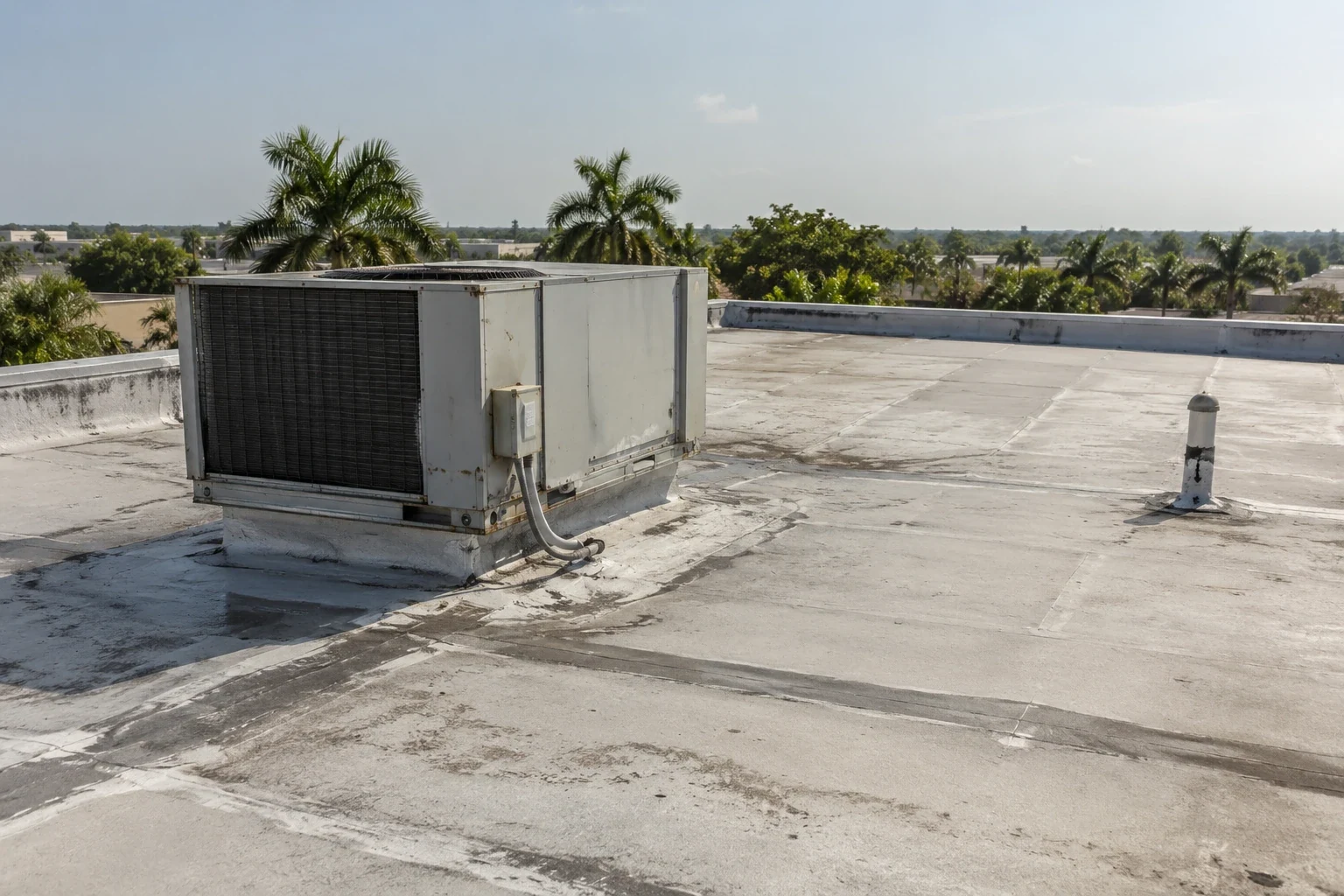
A retail roof carries rooftop units, exhaust fans, signage supports and often a long run of parapet. A medical building carries air handling, exhaust and sometimes specialized equipment that cannot easily be shut down. In both cases, a leak is more than a stained tile: it can interrupt sales, close an exam room or damage supplies and equipment.
That raises the importance of finding small problems early. We look at flashing around every curb and pipe, at seams along membranes and at the transitions where one material meets another. Where the roof has had repeated patches, we map them, because a cluster of repairs in one area usually points to a drainage or movement problem that patching alone will not solve.
Parapet walls matter on both building types. A parapet turns the roof edge into a shallow tub, so any gap in the cap flashing or any blocked scupper lets water stand against the wall. We check the base flashing where the membrane turns up, the termination bar or reglet at its top and the sealant along the cap. Those three lines are a common path for water into a wall cavity, and they are cheap to correct before the water arrives.
Summer Heat and Wet-Season Storms
Aventura's roofs face the same South Florida pattern the Hollywood normals describe: an August average daily maximum of 89.9 degrees, roughly 8.8 inches of rain in June and 8.7 in September. Heat expands membranes during the day and lets them contract at night. Rain tests drains and seams. Together they wear on roofs year after year.
Damaging winds, tornadoes, lightning, hail and flooding are the National Weather Service's concern from mid-May until early July, the heart of the wet season across South Florida. Before that window opens, a roof should have clear drains, tight edge metal and sound sealant at every termination. We recommend a pre-season walk for exactly that reason: it finds the items that would otherwise show up as ceiling stains in June.
The First Roof Walk, Step by Step
We begin at the outlets, because a roof that drains well forgives many small flaws. Next we walk the field in a pattern that covers every seam and penetration, noting soft spots underfoot, blisters, splits and areas where the surface has worn through. We photograph each finding with a landmark in the frame so the location can be found again, and we sketch the roof with those marks.
Then we compare the roof with what is reported inside. A stain in a stockroom ceiling rarely sits under its entry point; water follows the deck and insulation joints before it drips. We trace upslope from the stain until the roof surface shows the likely opening, and where it does not, we recommend a moisture scan to narrow the search before anyone cuts into the membrane. The result is a report that names a cause, not just a symptom, and gives the manager a priority list for repair or planned replacement.
Repair, Recover or Replace on a Working Building
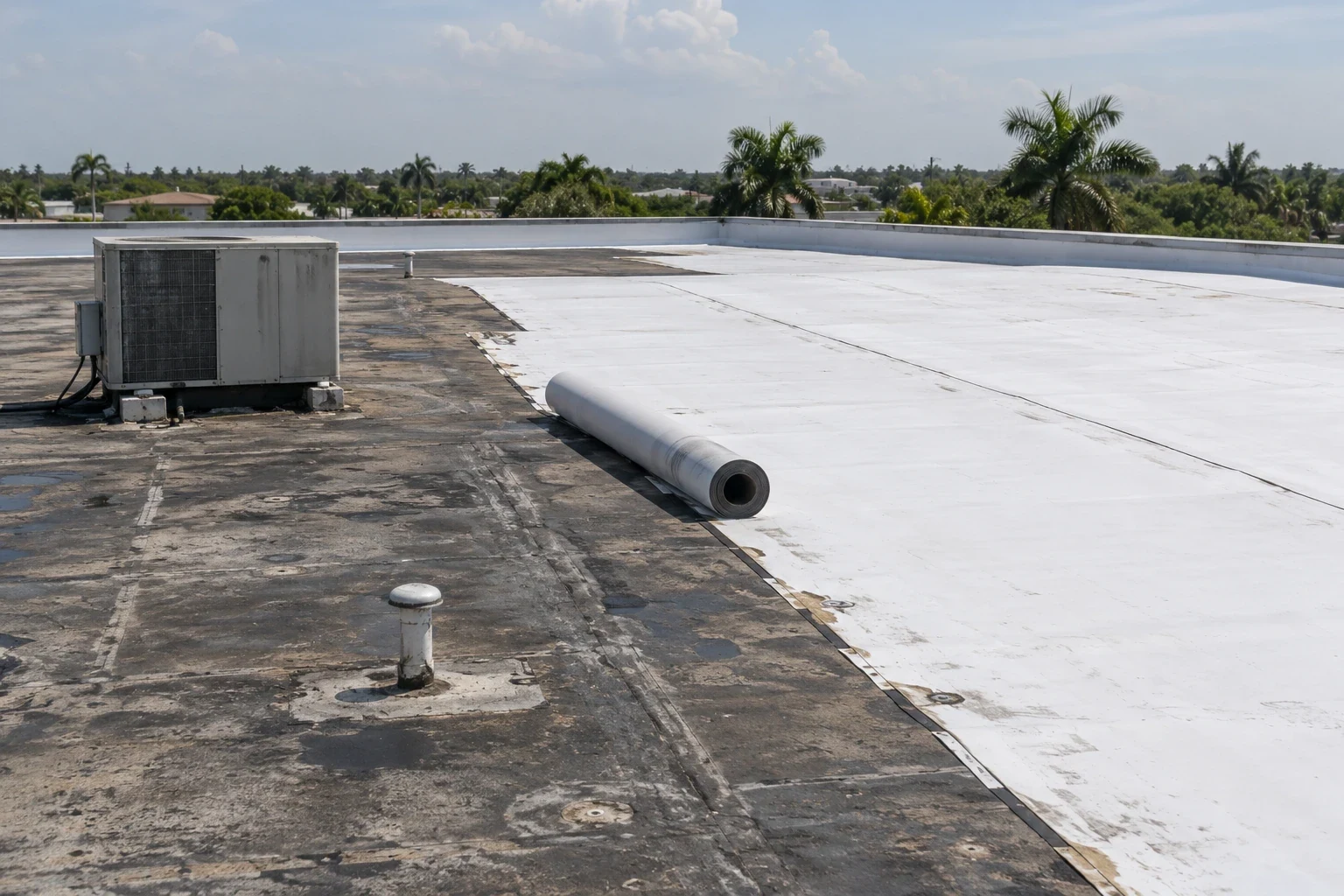
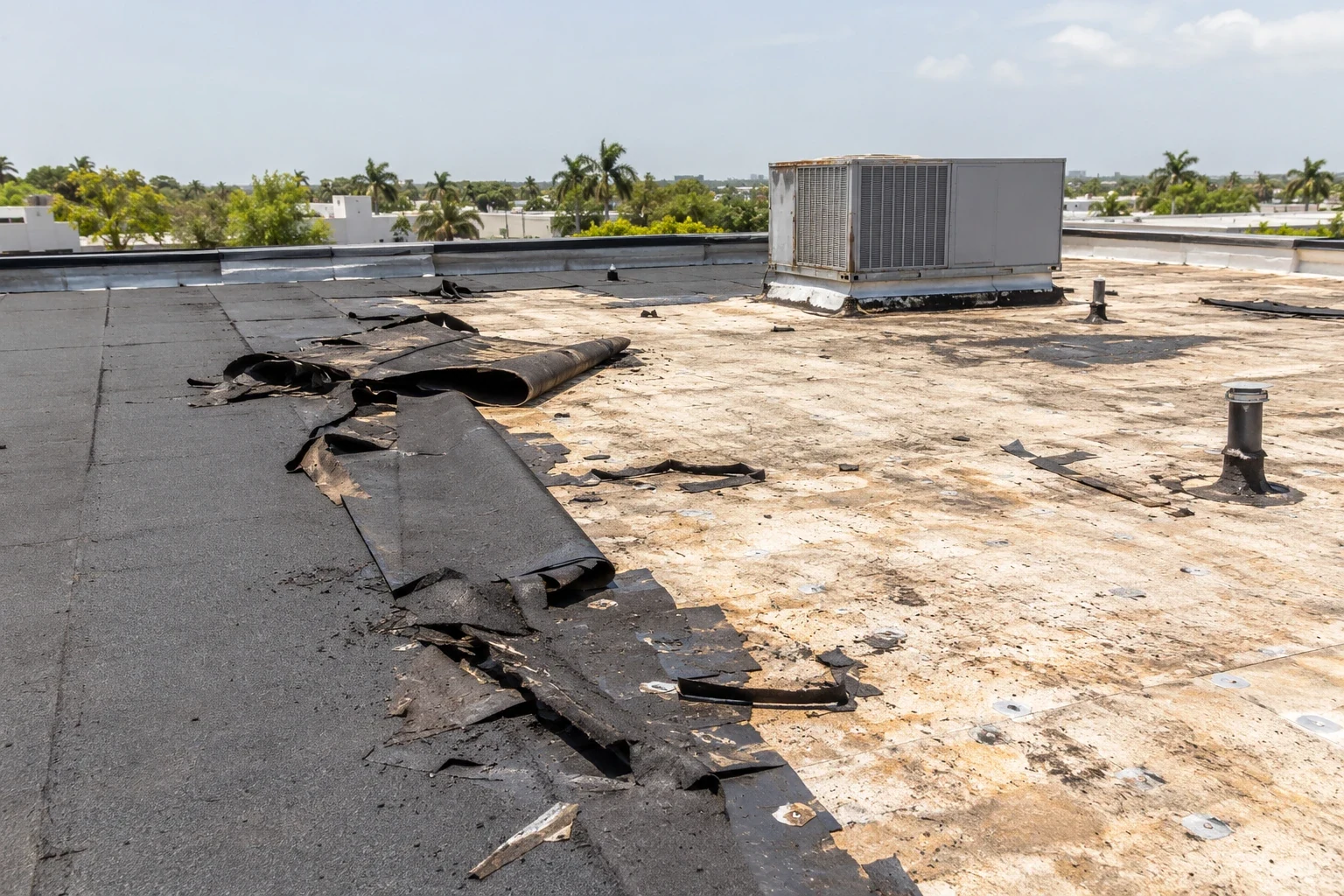
Owners in Aventura need a roof decision that does not close the business. A repair works when the membrane is sound and the defect is local. A recover puts a second membrane over an existing roof that tests dry. A replacement strips the roof down to the deck and rebuilds it, and it is the right path when insulation is wet throughout or the system has reached the end of its life.
We write each option with scope, access needs, schedule and the conditions that would make the next step necessary. Cost drivers include roof area, tear-off, insulation, the number of penetrations and the level of protection needed for interior spaces. Owners can see the difference between a lower first cost and a longer service life.
Insulation level and drainage often decide the price. A roof with wet insulation needs the wet boards removed whether the owner chooses repair, recover or replacement, so the moisture map sets a floor for the cost. A roof with poor slope may need tapered insulation or additional drains, and we price those as separate items so the owner can see their value.
Protecting Clinics and Shops During Roof Work
Work above a clinic or store needs a plan for noise, dust and water. We dry in each section before we leave, cover air intakes, control debris and coordinate hoisting so deliveries and customers are not blocked. For tenants with sensitive equipment, we agree on temporary protection and a call path in case weather changes.
Rooftop equipment often belongs to tenants, so we coordinate shutdown and restart with their service companies. Refrigerant lines, conduit and gas pipes stay protected during flashing work, and each penetration is photographed once sealed. Property managers receive a daily summary so tenants know what to expect the next morning.
Medical tenants often have requirements that retail tenants do not: dust control near procedure rooms, protection for supply storage and clear communication when work is above sensitive spaces. We ask for those requirements before the schedule is set, so tear-off and fastening occur where they cause the least disruption. Where a space cannot be moved, we use temporary protection below the work area.
Business Information and Roof Planning
Aventura's Economic Development Division provides business information on local taxes, building permits, associations and comprehensive-plan development. Owners planning roof work can start there for permit guidance. We prepare a roof scope that states the existing system, the proposed system and drainage changes so the permit application is complete.
Reroof scopes are written to meet the Florida Building Code, 8th Edition, which became effective on December 31, 2023. A clear scope also helps an insurer, lender or buyer follow what was done. Owners who keep photographs and invoices from each visit make later claims and sales easier.
Related Corridors and Cities
Roofs along Biscayne Boulevard raise their own access and drainage questions, and the Aventura Biscayne Boulevard corridor follows the same walk with those in mind. Owners who also hold property in North Miami Beach or Hallandale Beach can use the same condition report format across sites. A seasonal maintenance visit before the wet season keeps drains clear and flashing tight.

