Need this roof reviewed?
Roof repair, recover, coating and replacement for commercial and mixed-use buildings along the Biscayne Boulevard corridor in Aventura, FL.
New projects and existing buildings can sit side by side along a busy commercial street, and a new project next door tends to raise questions about the roof beside it. Aventura's 2025 development report lists multiple commercial and mixed-use applications on Biscayne Boulevard, and its report includes community-business zoning and commercial buildings along the same frontage. We work on the roofs of existing commercial and mixed-use buildings along the corridor: inspection, repair, recover, coating and replacement of low-slope and metal systems, planned around tenants who depend on the front door staying open.
Roofs on a Commercial Frontage
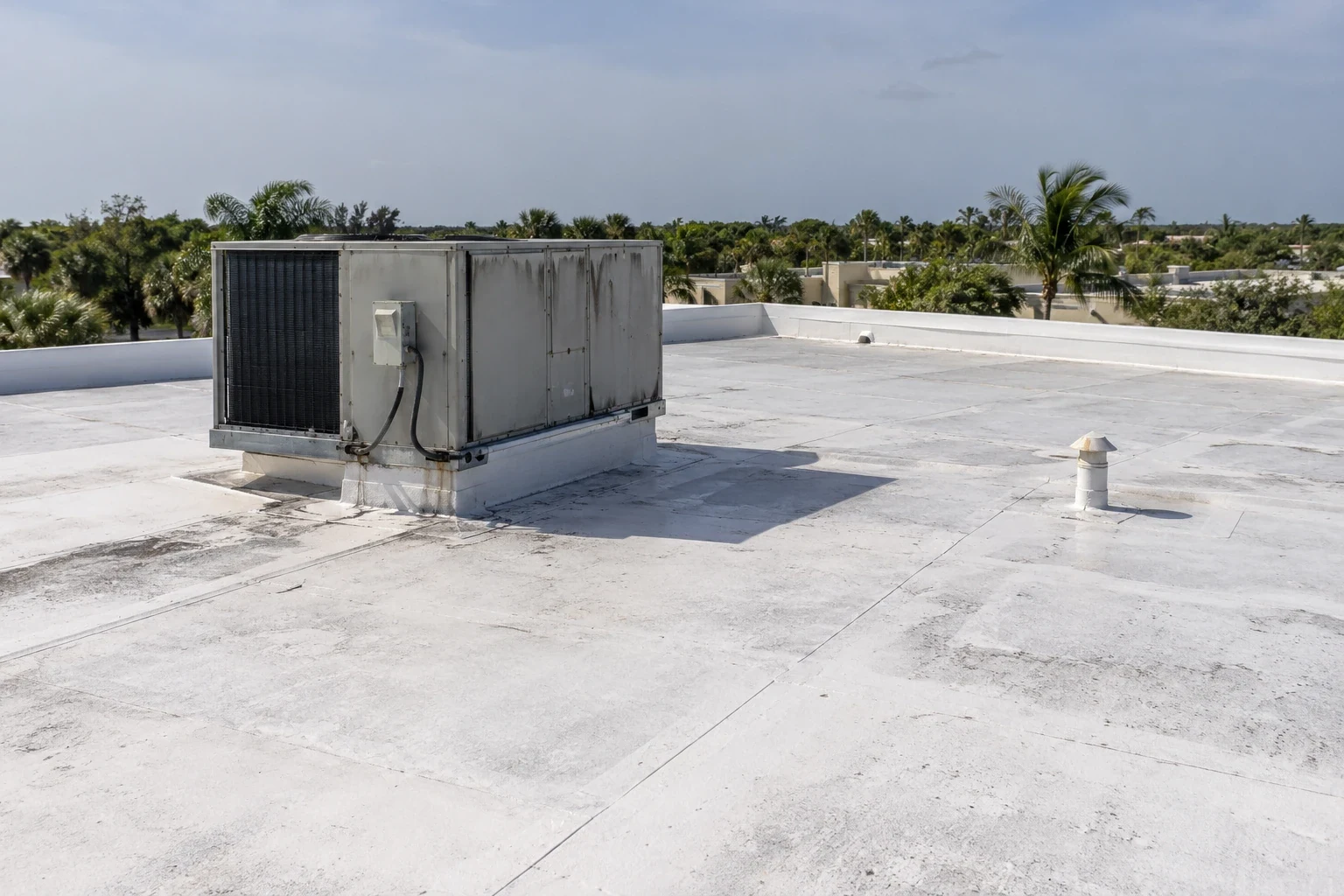
A commercial street produces a specific set of roofs: flat or low-slope membranes behind parapets, rooftop units placed to keep them out of sight from the street and exhaust or kitchen vents on buildings that hold restaurants. Each of those features creates a place where water can enter, and the roofs on busy frontages tend to have more of them than their size suggests.
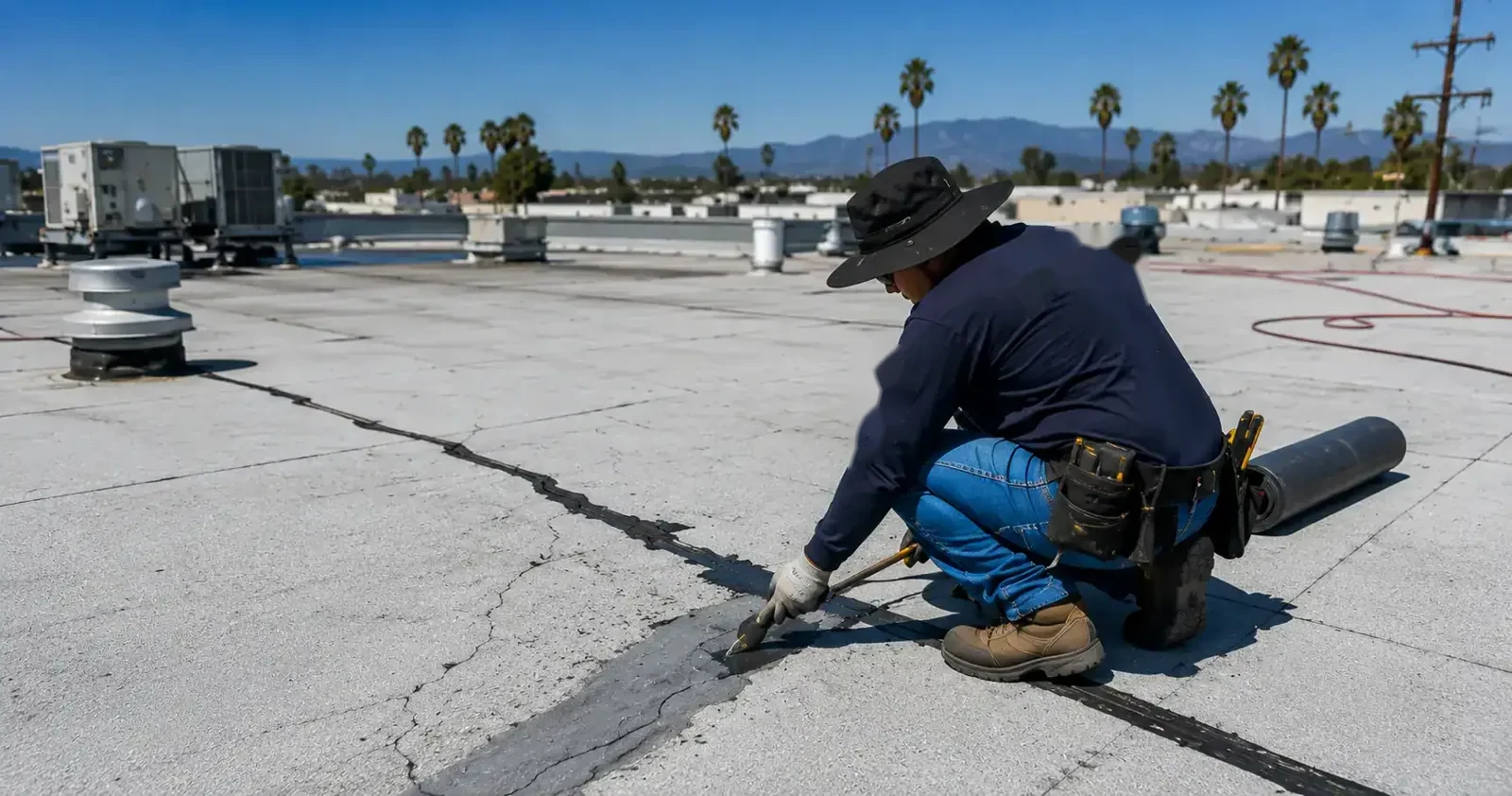
When a corridor has seen repeated tenant changes, it also has repeated rooftop changes. Equipment added, moved or removed leaves behind capped pipes, abandoned curbs and patched membrane. We look for those traces on the first walk, because old penetrations that were closed with a quick patch are a common leak source. If a curb is no longer in use, removing it and closing the opening properly is often cheaper than patching it again.
Drainage on these roofs deserves the same scrutiny. Parapets on three or four sides leave scuppers and interior drains as the only exits, and a roof with one drain per section has no backup if a strainer clogs. We look for overflow scuppers set above the primary outlets and for tapered insulation or crickets that guide water toward them. Where none exist, adding an overflow route is one of the most useful upgrades a flat roof can receive, since a blocked drain on a heavy-rain day otherwise sends water against the wall flashing.
Heat Load, Rain Load and Storm Season
The NOAA normals we use for Aventura come from the Hollywood station, our market city, where the August daily high averages 89.9 degrees. June and September average about 8.8 and 8.7 inches of rain. Roofs along a paved boulevard sit above a lot of hot pavement, and the heat combines with sun load to push membrane temperatures well above air temperature.
Severe weather risk peaks in South Florida from mid-May to early July, according to the National Weather Service, with damaging winds, tornadoes, lightning, hail and flooding all more likely. For a building on a commercial frontage, a pre-season walk covers drains, edge metal, sealant joints and any loose rooftop covers. Items found in April cost less to fix than leaks found in June.
The heat also affects the work itself. Adhesives and coatings have temperature and humidity windows, and a crew applying them at midday in summer can lose working time or compromise adhesion. We schedule temperature-sensitive steps for cooler hours and keep material shaded until use, since a membrane laid under poor conditions carries the flaw into its service life.
Development Review and Existing Roofs
The City's development review information tracks project sizes and zoning as part of site-plan tracking, and the 2025 report lists applications along the boulevard. Owners of existing buildings nearby can learn from that activity, since new development often raises questions about neighboring conditions: parapet heights, rooftop equipment screening and drainage across property lines.
For an existing building, the practical step is to document the roof as it stands. We record the system type, age, drain layout and condition in photographs and a sketch, which gives an owner a clear picture if a neighboring project raises questions or if a lender or buyer requests roof information. Roof work that changes the building outline, raises a parapet or adds equipment screens can involve City review, so owners should confirm requirements before ordering materials.
One more point for owners who expect neighbors to build: construction cranes and material staging often work above or near adjacent roofs, and dust, mortar and debris end up in gutters and drains. Cleaning after nearby work finishes keeps outlets open. We include a drain check in our maintenance visits for that reason.
Choosing a Path for the Roof
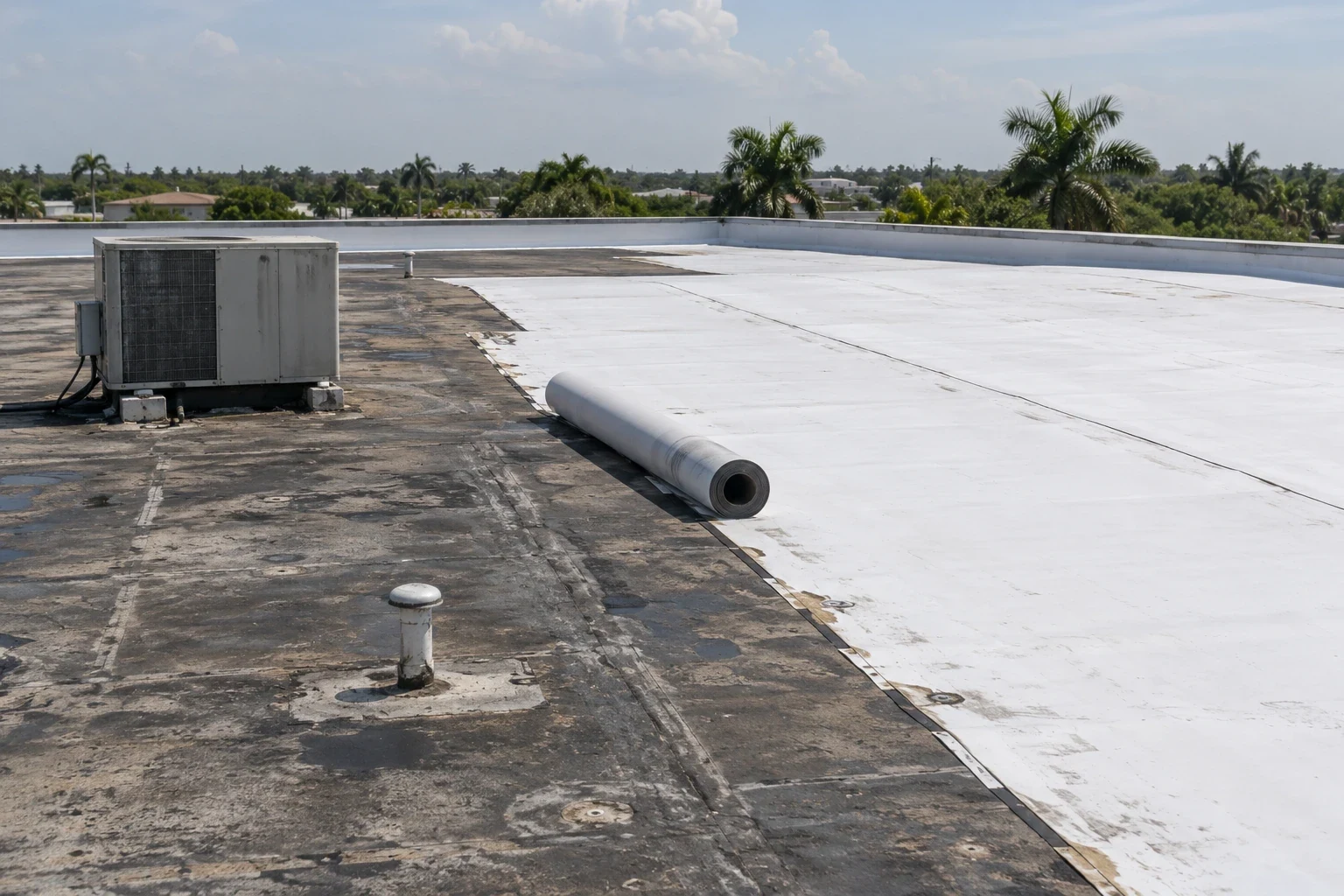
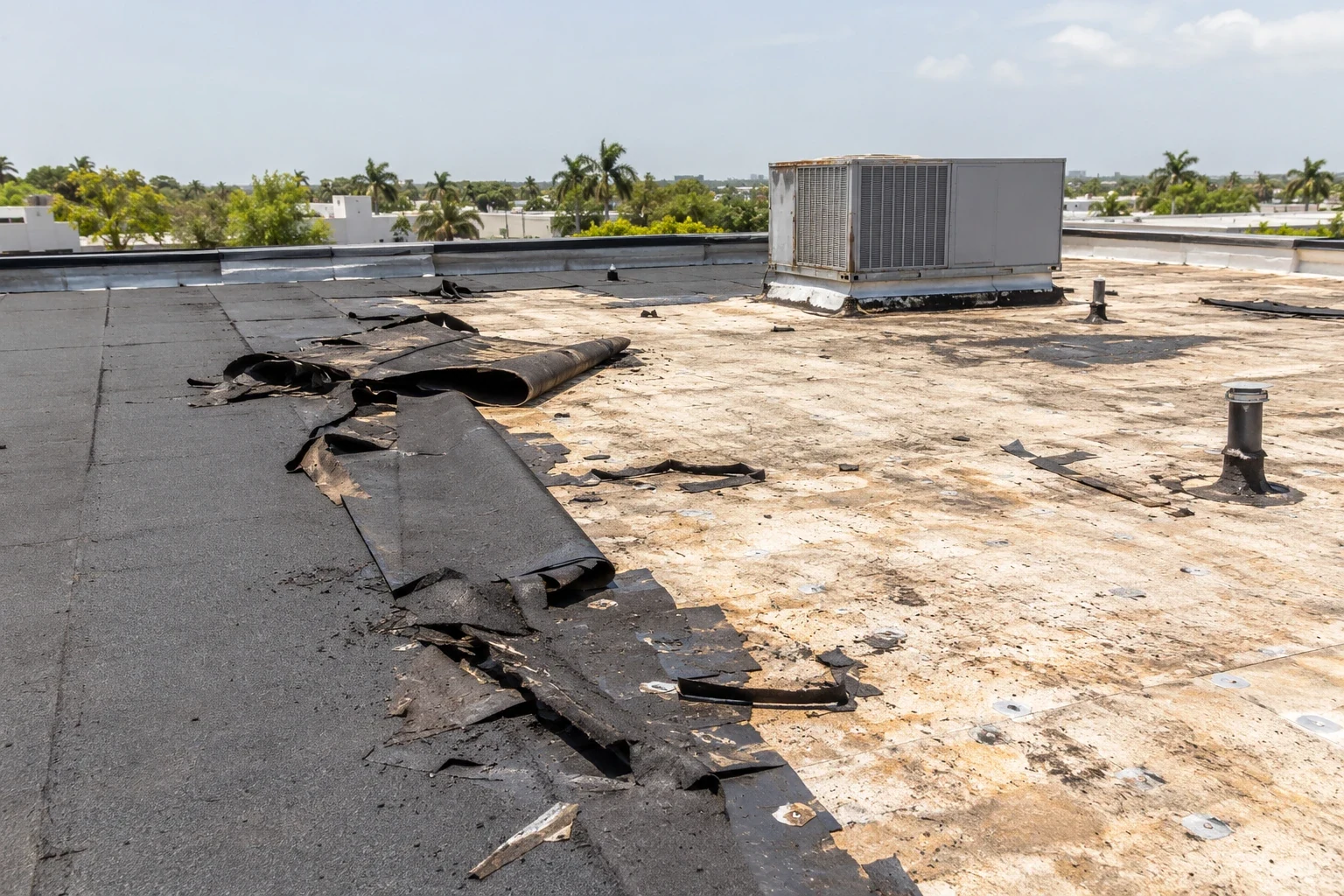
A leak repair fits a sound membrane with a local defect. A coating renews a weathered but dry roof and adds reflectivity. A recover adds a new membrane over a dry existing roof and skips tear-off. A full replacement removes the roof and rebuilds it, and it is the best answer when moisture is widespread.
The decision depends on moisture findings, roof age, the number of penetrations and how long the owner plans to hold the building. We write each path with scope, access, schedule and expected performance so the owner can compare them. Where redevelopment seems possible, a shorter-life repair with a good record may serve better than a heavy investment.
Cover board and insulation upgrades belong in the comparison too. Replacing a membrane without addressing crushed or wet insulation wastes the new layer. A cover board over the insulation gives the membrane a firm base and protects against foot traffic from service technicians, who visit rooftop equipment often on a commercial street.
Working Above Shops, Offices and Restaurants
On a street with steady customer flow, access and staging have to protect the public. We set lifts and dumpsters away from entrances, mark safe paths for pedestrians and schedule noisy tasks outside peak hours. Over restaurants, we protect kitchen exhaust intakes and control grease and debris so the work does not affect food areas.
The roof is divided into sections and each is closed before we leave, so an overnight storm does not enter the building. Tenants receive notice of the week's schedule, and the manager receives photographs of completed sections. When equipment belongs to tenants, we coordinate with their service contractors for shutdown and restart.
We also plan around the building's other trades. Sign contractors, mechanical firms and window cleaners may share roof access, and each can disturb flashing or drains. A short coordination call before the work starts, and a roof walk after it ends, keep responsibility clear if a leak appears later. Photographs taken before and after give the property manager a record to rely.
Other Roofs in the Area
Owners often hold buildings in more than one place. We cover Aventura as a whole, along with North Miami Beach and Hallandale Beach. The same report format applies in each, which lets a manager compare roofs and set priorities. A preventive maintenance schedule keeps small items from growing between projects.
Related Roofing Topics

