Need this roof reviewed?
Commercial roof repair, replacement, coating and solar-ready planning in Doral, FL for showroom, trade and business-district buildings near major corridors.
A skylight over a showroom floor brings daylight and a curb that moves with every temperature swing, and the flashing around it either keeps up or lets water in at the corner. Doral, FL points business owners to its Décor District and its Downtown Doral Arts District as local business-area resources, and the City describes the area as close to Miami International Airport and major regional corridors. Display-heavy buildings and trade buildings ask something specific of a roof: keep water off the merchandise and the finishes, and do it without constant attention. We begin each visit by looking for the details that control that outcome, which are the penetrations, the drains and the places where roof sections meet.
Display Buildings and the Cost of a Drip
In a building where the product is on view, a roof leak damages the merchandise and the presentation at once. A stain on a ceiling over a display, a wet patch on a finished floor or a swollen panel near a skylight can reach the customer long before the owner finds the entry point. That is why the first walk traces each interior report to the roof, using the plan, the drains and the penetrations as a map.
Both districts are named business areas, and we start from the owner's description of use, the roof age and the repair history. Then we record what is on the roof: sections, drainage, equipment, skylights and prior repairs.
For a multi-tenant building, the report separates what belongs to the owner's roof from what a tenant added, such as signage mounts, exhaust or skylight modifications. That separation helps the owner decide who repairs what, and it keeps later work from covering up a tenant-made opening.
Daylighting Details and Thermal Movement
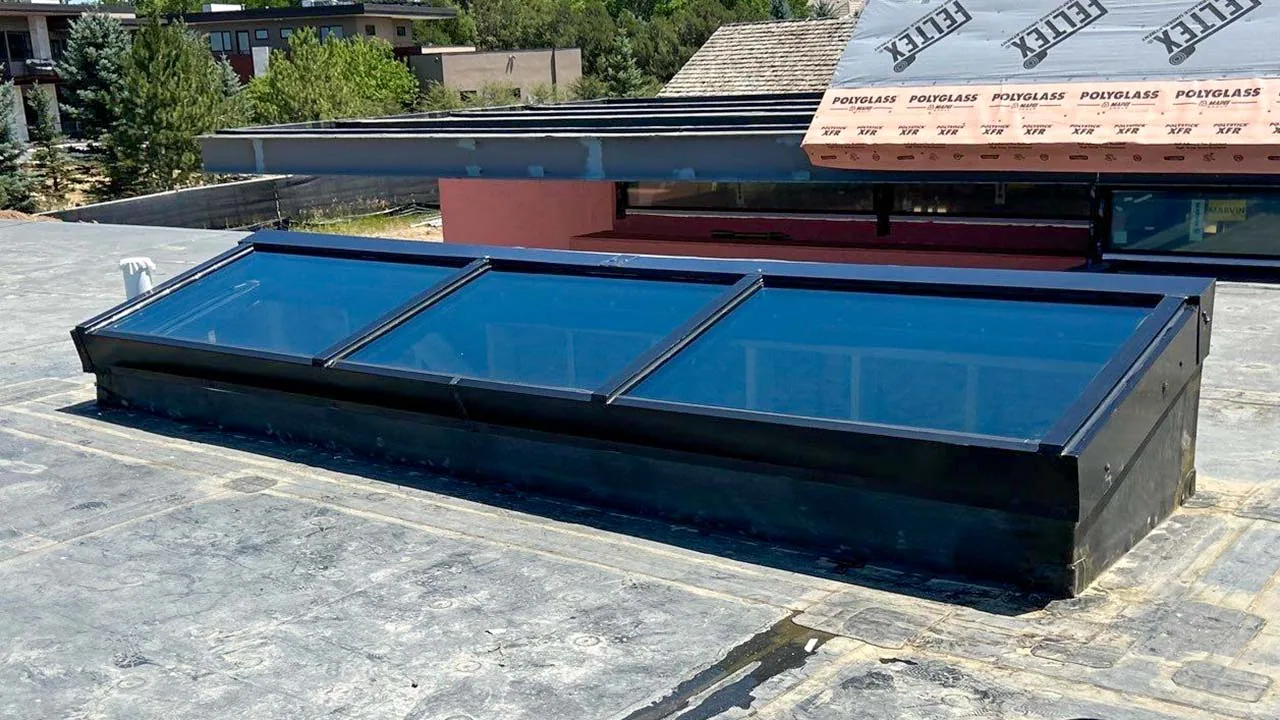
Skylights, roof hatches and clerestory curbs are made of materials that move differently from the membrane around them. Glass, aluminum and plastic expand at one rate and the roof at another, so the joint between them is a place where sealant works hard. The NOAA Hollywood normals put August's average daily maximum at 89.9°F, and a dark membrane runs hotter, so the movement cycle each day is large.
We check curb height, flashing laps, counterflashing, sealant condition and the glazing edge. Where a skylight leaks, the first question is whether water enters at the glazing, at the curb or through the membrane turn. Repair follows the answer, and the report names the detail that failed. A skylight and penetration flashing repair addresses the transition without disturbing more roof than needed.
Rain finds those joints in the wet months. At the Hollywood station June and September each average more than eight inches of rain, so a curb that is tight in May can leak in September once its sealant has moved. We recheck after the first heavy rain of the season.
What the First Walk Records
Our walk sorts the roof into sections and notes the use below each. We record the outlets, scuppers and overflow routes, then the edges, the curbs and the equipment supports, then the seams and prior patches. Photographs carry location tags so the same spot can be found again.
- Skylight, hatch and equipment curbs
- Drains, scuppers and the discharge path
- Edge metal, coping and gutters
- Ponding depth and drying time
- Seams, laps, blisters and prior patches
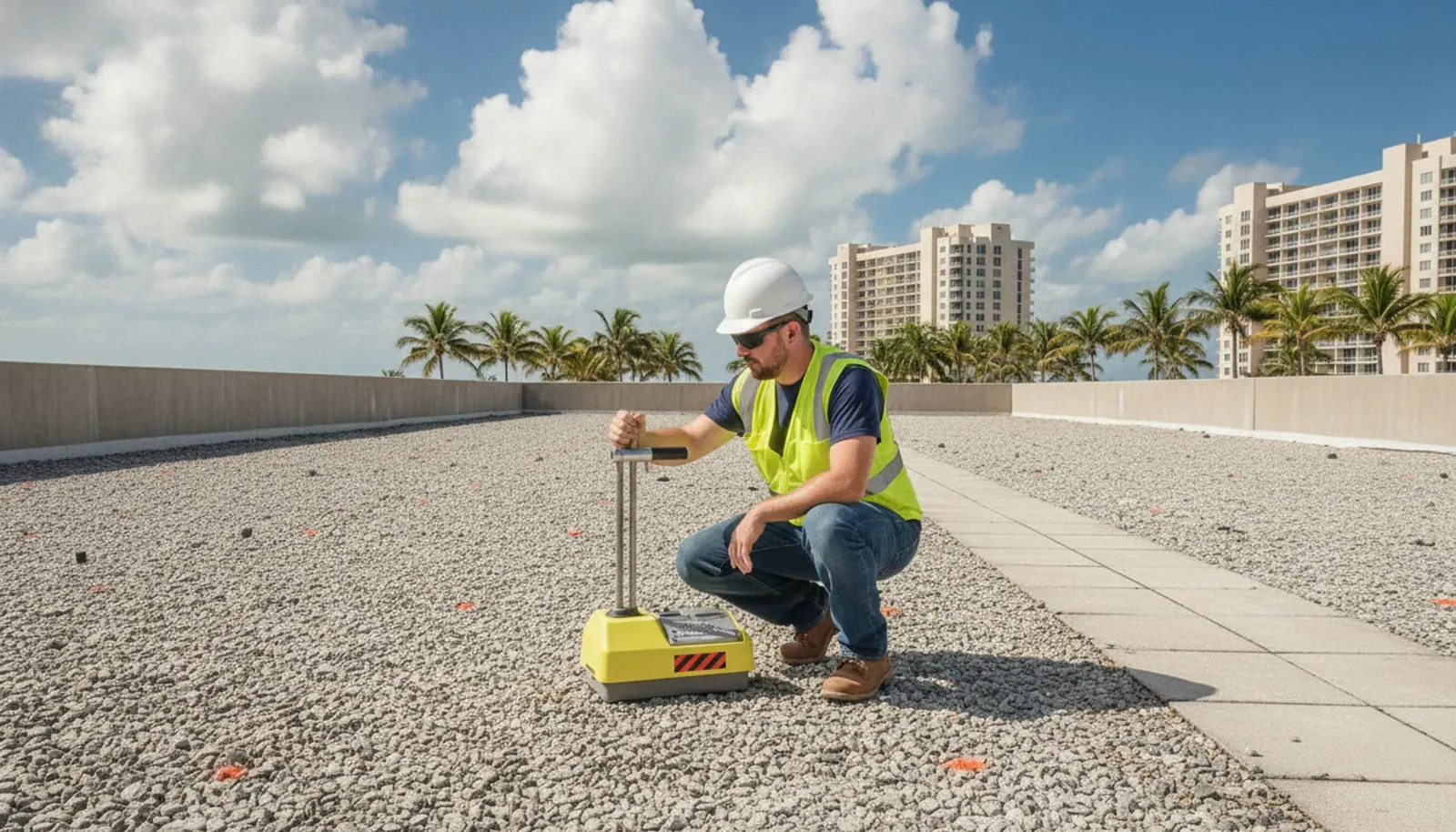
If readings suggest trapped moisture, an infrared moisture survey marks the wet area so repair can be limited to it.
Display buildings often have a ceiling that hides the underside of the deck, so the walk includes a look from below where access allows: stained tiles, rust on fasteners or darkened insulation edges. Those signs, matched to the roof above, narrow the search for the entry point.
Repair, Coating, Replacement and Solar Planning
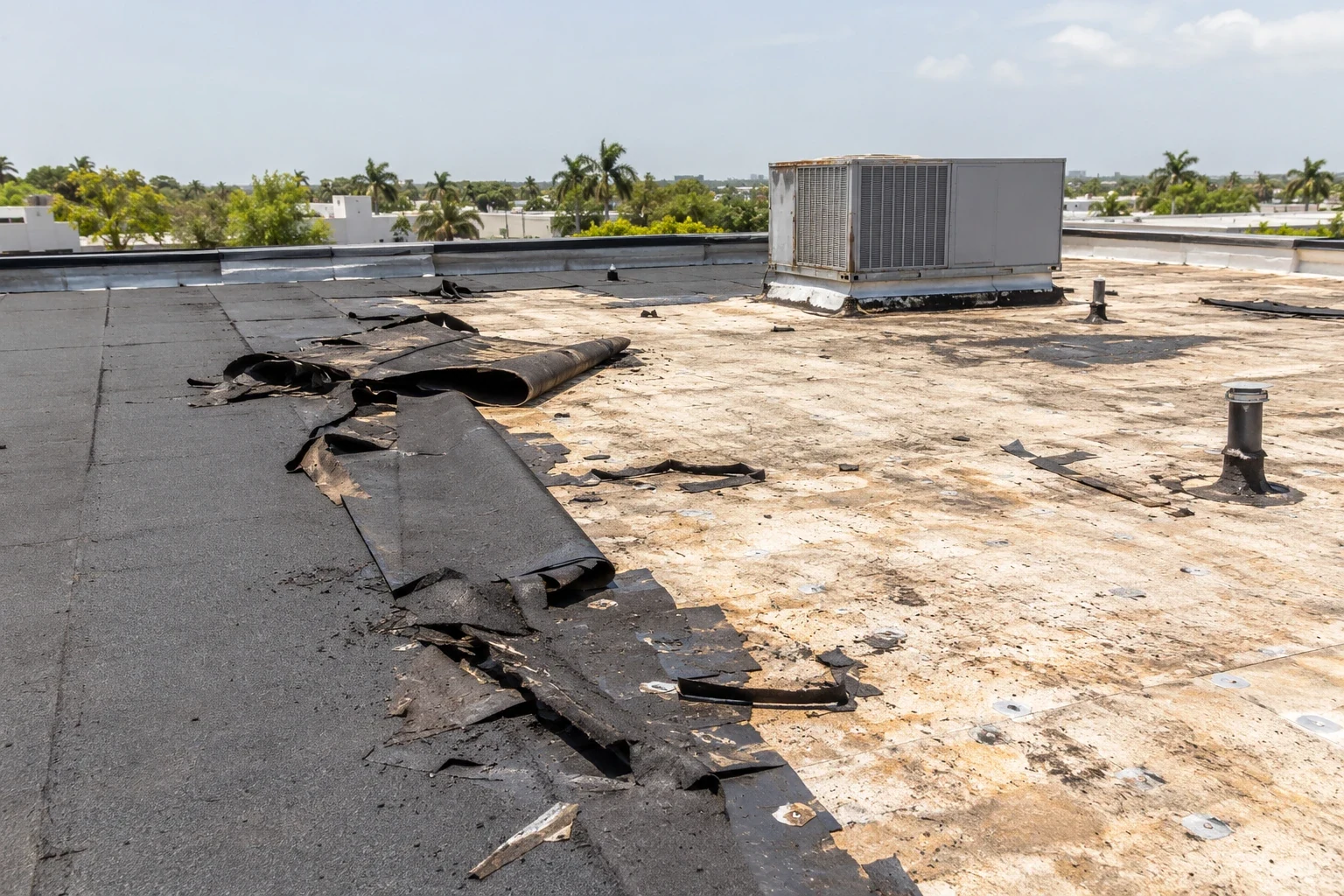
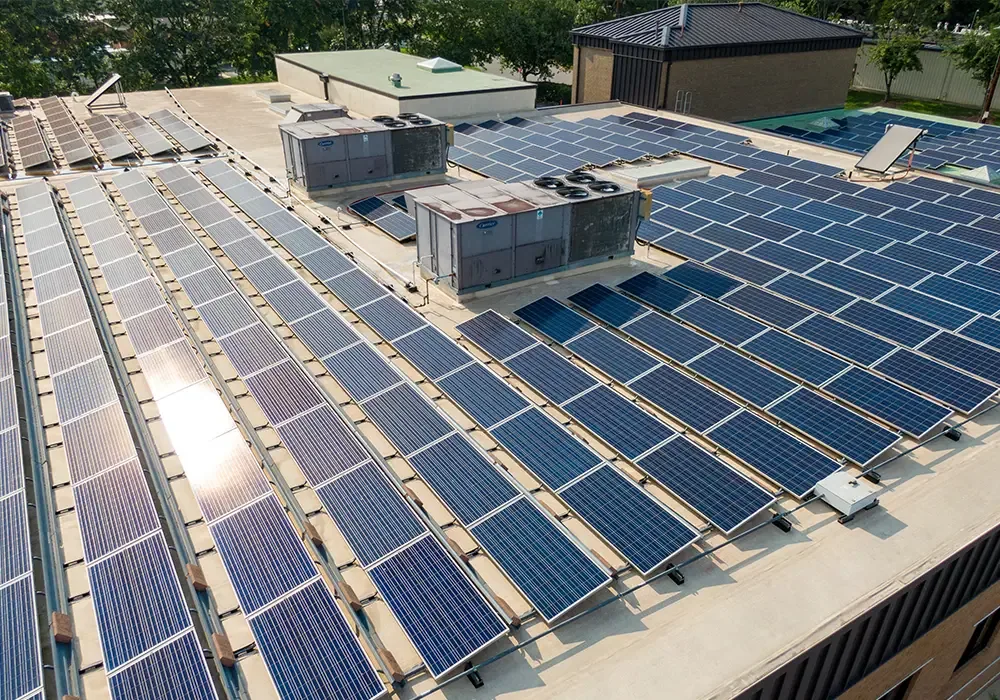
A confirmed defect on a sound roof calls for a repair with a defined boundary. A dry, attached membrane may take a coating once seams and flashings are corrected. Wet insulation, or leaks that return at the same details, point toward replacement. Owners who expect to add solar should raise it before the roof is replaced, since solar-ready roofing plans the layout, loads and penetrations so panels do not cut into a finished membrane later.
The business schedule below, the roof area, the number of penetrations, the extent of wet insulation and access all set cost and timing. We list those drivers in the proposal with the evidence behind each recommendation.
Where an owner is undecided, a staged plan repairs active leaks now, corrects drainage at the same visit and sets larger work for a capital cycle the owner chooses.
Corridors, Deliveries and Open Showrooms
The City describes Doral as close to Miami International Airport and major regional corridors, and we use that when planning delivery routes and timing so trucks arrive outside the property's busiest hours. Lifts and materials stay off customer entrances and loading areas, the work moves in sections that dry in daily, and interiors are protected wherever a ceiling will be disturbed.
Display buildings need extra care: dust and odor reach finished surfaces, and a dropped fastener can scratch a floor. We cover sensitive areas, seal openings during work and clean the perimeter at the end of each shift.
Permits, Records and Business Resources
Doral lists commercial-property search, active-business data and economic-development reports among its business resources. An owner using them to compare properties should add a roof condition report to the file, since it tells a buyer or lender what the roof will need. Reroof permits are reviewed by local building staff against the Florida Building Code, 8th Edition (2023), effective December 31, 2023 under the state commission's listing.
Owners with property in Miami Lakes or Miami Gardens can use one record format, and a preventive maintenance plan keeps drains and flashings current.
Preparing for the Roof Walk
A roof plan, leak dates with room locations, repair invoices and a list of tenant changes let us tie findings to places and separate old repairs from new problems. If the building has skylights or hatches, photographs of the interior below each help match stains to curbs.
We ask where the hatch or ladder is, which entrances and docks must stay clear and when quiet hours fall. With the answers in hand, the visit goes to conditions, and the report puts urgent protection in one list and budget-cycle work in another.

