Need this roof reviewed?
Commercial roof inspection, cool-roof upgrades, repair and replacement in Miami Lakes, FL for commercial and industrial buildings, with written findings.
Surface temperature is the quiet variable on a South Florida roof: two membranes of the same age can sit many degrees apart on an August afternoon because one is white and clean and the other is dark and dirty. Miami Lakes, FL has a Planning Department that processes development in neighborhoods and in commercial and industrial districts, and an Economic Development Committee that promotes local business interchange and recruitment. For an owner or manager in those districts, the roof conversation often starts with heat and cost, and it should end with water, because heat decides how fast a roof ages and water decides where it fails. We begin each visit by measuring both: the surface condition and the moisture route.
Commercial and Industrial Districts, Same Roof Questions
The Town's planning work spans commercial and industrial districts, so the buildings behind it can differ widely in use and age. We ask for the use, the age of the roof and the repair history, and we record the roof sections and their drainage on the first walk.
An owner planning visible exterior changes to a roof, such as new screening, added equipment or a changed parapet, should ask the Town which review applies. We draw the roof scope to match whatever review the owner and the Town settle on, and we keep photographs of existing conditions so the application starts from facts.
The Committee's networking socials and chamber showcase put owners and managers in the same rooms, which makes a shared habit useful: ask for a dated roof report whenever a property changes hands or a lease renews. We provide one after every first walk, with locations, photographs and ranked recommendations.
Surface Temperature, Thermal Movement and Drying Potential
At the NOAA Hollywood station the annual mean temperature is 76.1°F and the August average daily maximum is 89.9°F. A roof in that climate expands for much of the year, and a dark membrane expands more. Movement concentrates at seams, wall bases and curb corners, and over many seasons it loosens sealant and splits flashing.
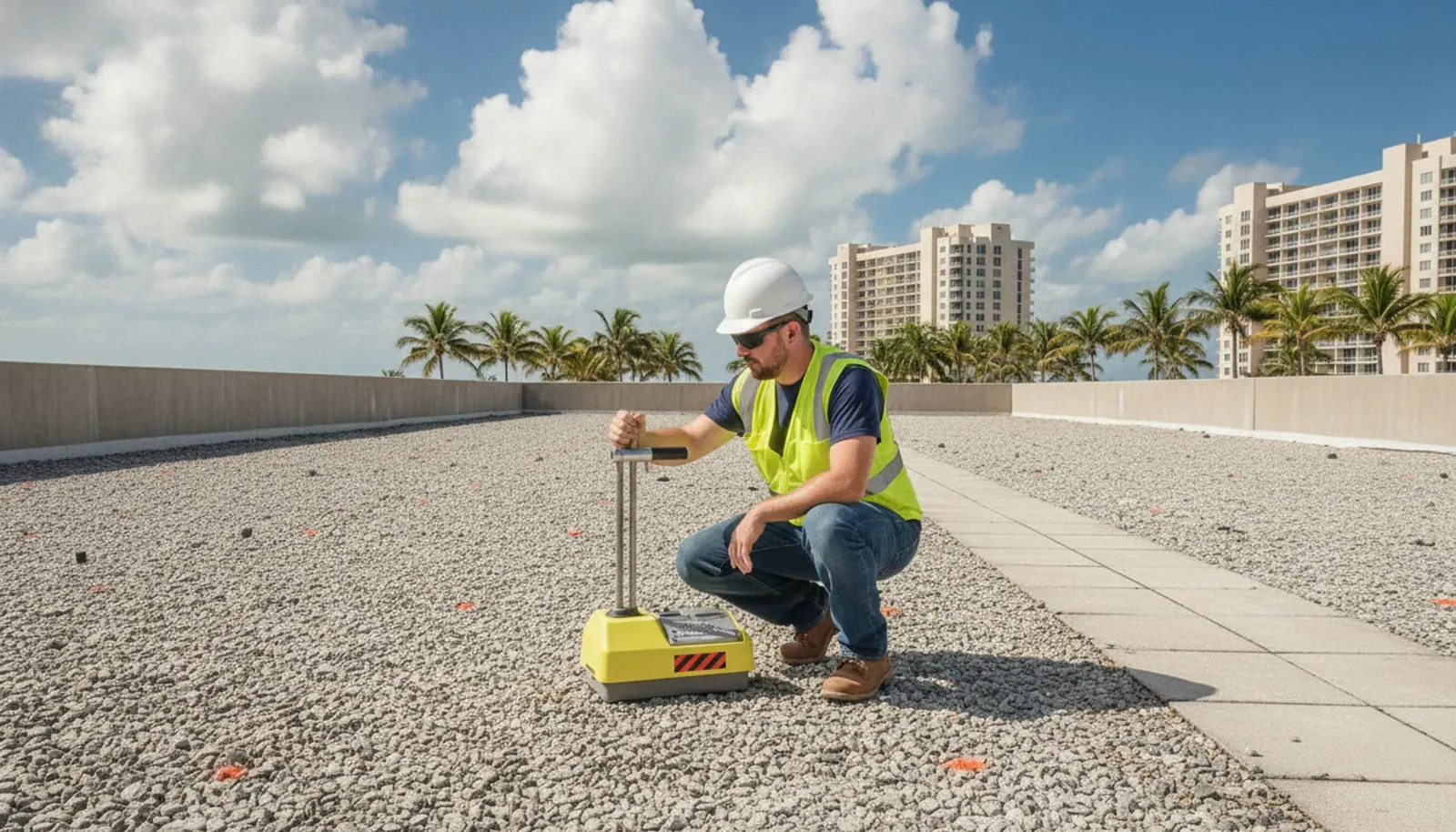
Drying potential matters just as much. A roof that drains quickly and dries between storms keeps its insulation dry. A roof that holds water in low areas or has trapped moisture beneath its membrane never dries completely, and its insulation loses value while its deck takes on moisture. The first walk records ponding depth, drying time and any surface sign of wet layers.
Wind-driven rain adds a third force in the wet months. It pushes water sideways into laps and under loose edges, which is why edge metal and the first row of fasteners are checked before the season, not after the first leak.
Reading the Surface Before Opening It
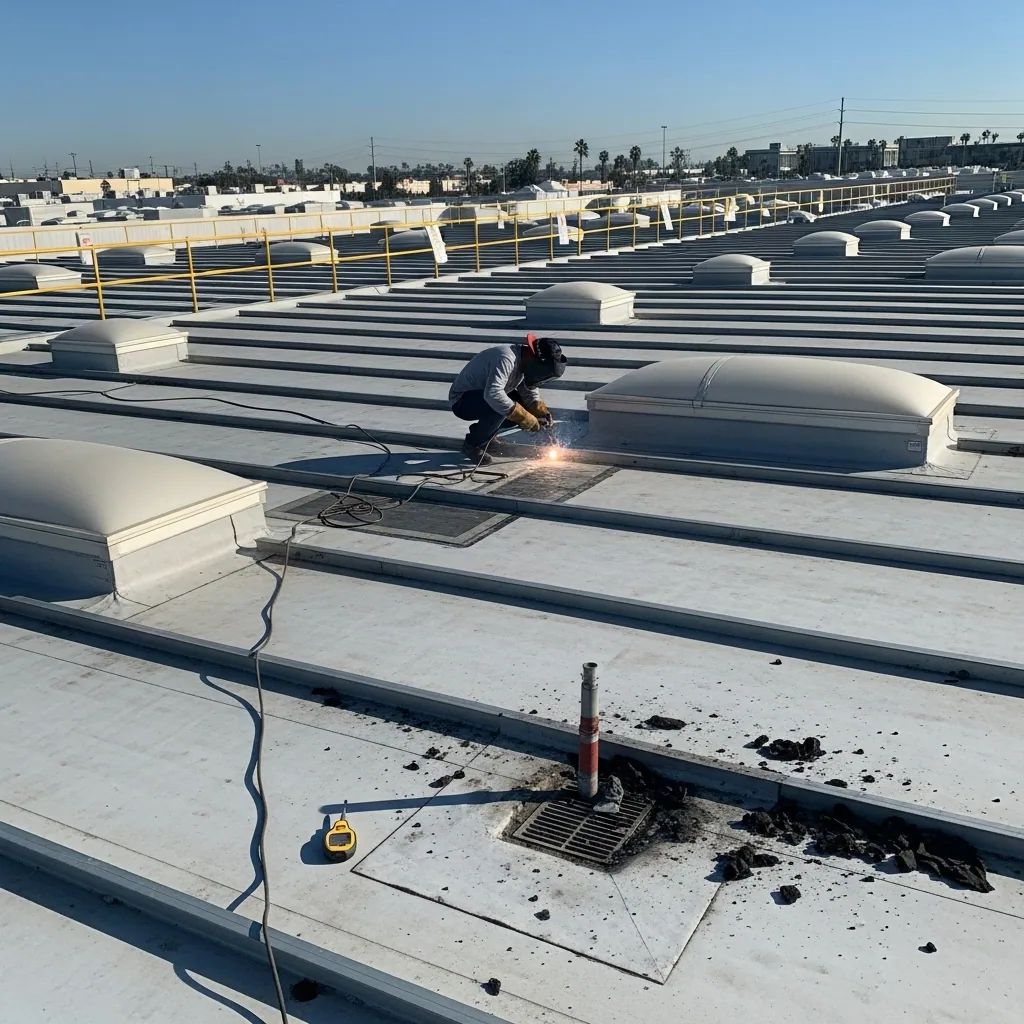
We read a roof from the outside in. Dirt patterns show where water flows and stops. Algae or staining shows where it lingers. Blisters and soft spots show where moisture or air has collected. A uniform chalky surface shows weathering, while localized cracking shows movement.
- Dirt and staining patterns around drains and walls
- Blisters, soft spots and lifted laps
- Cap, coping and edge condition
- Curb corners and boot condition at penetrations
- Prior patches and whether they have held
When the surface leaves a question open, an infrared moisture survey or a few test openings answer it before the scope is written.
Edge conditions deserve a closer look on any roof that has seen several summers. Coping joints open, fasteners back out and sealant hardens, and a roof edge that moves in the wind lets rain under the membrane. We test each section by hand and record those that need resetting.
Cool-Roof and Reflective Options
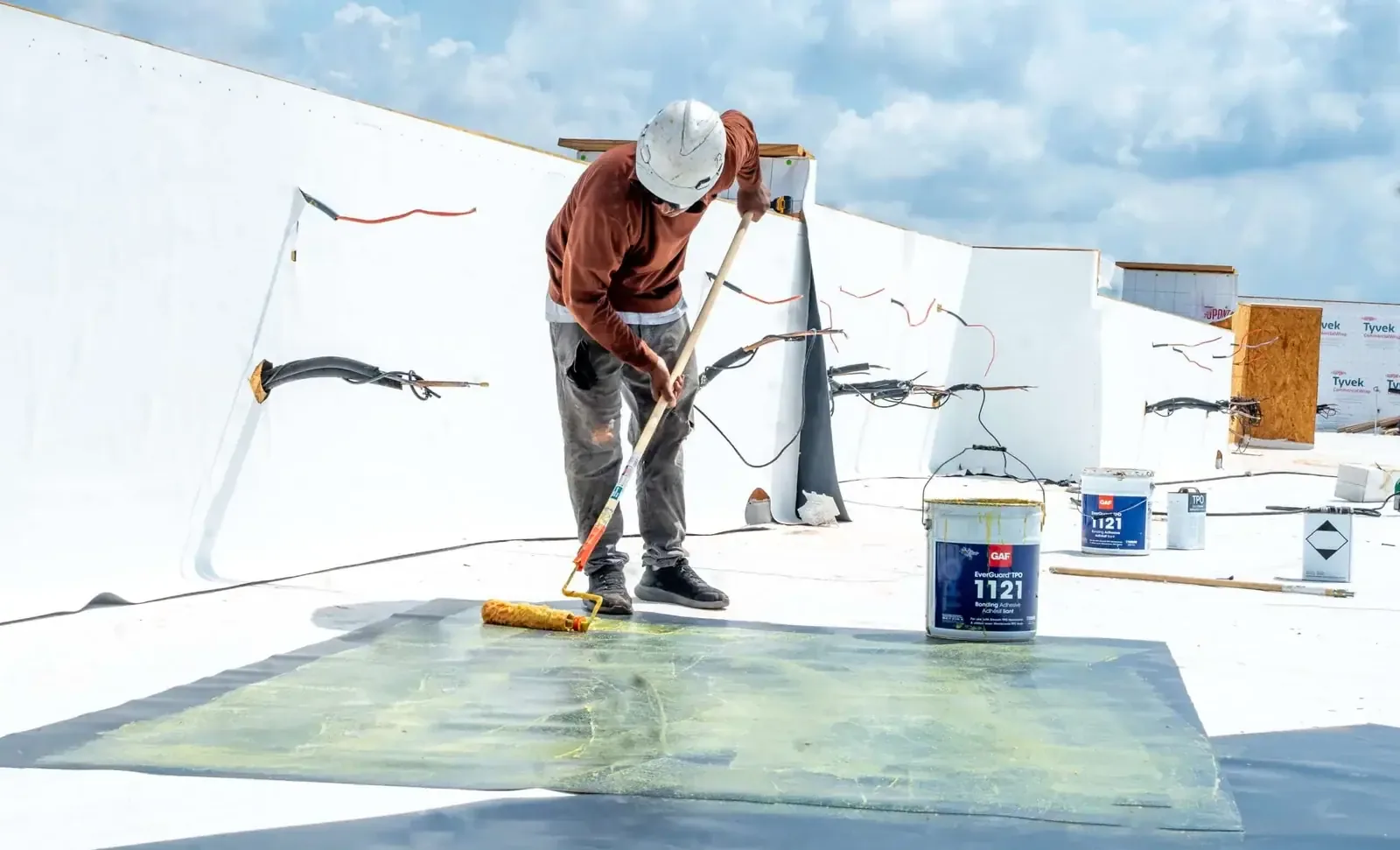
A reflective surface lowers surface temperature, which slows thermal movement and can reduce cooling load. Cool roof installation can be done with a white single-ply membrane or a reflective coating over a sound existing roof. The coating route only works when the existing roof is dry, attached and repairable, so moisture readings come first.
If the existing roof is wet, a reflective surface on top would trap the problem. In that case the wet layers are removed and the new system is chosen with reflectivity in mind. Access, roof area, penetrations, wet-area extent and the schedule below drive cost and timing, and the proposal states them beside the evidence for each option.
Tenant Schedules and Storm Season
Roof work in an active commercial district goes around tenants. Work goes in sections that dry in daily, lifts and materials stay away from entrances and docks, and a posted plan gives the hours and a contact. Where interiors are sensitive, protection goes in before any opening is made.
Large jobs are scheduled with the early wet season in mind, since the National Weather Service puts South Florida's stormiest weather between mid-May and early July. Any open section is sized so it can be closed to weather within a single shift.
If tenants ask for noise or odor limits they are written into the plan, and adhesives and primers stay away from air intakes.
Records, Permits and Peer Properties
The Florida Building Code's eighth edition, dated 2023, governs reroof permit review, and local building staff apply it. Stage photographs and a written note on what was taken off and put on complete the record. Drains and flashings stay in order under a preventive maintenance plan.
Owners with property in Doral or Miami Gardens can use the same record, and a flex-industrial roof or office building roof follows the same format.
What the Owner Receives After the Walk
The owner receives a written report that connects each observation to a location and a photograph: where water collects, which details have moved, which patches have held and which areas show signs of trapped moisture. The report keeps conditions that need prompt work apart from those to watch and sets out the options with the evidence for each.
If the roof is a candidate for a reflective upgrade, the report states what must be repaired first and what the new surface would change at the seams and flashings. If it is not, the report says why and describes the repair that fits. Either way, the owner leaves with a plan that can be priced, scheduled and compared with other buildings in a portfolio.
Related Roofing Topics