Need this roof reviewed?
Commercial roof repair, recover and replacement for older strip retail along West Oakland Park Boulevard in Oakland Park, FL, with layer and deck checks.
A building constructed in the 1970s may be wearing its second, third or fourth roof, and each layer added over the last changes what a repair can do. Oakland Park's corridor study covers a commercial area west of I-95 out to NW 31st Avenue, dates the parcels to the late 1960s through the early 1980s, and calls much of the stock older strip-mall retail. The report is about parcels and not about roofs, but it tells us what to expect to check: how many layers are on the deck, how well they are attached, and whether water has been trapped between them. Those answers decide whether a repair, a recover or a tear-off makes sense.
Older Strip Retail and Layered Roofs
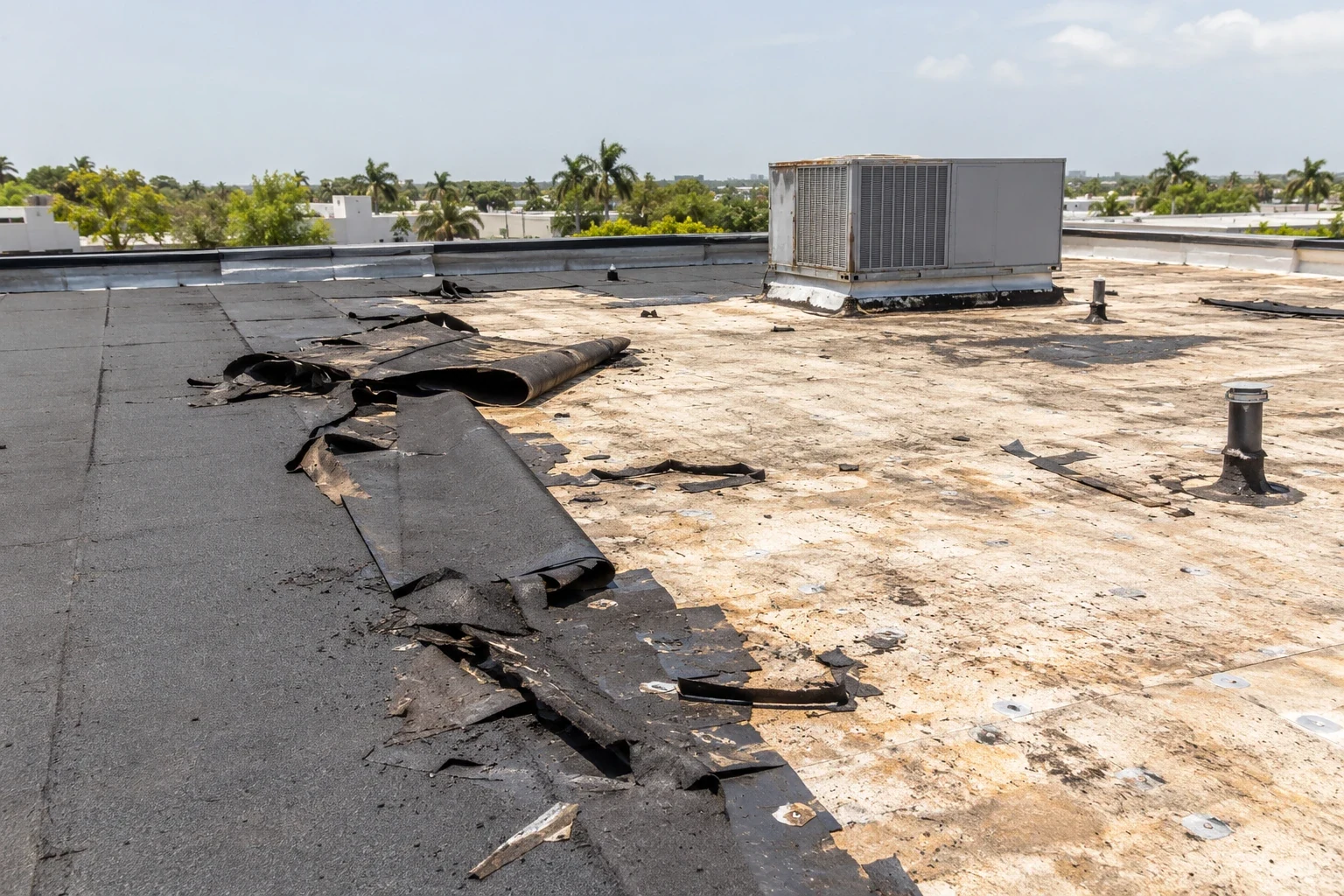
An older strip center may have had its roof repaired and sometimes recovered, and those repairs are not always documented. A first walk looks for evidence of layers: a thickened edge at the parapet, a step at a wall base, blisters or soft spots in the field. We probe at test points and open a small area where the evidence is unclear, then record the number of layers, the insulation type and the condition of the deck.
This matters because many recovers are limited by the layers already on the roof. Adding weight over wet insulation traps moisture; adding over a deteriorated deck hides a structural problem. We report what we find before recommending a route, and we say plainly when removal of the old layers is the better choice.
Tenant equipment tells its own story. Old curbs left from removed units, capped lines and abandoned supports are common on a roof that has outlasted several tenants. Each is a detail that can leak, and we list those that should be removed, sealed or reflashed so the owner can price the cleanup with the main scope.
Heat, Rain and Aged Seams
Heat and rain set the cycle: the annual mean daily maximum at Hollywood's NOAA station is 83.2°F, August reaches 89.9°F, and both June and September top eight inches of rain. Aged membranes lose flexibility in heat, so seams and flashings that were sound when installed can split under daily movement. Rain then enters at the split, and the water travels along the deck before it appears inside.
Wind-driven rain is the concern in the stormiest weeks of South Florida's wet season, which the National Weather Service puts between mid-May and early July. For an older roof, wind-driven rain makes edges and wall flashings the places to inspect first, since an edge that has lifted can let a storm do damage far from where it started.
Drainage on an older roof often has a history of its own: drains raised by added layers, scuppers set too high, slopes that have flattened. We measure ponding depth after rain and compare it with the outlet positions, which shows whether a tapered insulation correction or an added drain is part of the right answer.
Shared Roofs and Tenant Equipment
Strip retail puts many tenants under one membrane, and each tenant may have added equipment over the years. The walk records each unit, the curb or support beneath it, the condensate and exhaust paths, and the condition of the membrane around them.
- Demising walls and the flashing along them
- Rooftop units, curbs and added penetrations
- Drains, scuppers and overflow routes
- Seams, laps and old patches
- Signs of wet insulation near leak reports
Where tenant reports are scattered, we plot them on the roof plan. A pattern along one wall points to a flashing; a pattern near a drain points to ponding; a scatter across the field may point to wet insulation, which an infrared moisture survey can confirm.
Repair, Recover or Tear-Off
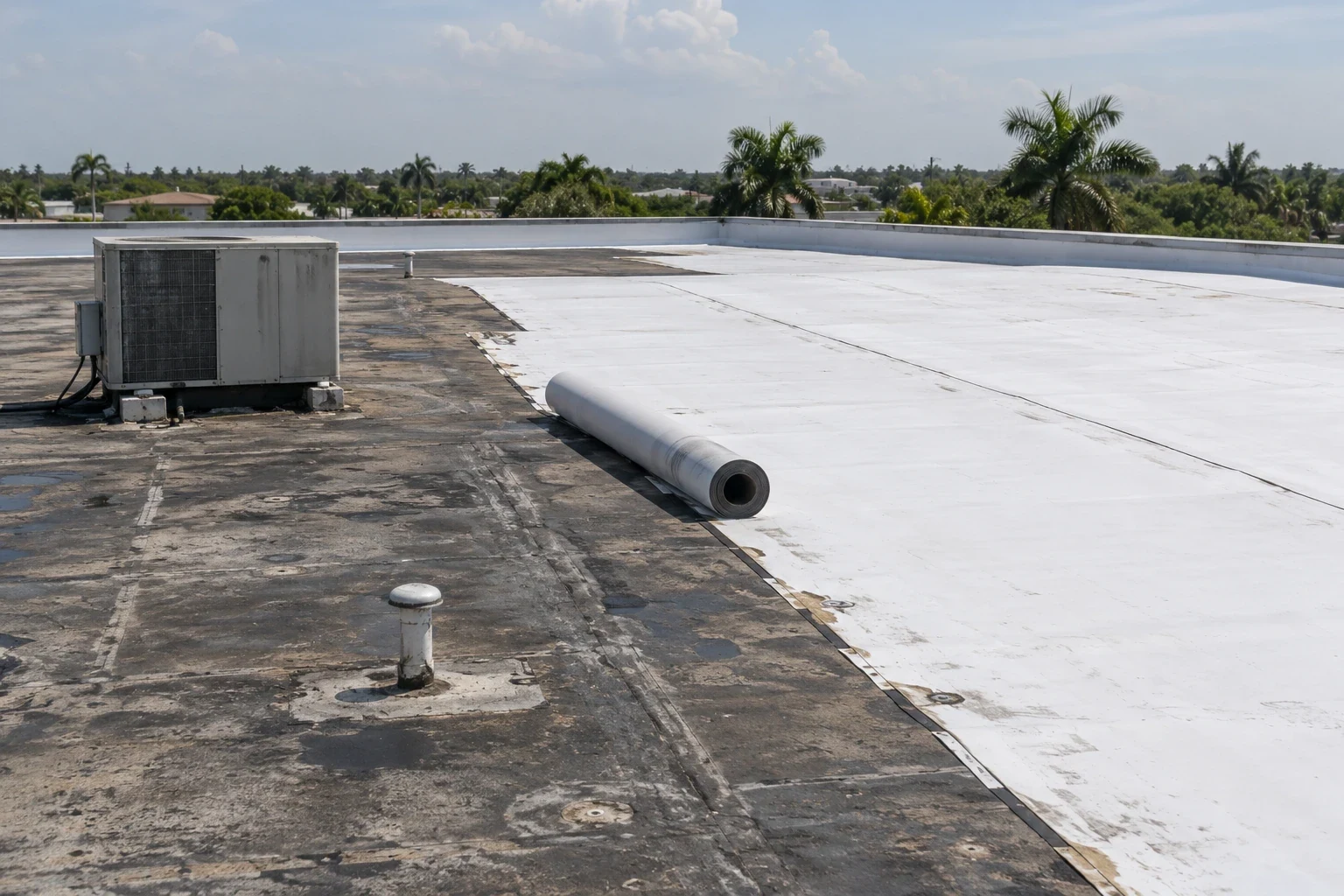
A roof with a confirmed defect and a sound deck can be repaired. A roof with dry, attached layers may take a recover, which avoids tear-off and noise above tenants. A roof with wet insulation, multiple old layers or a soft deck usually calls for removal and replacement, which also lets slope and drainage be corrected.
The code also matters. The 8th Edition (2023) of the Florida Building Code took effect December 31, 2023, per the state commission, and the local building department reviews reroof permits against it. We list the requirements that affect the assembly, such as the number of layers a recover may add, and confirm them before pricing.
Cost and timing follow the number of layers to remove, the deck condition, access, roof area and the tenant schedule. We name those drivers in the proposal instead of quoting a number before the roof has been opened.
Staging on a Busy Corridor
The City describes the corridor as heavily traveled and among Broward County's highest transit-ridership routes. Foot traffic and bus stops mean that sidewalk protection is part of the roof plan. We fence drop zones, post spotters where trucks cross the pedestrian route, lower debris in a closed chute and set deliveries for quiet hours.
Tenants stay open, so the work moves in sections that dry in daily. Tenants get interior protection under any ceiling that will be disturbed, and the manager receives a daily plan listing the work area and hours. A larger project is sequenced by roof section, which keeps most suites untouched on any given day.
A Roof File for the Next Owner
Older strip centers change hands, and the roof file travels with them. It should hold the layer count, test results, photographs, repair history, permit paperwork and drain-cleaning notes. A preventive maintenance plan keeps strainers clear and small repairs current between projects.
Owners with other property in Lauderdale Lakes or in the Central City CRA can use one format across sites, and a shopping center roof follows the same record.
Planning the Next Step
After the walk the owner receives the layer count, photographs, a ranked list of repairs and the options side by side. The ranking separates active leaks from conditions to monitor, and each option states what it solves, what it leaves open and what would change the recommendation.
If the building has several roof sections from different eras, the plan treats them separately, since a newer addition may need only flashing work while the original section needs a larger scope. That separation keeps spending matched to need.