Need this roof reviewed?
Manage shopping center roof repairs in Hollywood, FL with clear tenant access, drainage review and documented work zones for retail buildings and shared areas.
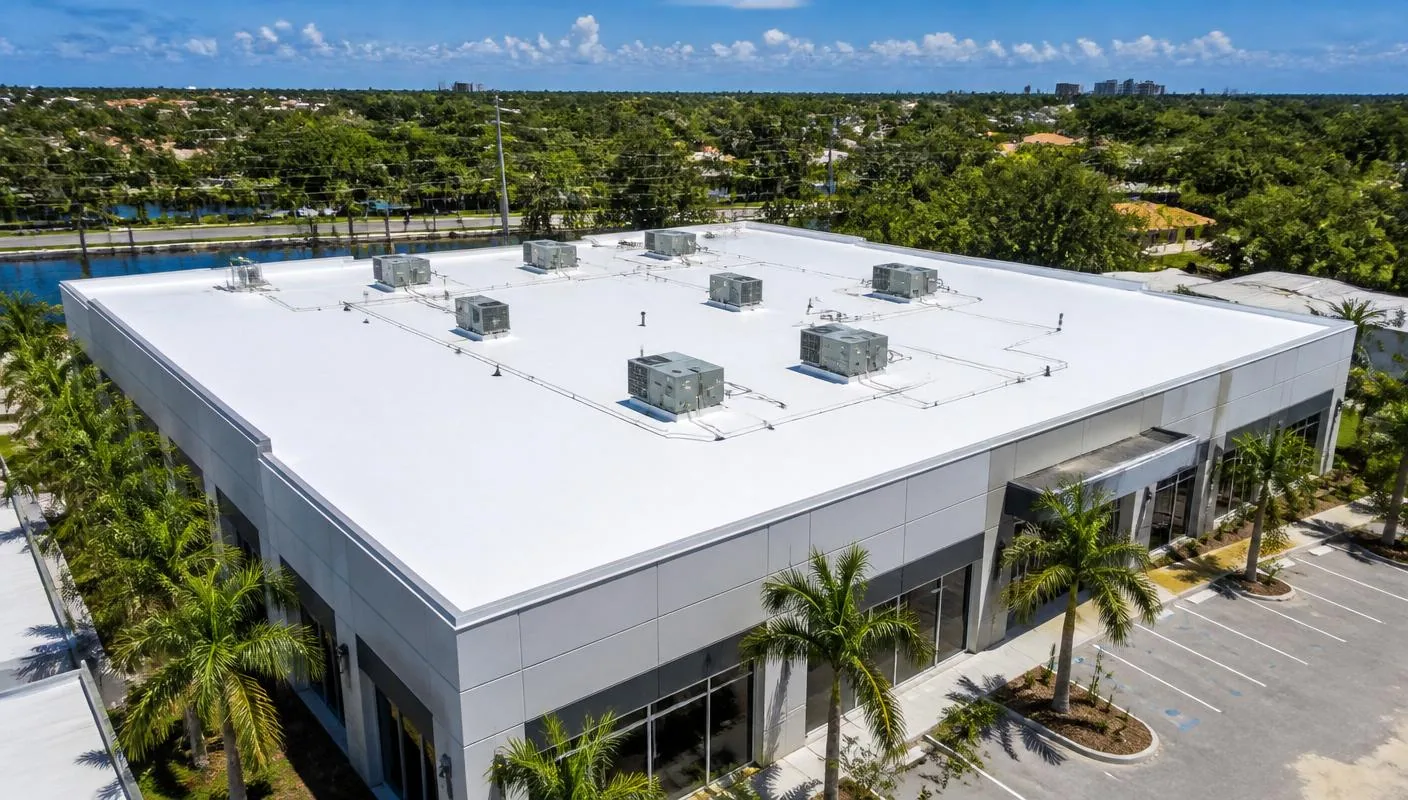
A shopping center roof has shared water paths above separately operated spaces. A leak over one tenant may begin at a common drain, parapet or rooftop unit serving another part of the building, so the repair starts by mapping the report to the roof. Hollywood, FL combines hot summer surfaces with substantial seasonal rain. In nearby Hallandale Beach, the city’s plan describes commercial density along East Hallandale Beach Boulevard, including strip centers and office buildings. We inspect the actual membrane and drainage plane, identify the work boundary and coordinate access before repair materials are brought on site.
Locate the leak across tenant lines
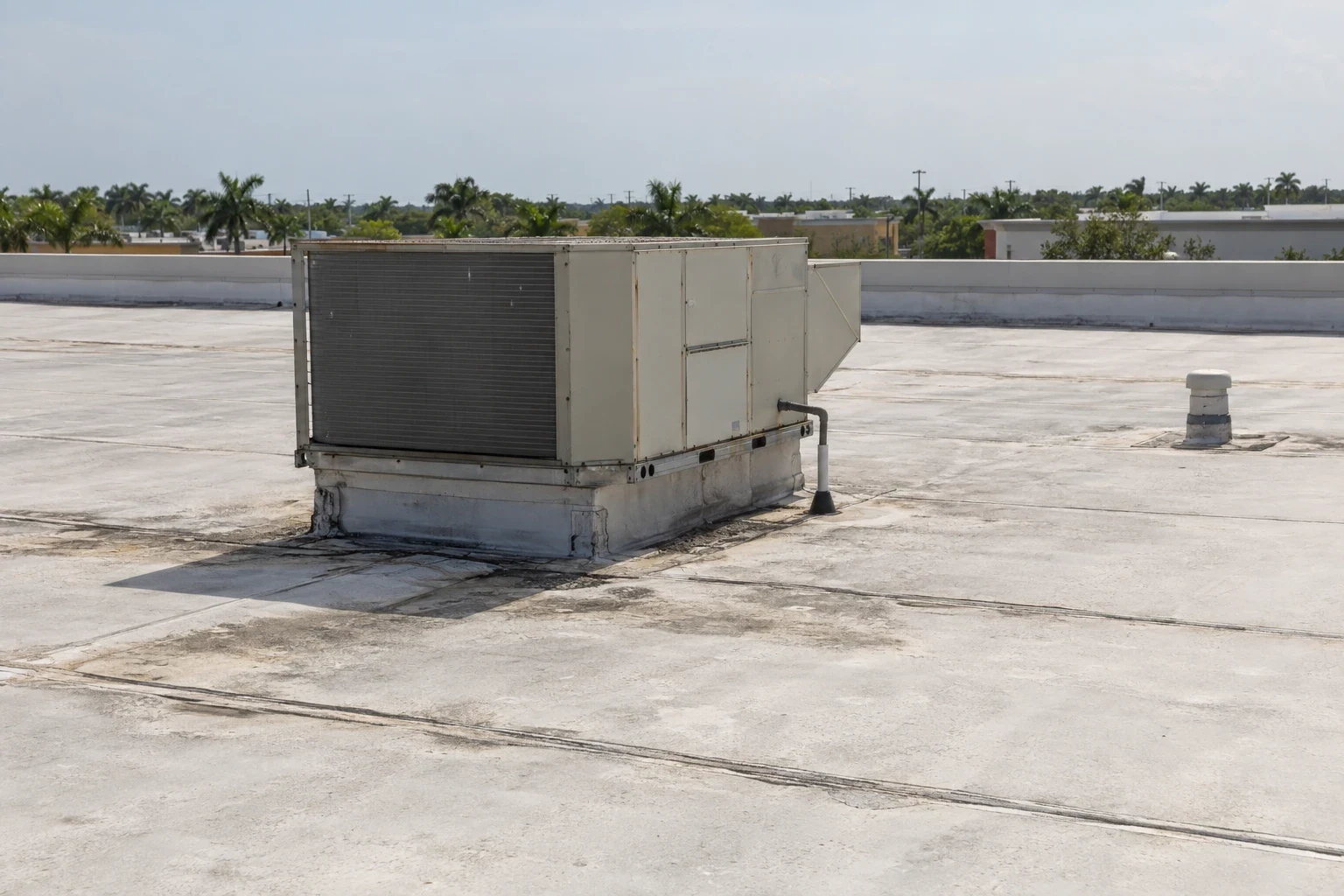
Interior reports should include the suite, room, date and what was operating when water appeared. We compare those details with roof plans, equipment curbs, roof drains, expansion joints, seams and prior patches. Water can travel under a membrane or along deck flutes before it reaches a ceiling, so the space directly above the stain is only one place to inspect. A marked photo should identify the roof area and the corresponding tenant space without assuming responsibility from the location alone.
Shopping centers often combine a long roof field with repeated walls, signs, exhaust equipment and service penetrations. We note where each detail interrupts the membrane and whether prior work has altered drainage or flashing. If roof areas belong to different ownership or maintenance agreements, the scope should define which section is included and what remains outside it. A commercial roof inspection can provide the condition map, while a grocery roof review can account for refrigeration equipment and service access when that use is part of the property mix.
Keep emergency protection separate from a permanent repair. We can help protect an affected interior and establish temporary coverage where conditions permit, then trace the roof entry and define the permanent detail. A big-box retail roof assessment addresses a different span and equipment layout, even if the property manager is the same.
Check common drains and overflow paths
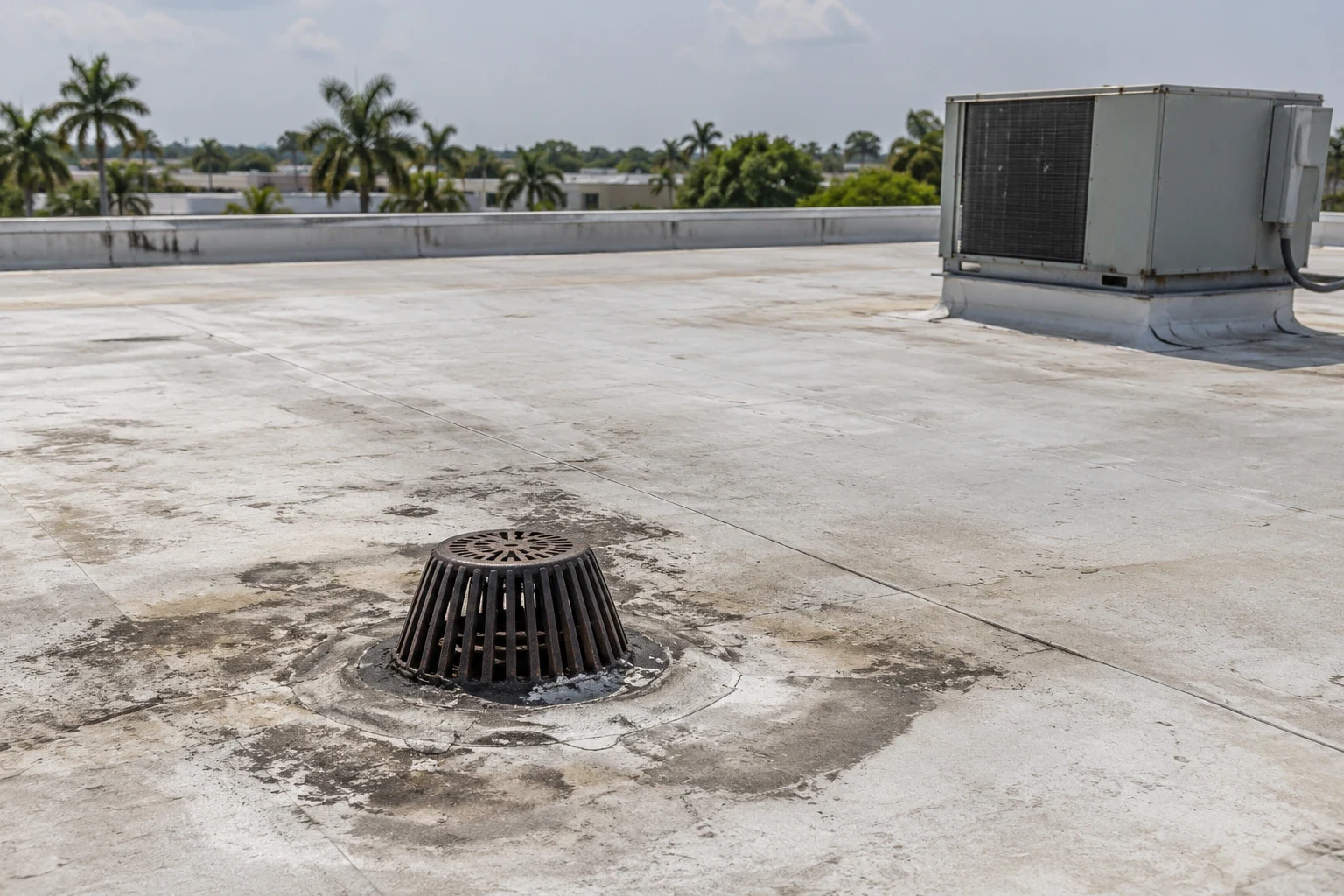
The two wettest months in Hollywood, June and September, each pass eight inches of rain, which is when a plaza roof with weak scuppers shows it. That pattern makes outlet maintenance worth scheduling before the wet months. We inspect strainers, bowls, scuppers and overflow routes, then follow the surface slope toward each outlet. A clear strainer can sit above a settled area that still holds water against a seam or curb. If the outlet or its connection has failed, drain and scupper repair can be separated from membrane restoration.
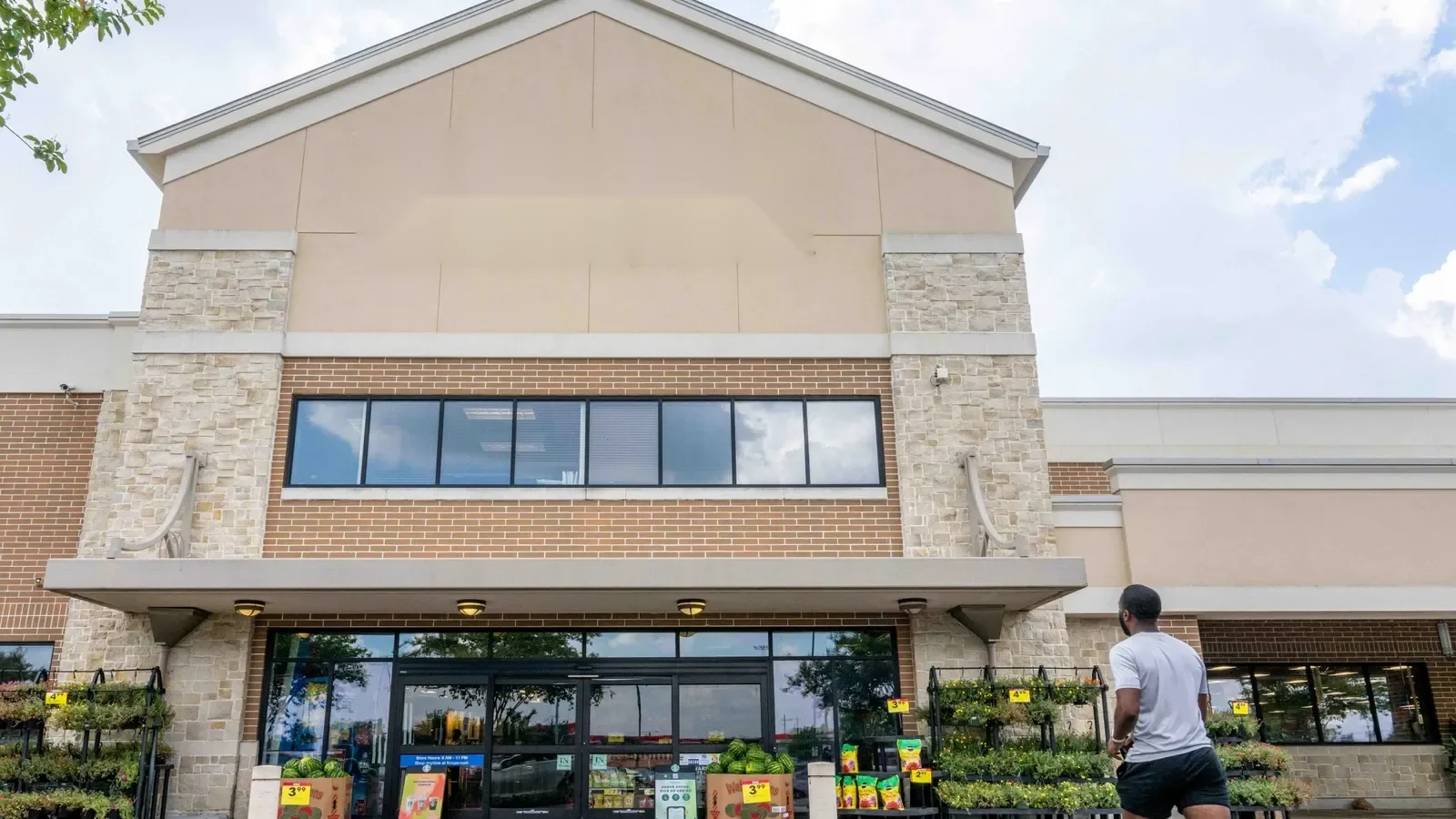
On a strip center along East Hallandale Beach Boulevard, shared parking and tenant operations make access planning part of the repair sequence. We document whether water remains after rain, how deep it is, what drains it and whether the surrounding membrane shows stress or previous movement.
Flood-map review is a separate record from roof drainage. Hollywood’s citywide assessment considers tidal, surge and compound-flood exposure; on the roof, we report ponding depth, outlet condition and overflow height so the owner can hand those numbers to whoever reviews the parcel. A ponding-water repair review can determine whether a low area needs outlet work, localized correction or further investigation.
Coordinate work without blocking the center
Before mobilization, we confirm roof hatch access, staging space, delivery paths and the person authorized to coordinate with tenants. A repair near an entrance may require a different work window from one above a rear service lane. Equipment lifts, material handling, odors and temporary barriers can affect business operations beyond the roof edge. We outline those impacts with the property manager and identify how the work zone will be separated from customer and service routes.
In Downtown Hollywood, event closures on the stretch of Hollywood Boulevard from US-1 to 21st Avenue can slow delivery trucks and shift where customers and staff park, so the fenced work zone is placed to keep the busiest entrances clear. When a project is near that area, we confirm current routing with the site contact rather than rely on an old calendar. The Johnson Street business district covers the Johnson Street blocks between 56th Avenue and US-441, and a center there needs the same service-access and tenant coordination. We establish the actual center entrance and roof route before the crew arrives.
If water reaches an occupied suite, the manager should know what is temporary and what is complete. We can sequence interior protection, roof repair and finish work so the tenant receives a clear handoff. A closeout note should show the repaired detail, nearby conditions reviewed and any area that still needs testing. That record helps avoid repeating a broad tenant notification when later work is confined to a separate roof section.
Set the repair boundary before pricing
A single open seam or puncture can often be repaired when the surrounding membrane is sound and a patch can bond to a cleaned surface. Several leaks, wet insulation or deteriorated attachment may call for selective removal or a broader replacement analysis. We identify what is visible, which layers were checked and where a core or opening could change the quantity. This keeps a limited service call from becoming an assumed full-roof scope, and it prevents a small patch from being mistaken for proof that adjacent areas are dry.
For a coating or recover discussion, we check drainage, adhesion, moisture and attachment before comparing options. The existing membrane type and surface condition control compatibility. A coating cannot correct a blocked drain or unstable substrate, and a recover can conceal wet layers if testing is skipped. A moisture survey can select candidate test locations, while a TPO repair option applies only where the installed assembly and approved materials support it.
Cost and timing vary with access, number of tenants, area opened, insulation replacement, metal details and coordination requirements. We define those drivers in the scope and mark allowances where concealed conditions remain unknown. If ownership is deciding between repeated repairs and capital replacement, a roof capital plan can compare urgency and budget sequence without mixing the condition of separate tenant areas.
Leave the manager with a usable record
After the work, the property manager should receive photos, repair locations, material notes, access limitations and any follow-up item. Keep the record with tenant notices, roof plans, equipment changes and prior leak calls. If a later report comes from the same suite, staff can compare its timing and location with the repaired path. If it comes from somewhere else, the record helps the next inspection begin with a new area rather than repeat completed work.
Send the roof plan, suite location, photos and access contact before arranging a walk. We will walk the relevant field areas and transitions, explain the repair boundary and return a scope that accounts for the center’s operating needs.

