Need this roof reviewed?
Commercial roof repair, replacement and maintenance in the Central City CRA of Fort Lauderdale, FL, for strip centers, restaurants and warehouse buildings.
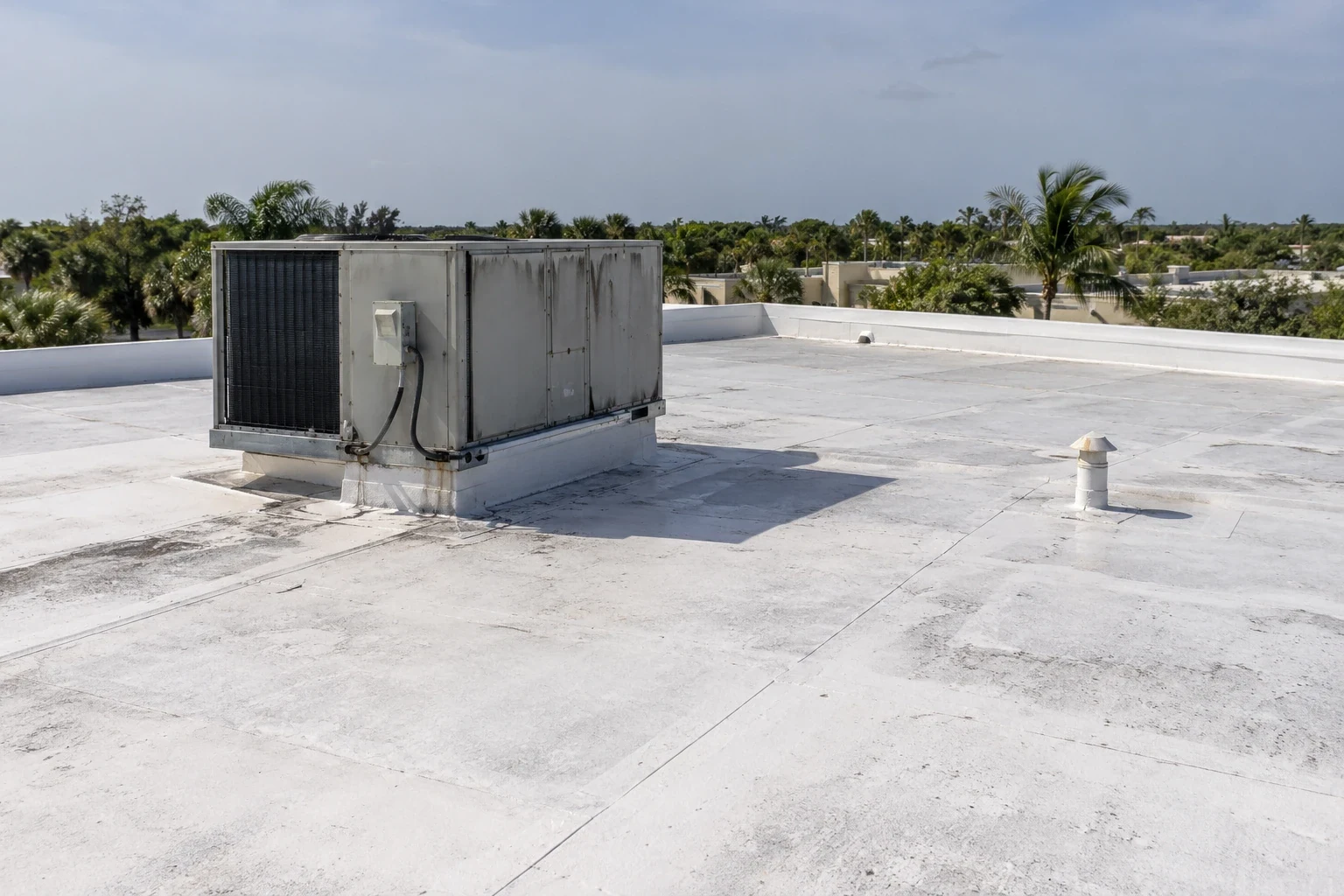
Grease and shared walls mark the roof of a strip center, while dock edges and long seams mark the roof of a warehouse, and each fails in its own way. The Central City Community Redevelopment Area in Fort Lauderdale, FL covers about 344 acres, and its published description mentions strip centers, restaurants, gas stations and small businesses along Sunrise Boulevard, with concentrations of warehouse and light-industrial use near the eastern FEC Railway. That range of building types is the reason we start each visit by sorting the roof by use, and then by the water path, before choosing a repair.
Weather adds a second sort. A hot, dark surface moves more than a reflective one, and a wet roof with a poor path to its outlets will show its weakness within a season. The first walk therefore records both the use and the exposure, and the report keeps them together so ownership can see why a recommendation was made.
Auto-Oriented Frontage and Its Roofs
Sunrise Boulevard frontage is described as auto-oriented commercial, and on any low-slope roof behind that kind of frontage the points of interest are a front parapet, a rear service edge and the mechanical equipment in between. Restaurants add grease-laden exhaust; strip centers add shared demising walls; small businesses add owner-installed equipment that may not have been flashed to the original standard.
On a first walk we look at each of those elements. On a roof shared by several tenants, the shared drains and walls are marked so that a stain in one suite can be traced to the closest roof detail. Where a roof serves a single small business, we focus on the transition at the parapet and the penetrations the owner is most likely to have added.
Gas stations and similar small-footprint buildings along the same frontage get a shorter walk but the same sequence: canopy and building edge, drains, penetrations, then the membrane field.
Heat Path and Wet-Season Load
Using the NOAA Hollywood station as the nearest reference, the mean of daily highs over the year is 83.2°F, and the National Weather Service places the stormiest weeks of South Florida's wet season from mid-May to early July. A flat roof experiences those conditions as repeated cycles: a hot surface expands, a downpour cools and loads it, and water then looks for any seam, lap or flashing that has opened.
Those regional conditions tell us where to look first at a Central City address: edges, the first fastener rows, seams near rooftop equipment and any low spot that holds water after the rain has stopped. We photograph each location so that a later visit can show whether a condition has changed.
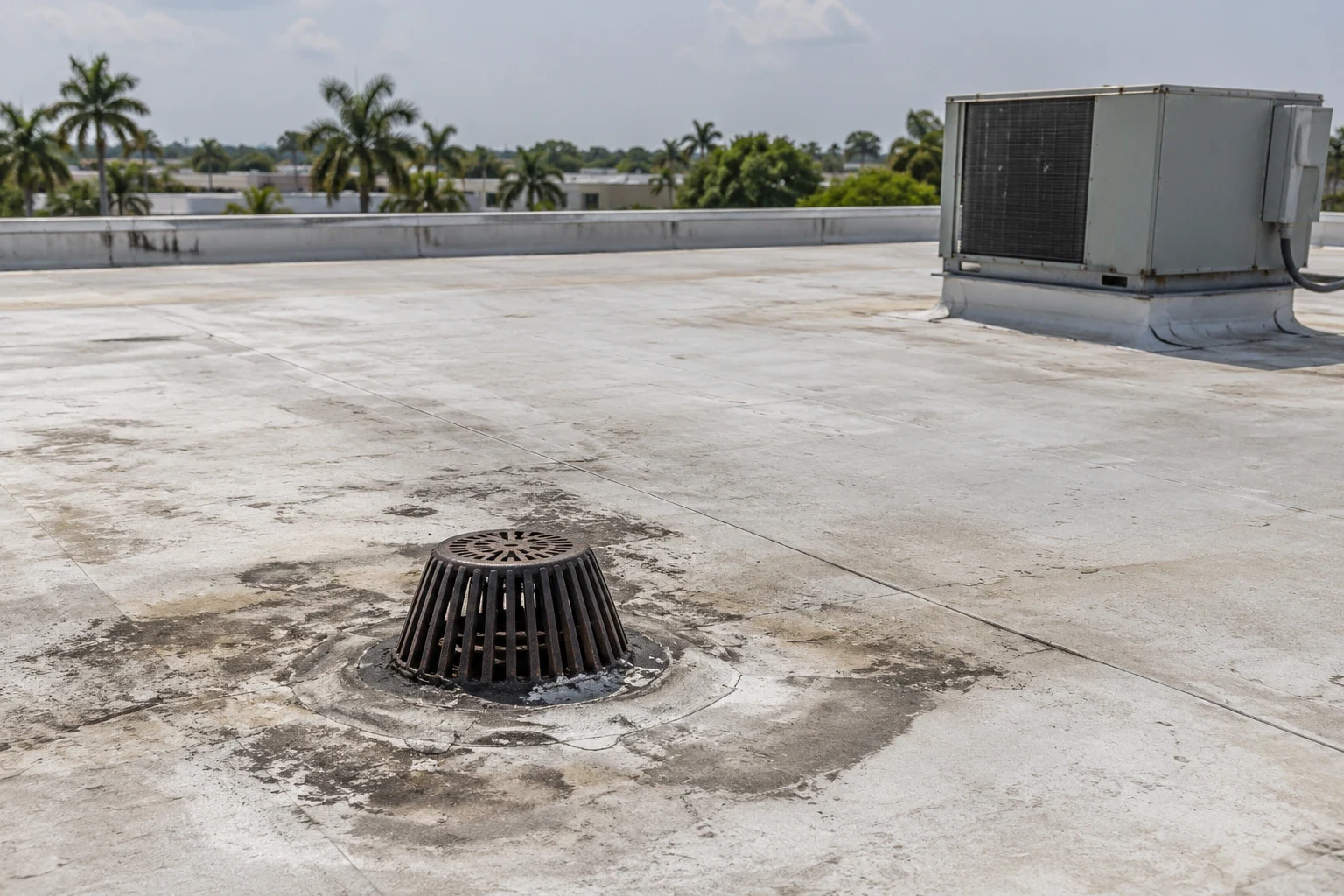
Drainage ties these loads together. Every roof gets its strainers, scuppers, overflow openings and approach slopes checked, because one clogged outlet can turn an ordinary downpour into ponding within minutes. Drain and scupper repair is scoped when an outlet or the surface around it contributes to the condition.
Warehouse and Light-Industrial Roofs Near the Railway
The area near the eastern FEC Railway holds warehouse and light-industrial uses, and those roofs ask different questions. Wide spans can deflect, and a shallow dip between supports collects water; dock-side edges take the weight of moving equipment and traffic; large skylights or roof hatches add curb details that leak when sealant dries out.
- Ponding depth between supports and how long water remains
- Dock-side edge metal, gutters and downspout discharge
- Curb flashing at hatches and skylights
- Condition of seams where service traffic walks
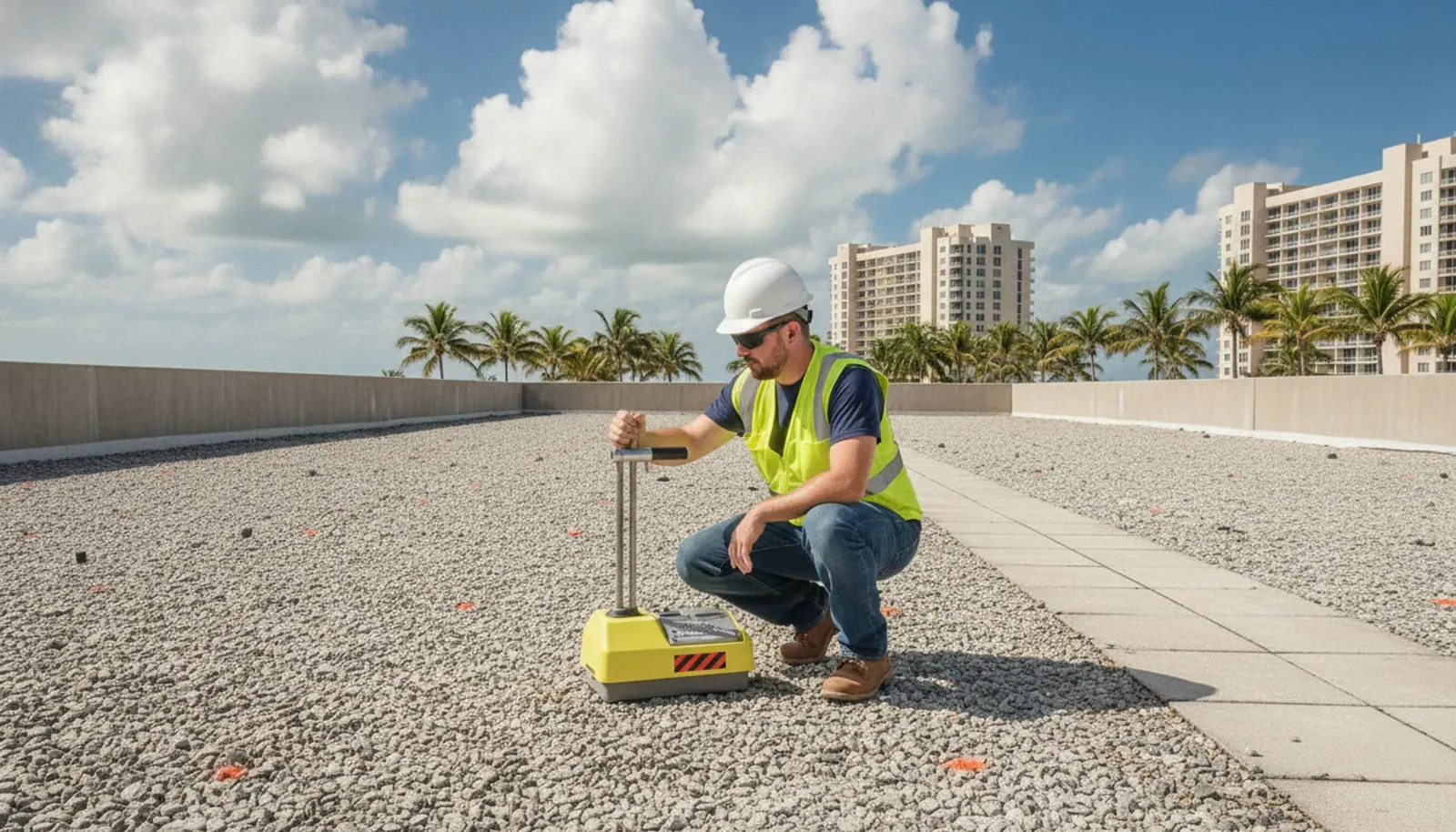
Where wet insulation is suspected, an infrared moisture survey can mark the areas before anything is opened, so the repair is limited to what readings support.
Restaurant roofs get their own checklist: grease staining around exhaust fans, softened or tacky membrane near outlets, loose fan covers, and drain strainers that collect kitchen debris. A film of grease also keeps new patches from bonding, so cleaning to sound material comes before any repair.
Choosing Between Repair, Coating and Replacement
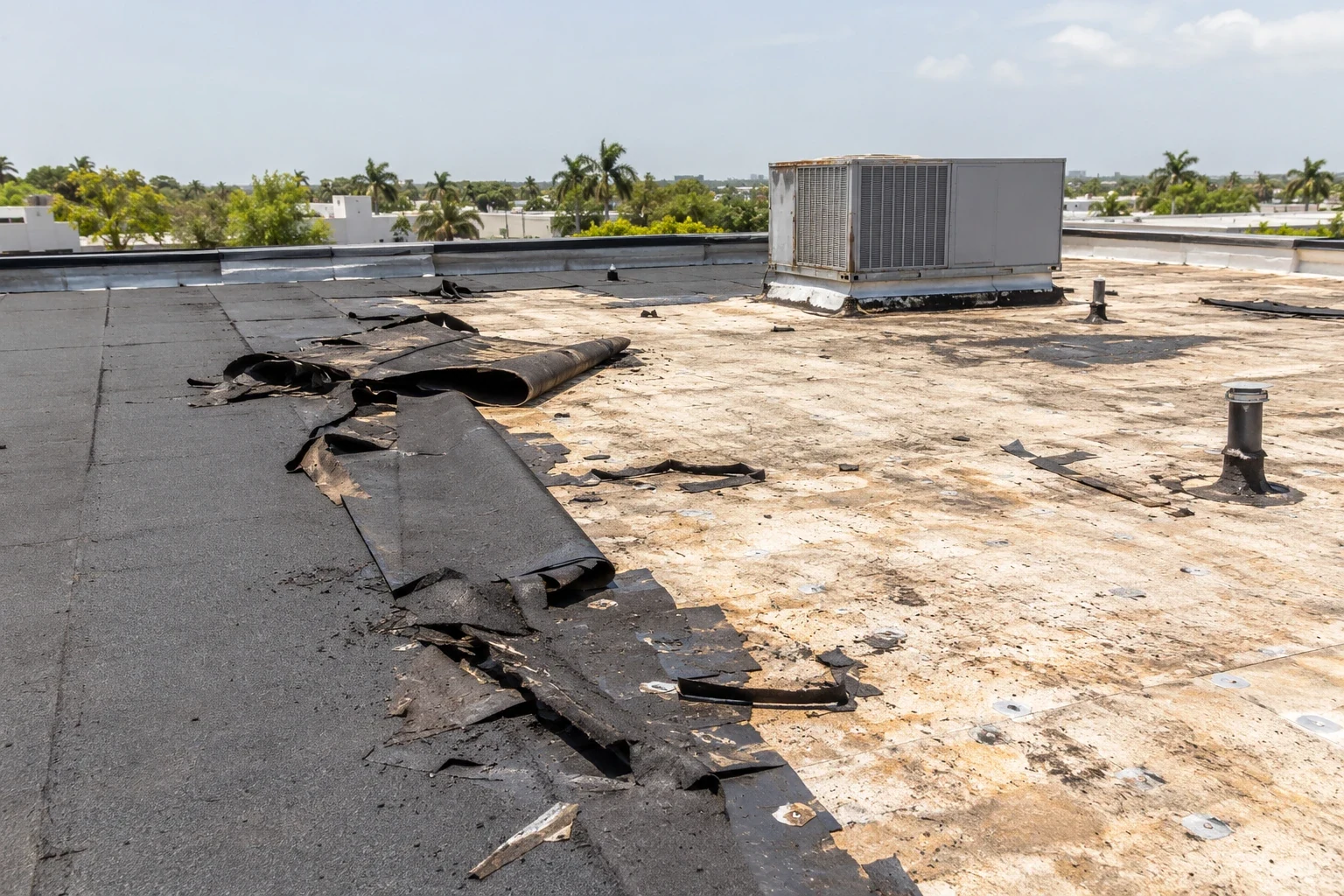
A repair suits a roof with a confirmed defect and sound surroundings. A coating suits a roof whose membrane is dry, attached and repairable once seams and flashings are corrected. Replacement or a recover suits a roof where moisture, attachment or deck findings extend beyond a local boundary. Our roof coating restoration and replacement proposals list the evidence for each recommendation.
Access, roof area, penetration count, wet-area extent, deck condition and tenant schedules drive both timing and cost. A restaurant cannot lose its kitchen for a morning without notice, and a warehouse cannot lose its docks, so the schedule is part of the scope and not an afterthought.
Staging Around Open Storefronts and Docks
Commercial frontage keeps its doors open, so the roof plan starts with how people and trucks reach the building. We choose a lift position away from entrances and customer parking, fence the drop zone and set noisy tear-off for the hours the owner picks. For a warehouse, the work is divided into sections that dry in before the dock closes for the day, and material arrives when the yard is quiet.
Roof access is its own question. We confirm where the hatch or ladder sits, whether the route crosses a tenant's space and whether a shared roof needs notice to neighbors. The daily plan is written down: work area, hours and a contact who can stop the job if a problem shows up below.
Maintenance Records and Plan Review
A roof file for a Central City property should hold the condition report, photographs, repair history, drain-cleaning notes and permit paperwork. According to the state building commission, the Florida Building Code, 8th Edition (2023), has been in effect since December 31, 2023, and the local building department checks reroof permits against it. We prepare scope documents with those requirements in mind and keep stage photographs so the file shows what was removed and what was added.
Owners with buildings in the Northwest Regional Activity Center or in West Oakland Park Boulevard Corridor can use the same record format. A preventive maintenance plan keeps outlets clear before the wet season.