Need this roof reviewed?
Commercial roofing for churches in Hollywood, FL, with leak tracing, worship-schedule coordination and phased repairs for occupied buildings.
A leak above a gathering room can force a change to a service schedule before the roof scope is clear. Churches and houses of worship often combine assembly, office, education and community uses, so one roof opening can affect several activities. In Hollywood, FL, June and September precipitation normals exceed eight inches each, making drainage and flashing transitions practical inspection points. We trace the water path, protect the occupied area and show the property manager which work can be completed between scheduled uses.
Work between scheduled gatherings
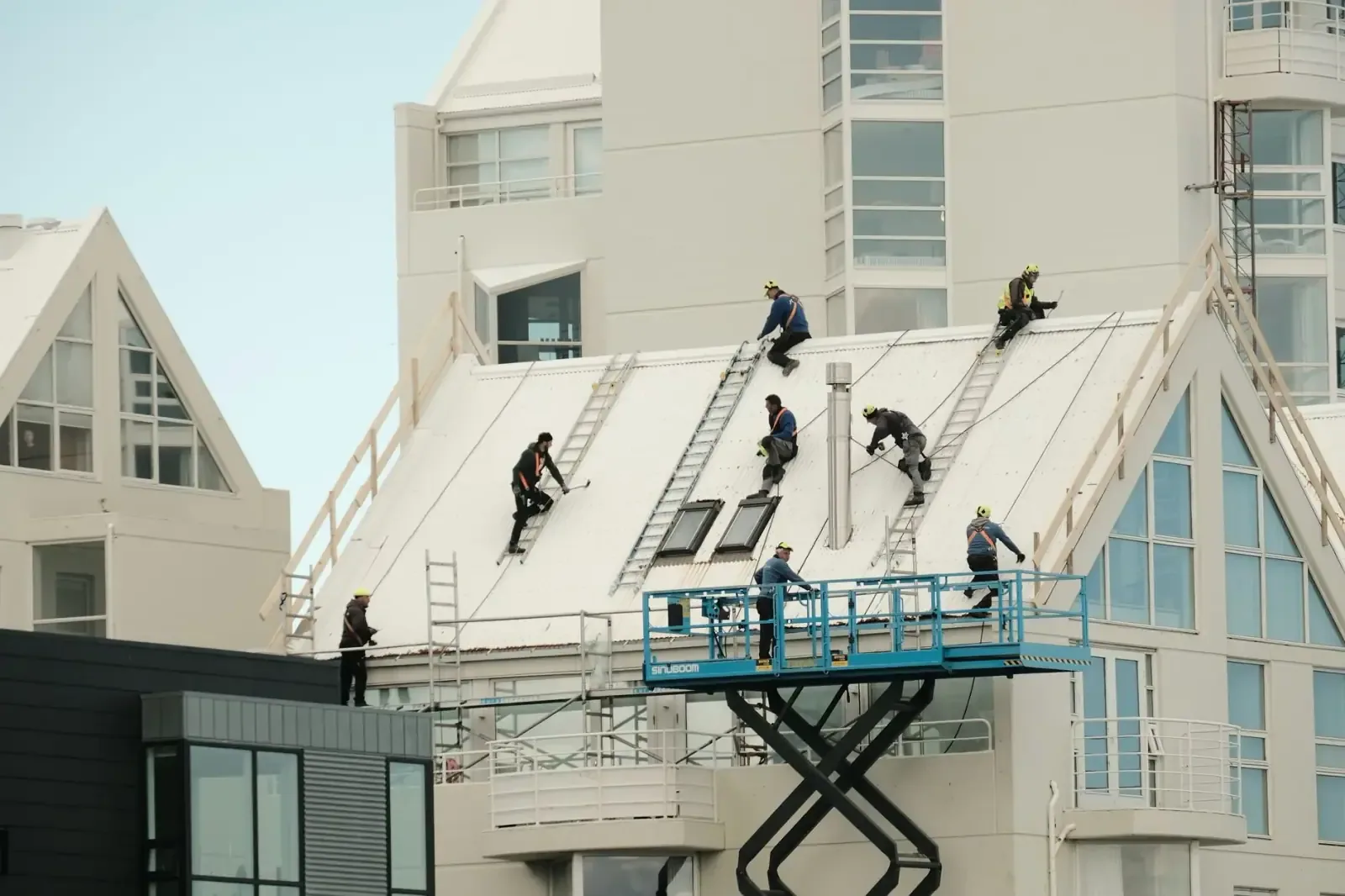
Access planning starts with the building calendar, roof access and areas that need to remain open. We identify entrances, assembly rooms, classrooms, kitchens and office areas below the work, then map hoisting and debris movement. The phase plan can reserve noisy work for a suitable window and identify rooms that need notice. A dry-in limit is set before each opening so the building can return to normal use.
Where water appears above a gathering area, we compare the interior mark with roof seams, drains, penetrations and previous repairs. Water may move across insulation before it reaches a ceiling, so a stain does not define the repair boundary. We photograph the roof and interior location, then use a commercial roof inspection to establish what is visible and where selective testing may help. If an active leak needs immediate protection, an emergency repair response can secure the area while the permanent scope is prepared.
Check the roof above each room
A worship building may have different roof areas over the sanctuary, offices, classrooms or additions. Their transitions can move differently and carry separate drainage paths. We inspect membrane seams, metal joints, parapets, valleys, curbs and penetrations, and note where a roof plane changes height or material. The report keeps each observation tied to a roof location rather than treating the entire property as one uniform surface.
At a membrane edge, loose termination or open flashing may let water reach insulation or the deck. Around equipment, movement at a curb can split the detail. A perimeter metal review or penetration flashing repair is scoped to the connection that failed. We inspect adjacent layers to determine whether the work remains a detail repair or extends into the field.
Read drainage during rainy months
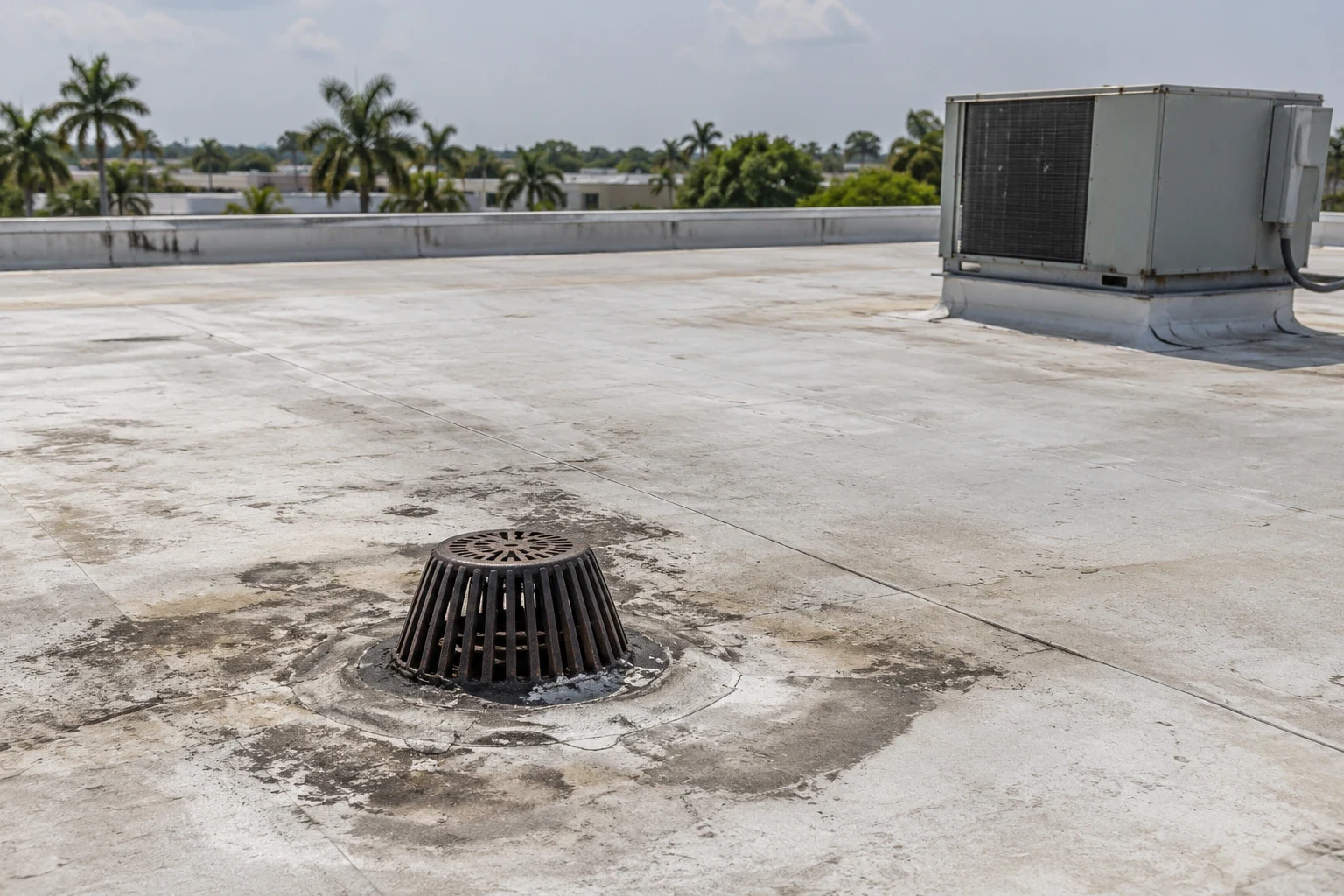
NOAA's Hollywood station records 8.84 inches of normal precipitation in June and 8.67 inches in September. Those monthly averages make outlets and overflow routes worth checking before a leak develops. We look at strainers, bowls, scuppers, the surrounding membrane and whether the slope leads water toward the intended discharge point. A clear drain may still sit in a low area that holds water after the rain ends.
The city's stormwater program studies how rainfall and tides interact in flood-risk modeling, so we trace each downspout to where it discharges and report any low discharge point to the owner. A drain and scupper scope can then address an outlet or transition that holds water. In the Historic Hollywood business district, centered on Hollywood Boulevard between 21st Avenue and Young Circle, that discharge check is made at the outlet, not assumed from the street.
Respect existing materials and details
The Harrison and Tyler historic districts include residential, commercial and mixed-use properties, many reflecting architectural styles popular in the 1920s. Where a worship property sits in or near one of them, we ask for existing photographs and prior roof plans, because the assembly on the roof, not the architectural style, decides the repair. When a building has distinctive metal or masonry transitions, we identify the details that must remain intact. Existing photographs or prior roof plans help track what was installed and where later work changed a connection.
Repair materials need to be compatible with the roof that is present. We clean and prepare a sound surface, replace failed flashing and restore continuity at seams without hiding a movement problem beneath another layer. A standing seam metal system has different attachment and panel details from a membrane roof. We record the system found before recommending a repair, recover or full replacement.
Compare localized work and replacement
A limited leak may need a repair when the surrounding membrane, insulation and substrate are sound. If wet material continues beneath a wider area, a patch alone can leave the source of future damage in place. We use survey indications and selective openings to map moisture, then distinguish affected layers from material that can remain. The proposal states its assumptions and separates temporary protection from permanent work.
A recover is considered when the existing assembly is dry, stable, attached and compatible with the proposed system. Where those conditions are not present, removal may be necessary. The recover evaluation describes what stays in place; a replacement scope defines removal, drainage corrections and detail transitions. A property with multiple roof sections can be phased so funding and building schedules remain manageable.
Use a report for the next decision
A useful recommendation identifies the leak location, roof assembly, observed condition and action. The same occupied-building planning applies on senior living roofs and hospital roofs, where the work plan is also matched to an operating schedule. We include photographs, test locations, access limitations and any remaining question that could change the work. The congregation or property committee can then compare immediate repair with capital work using the same information. A condition report keeps the record organized for later maintenance and review.
For a house of worship in Downtown Hollywood or near the Johnson Street Business District, a stretch of Johnson Street from 56th Avenue out to US-441, the first step is a roof walk with the building's own plans and leak history in hand. Emergency response is available at any hour, including weekends and holidays. Share the roof plan, schedule and leak history, and we will define the first condition that needs attention.

