Need this roof reviewed?
Roof repair, recover, coating and replacement for one-story commercial buildings in the Gateway East area along East Hallandale Beach Boulevard, FL.
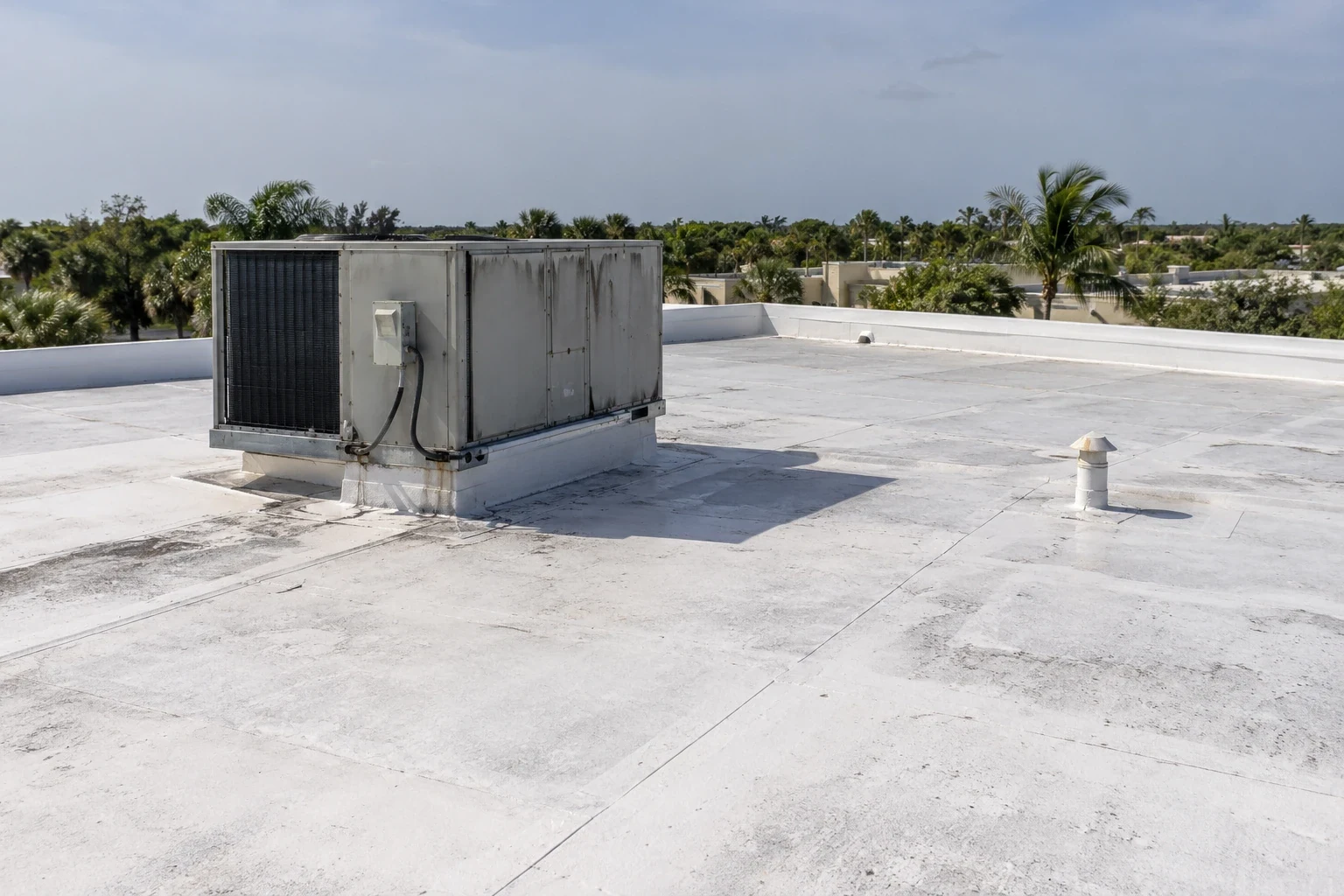
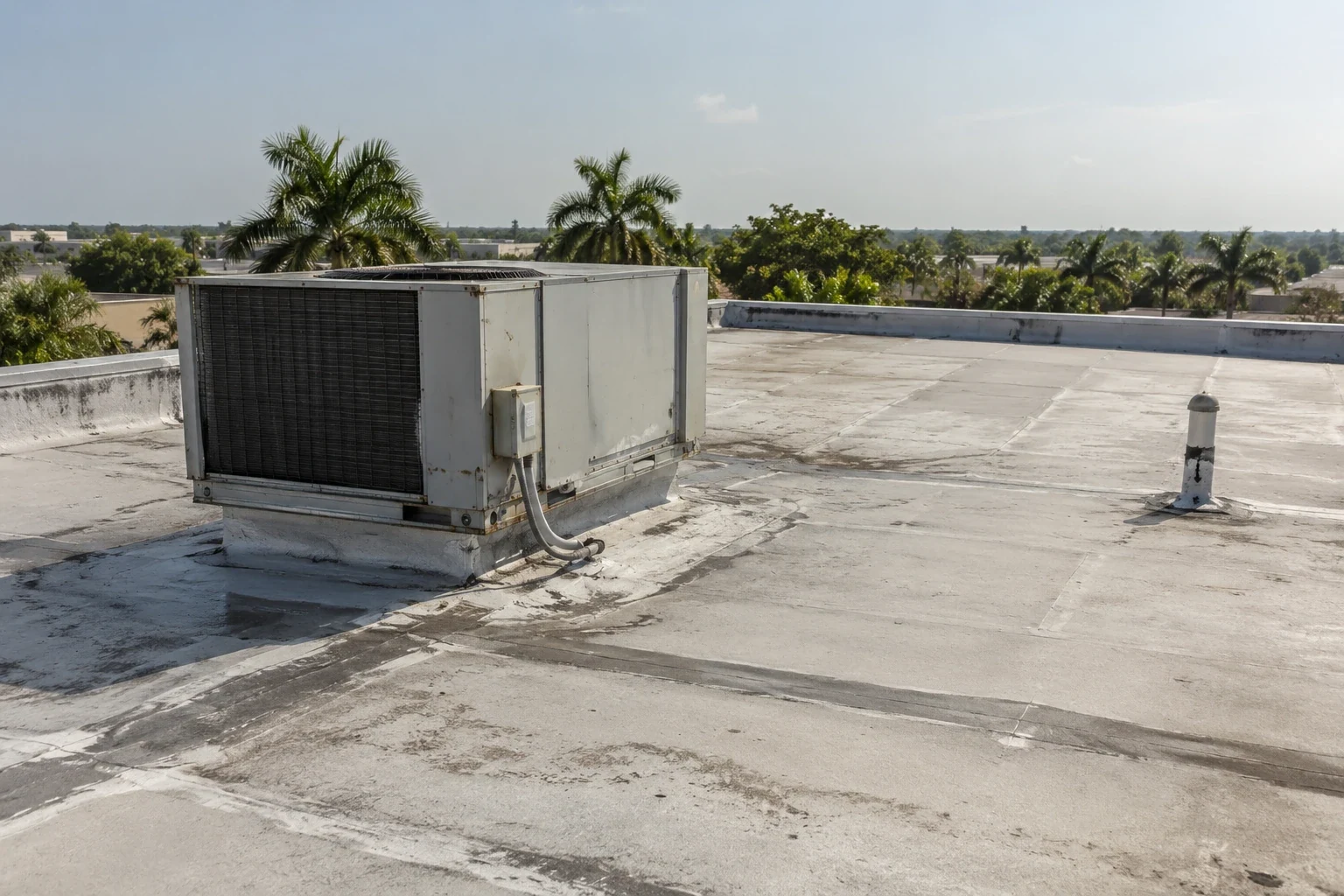
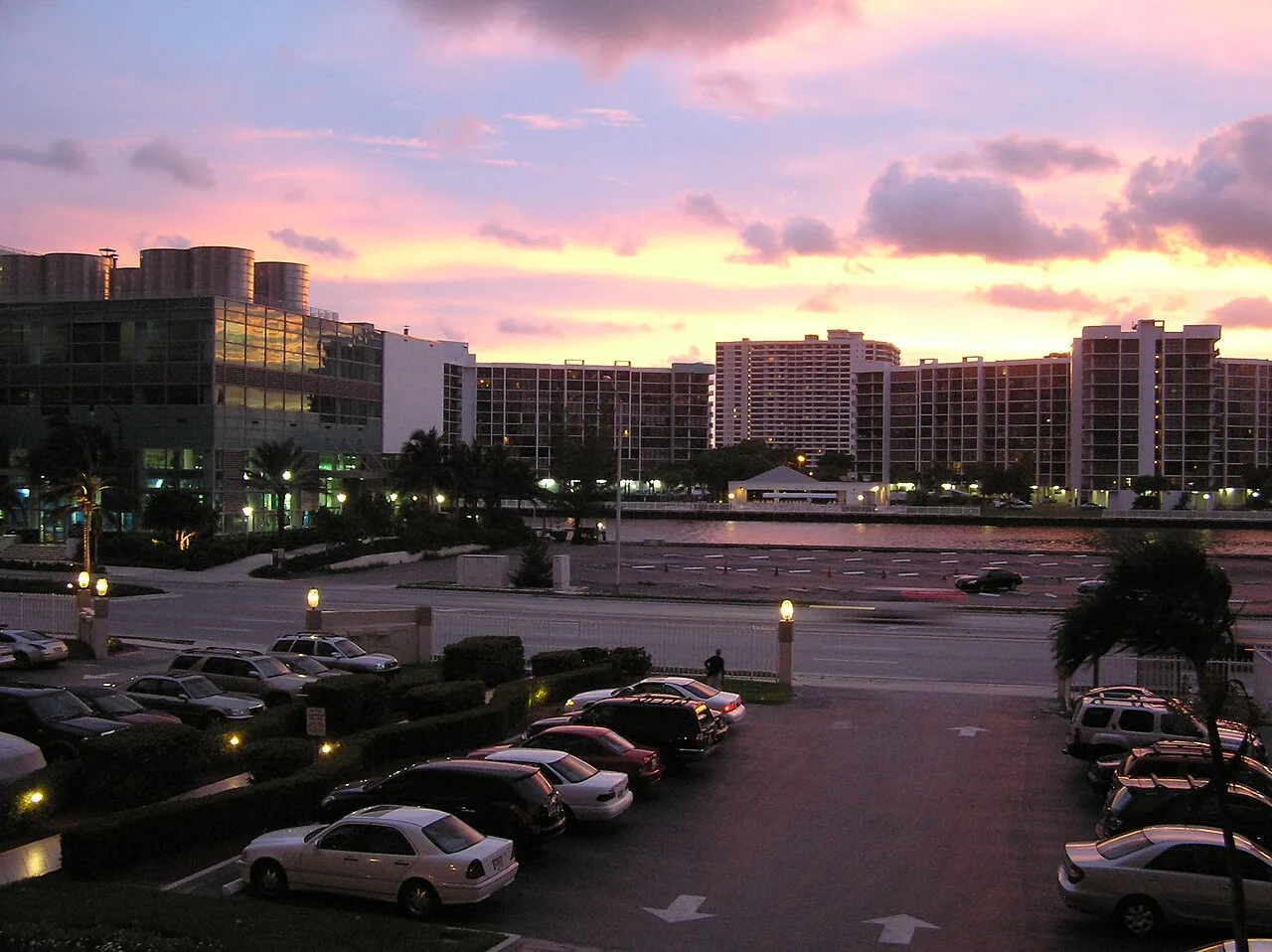
A one-story commercial building has more roof than it has anything else. Walls are short and nearly all the weather lands on a single flat surface. Hallandale Beach's master plan describes Gateway East as building on the existing commercial uses along East Hallandale Beach Boulevard and characterizes much of the area as one-story buildings set behind surface parking. Roofs of that shape are what we look at first in the area: low-slope membranes, rooftop units, edge metal and drains on buildings whose owners need the roof to stay quiet so the tenants can stay busy.
Why a One-Story Roof Works Harder
On a tall building, a roof is a small cap on a large structure. On a one-story retail or service building, the roof is the main exposed surface. It takes the sun all day, receives every shower directly and has penetrations, such as exhaust fans, plumbing vents and air handlers, spread across a large flat area. Each one is a place where flashing has to hold.
Because the roof is close to the ground, it also takes impact. Debris blown from the parking lot, ladders leaned on parapets and service technicians stepping off access hatches all leave marks on the membrane. We look for scuffs, punctures and thin spots, especially around rooftop equipment, where foot traffic concentrates. Walkway pads and protective boards at those routes are a modest addition that prevents repeat damage.
Edges deserve the same attention. On a flat roof with short parapets, the coping or edge metal is the first line against wind-driven rain, and a loose cleat or open joint lets water behind the membrane. We press-test metal, check fastener spacing and look at the sealant bead along every termination. Fixing an open edge early is a small job, and leaving it open lets water travel under the membrane and wet the insulation below.
Parking-Lot Heat and Summer Rain
A roof behind a large paved lot sits in a warm setting, and paved surfaces hold and re-radiate heat after sunset. Hollywood's normals show an August high near 89.9 degrees on average, and a roof surface runs well above that when the sun is high. Thermal movement from that daily swing opens seams on older membranes and cracks sealant at flashing terminations.
Rain follows the heat. June and September bring about 8.8 and 8.7 inches of rain on average in Hollywood, and the heaviest weather of South Florida's wet season arrives between mid-May and early July, when flooding, hail, lightning, tornadoes and damaging winds are most likely. On a flat roof, short-term downpours test every outlet at once. We check strainers, sumps and scuppers and measure ponding depth after rain to learn whether the drainage plane works in practice and not only on a drawing.
Repair, Coating or Tear-Off on a One-Story Roof
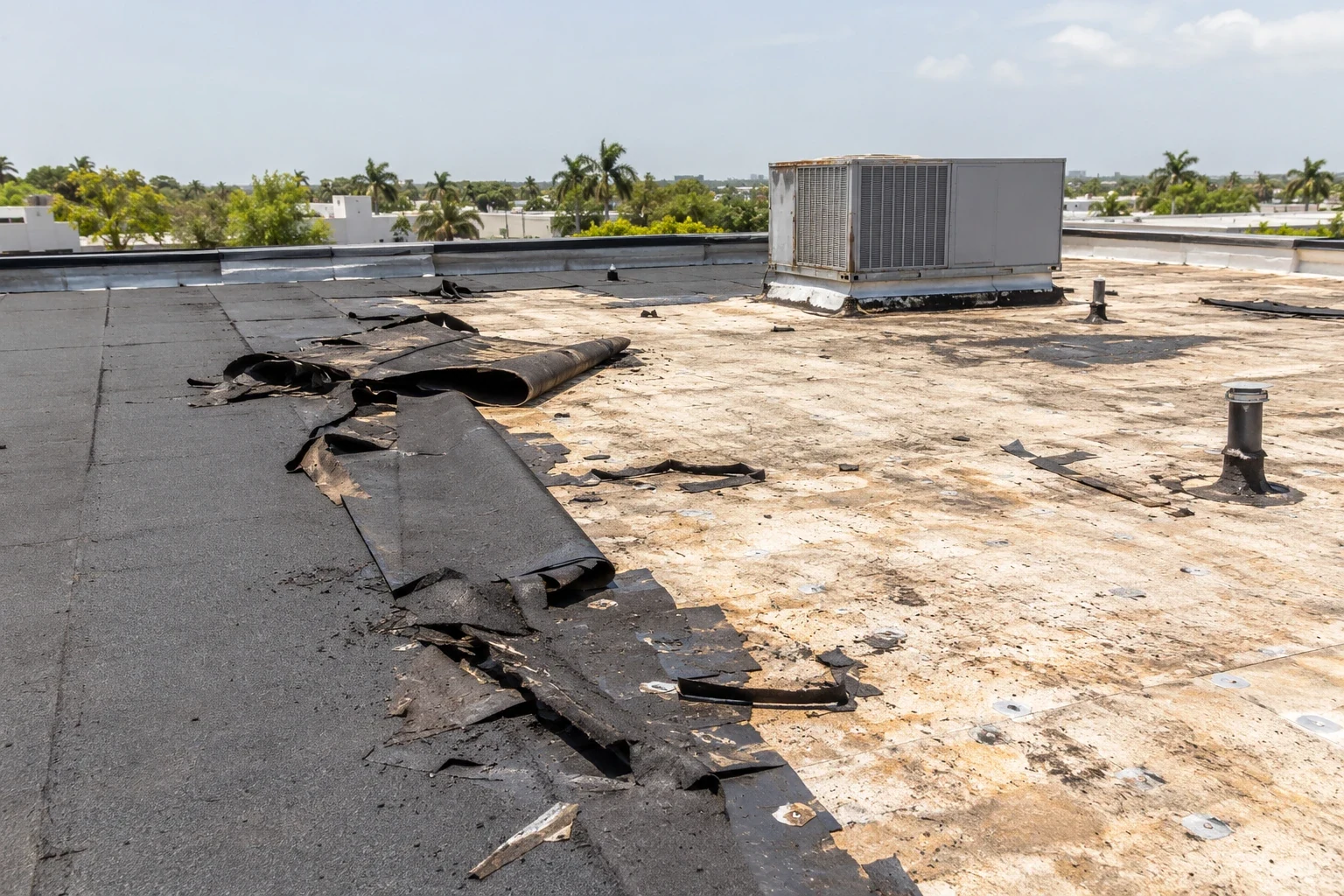
A one-story building keeps the options easy to compare. Where the membrane is dry and sound, a roof coating restores reflectivity and seals hairline cracks without the tear-off a replacement needs. Where seams have opened or flashing has pulled, a targeted repair addresses the defect and keeps the rest in service. Where moisture has reached the insulation across a large share of the roof, replacement is more practical than patching.
The decision turns on moisture, age and the number of penetrations. We measure moisture with a meter or an infrared scan, count the penetrations and then write the options in order of scope. A property owner can see what each path covers, what it leaves open and when the next decision point would arrive. For roofs on a single-tenant building, a recover over an existing dry membrane is often worth pricing too, since it avoids tear-off and disposal.
Edge and drain upgrades often fit inside any of the three paths. New edge metal, larger sumps or an added scupper can be priced as separate line items, which lets an owner stage the work across budget periods without giving up the larger plan.
Mixed-Use Plans and the Holding Period
The master plan's redevelopment strategy for Gateway East is mixed-use development with a significant residential component. A plan like that signals long-term change, but it does not set a date for any specific property. Owners with a lease in place need a roof that performs through that lease, and owners thinking about selling or redeveloping need a roof that does not become a negotiation problem.
We help by documenting roof condition in a form a buyer, lender or tenant can read: system type, approximate age, drain layout, repair history and moisture findings. If the site later changes, the record shows what was fixed and what remained. If the site stays, the same record guides a planned replacement at the right moment.
Keeping Shops Open During Roof Work
Retail and service tenants rely on foot traffic, so we schedule around opening hours and customer flow. We stage materials away from entrances, protect air intakes, cap exhaust where needed and divide the roof into sections so each is closed before we leave. For noisy work, we agree on windows with the property manager so that appointments and meetings are not interrupted.
Where parking is tight, deliveries and dumpsters are positioned to leave customer spaces open. A crew that arrives with a plan for lifts, debris and safety fencing keeps the site orderly. After the work, we walk the roof with the manager, record the finished conditions in photographs and review any follow-up items.
Rooftop equipment needs coordination too. If a tenant's air handler has to be shut down or lifted for flashing work, we schedule it with the tenant's service contractor so the unit is back online the same day. Refrigerant lines, conduit and gas pipes are protected while the new flashing is installed, and each penetration is photographed once sealed.
Nearby Districts and Ongoing Care
Owners with properties across the city can group roofs by area. The same condition report format works for buildings in Hallandale Beach, the Gateway West area and the Town Center area, so a manager can compare roofs and spend where it matters most. Scheduling preventive maintenance before the wet season clears drains and resets loose flashing before the heaviest rain.
Related Roofing Topics

