Need this roof reviewed?
Commercial roof repair, replacement, coating and maintenance for buildings near the I-95 exit in the Gateway West area of Hallandale Beach, FL.
A roof beside a major highway collects more grit and soot than one on a quiet street, and the grit ends up in the drains. Hallandale Beach's master plan describes Gateway West as one-story commercial properties with surface parking adjacent to I-95, and it envisions higher-density mixed-use development reached from the I-95 exit, with a mix that would favor office and hotel uses. We repair, replace, recover and coat the low-slope and metal roofs on commercial buildings in this part of the city, and we pay close attention to the conditions highway-side buildings create: dirt on membranes, clogged drains and equipment that runs all day.
Dust, Exhaust and Drainage Near a Major Roadway
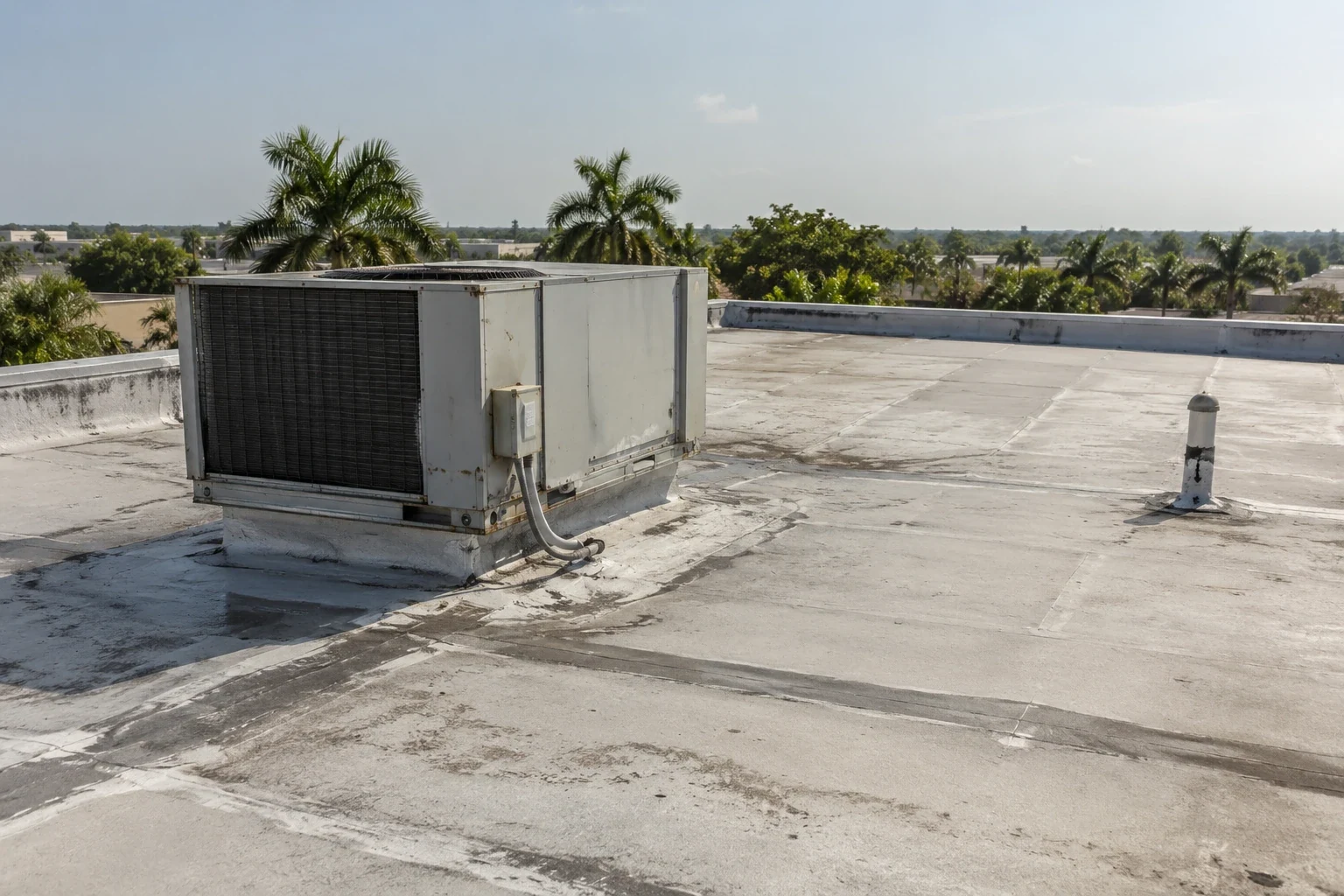
Buildings next to a busy interstate collect fine grit and soot, which settle on roof surfaces and in drains. Dirt darkens a reflective membrane and lowers its ability to shed heat, and it packs into strainers where it can hold water at the outlet. We inspect for that film, clean the surface if the membrane allows and replace or add strainers when the existing ones have lost their shape.
The weather adds its own load. Hollywood's normals give an August high of 89.9 degrees on average, with rain near 8.8 inches in June and 8.7 in September. During South Florida's stormiest weeks, from mid-May to early July by the National Weather Service's account, damaging winds, tornadoes, lightning, hail and flooding all become more likely, so a flat roof near the highway benefits from clear drains and secure edges before those weeks begin.
Wind-driven rain adds one more wrinkle on open sites. Where a building stands in the open, with little around it to break the gusts, the roof edge takes the full force. Perimeter flashing, coping joints and fastener rows along the edge are where uplift begins, and we examine them closely. An open joint in edge metal is easy to miss from the ground and lets water behind the membrane within a single storm.
One-Story Commercial Roofs Today, Office and Hotel Roofs Tomorrow
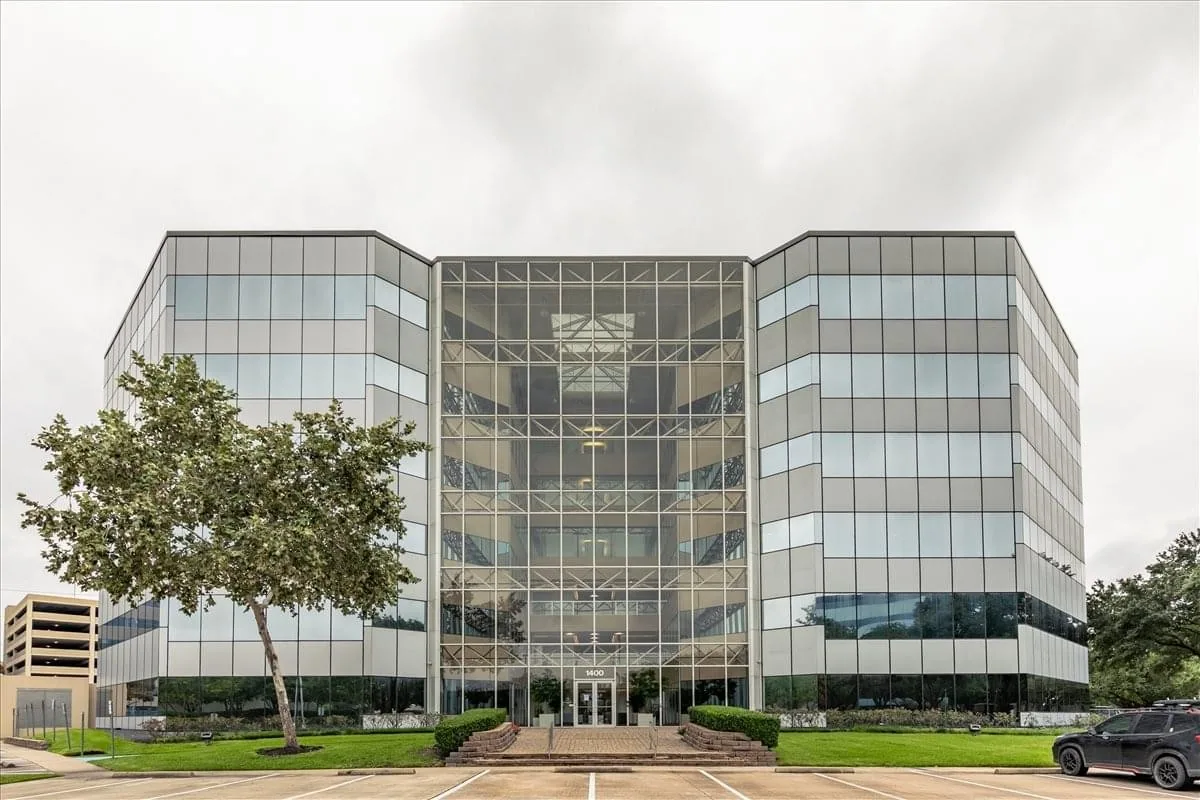
The existing buildings are described as one-story commercial properties, so the immediate roof work is low-slope membranes, edge metal and equipment flashing. The plan's future vision favors office and hotel development, which brings different roof needs: larger mechanical equipment, more drains and parapets, rooftop amenity or service areas and tighter requirements for noise and water control over occupied rooms.
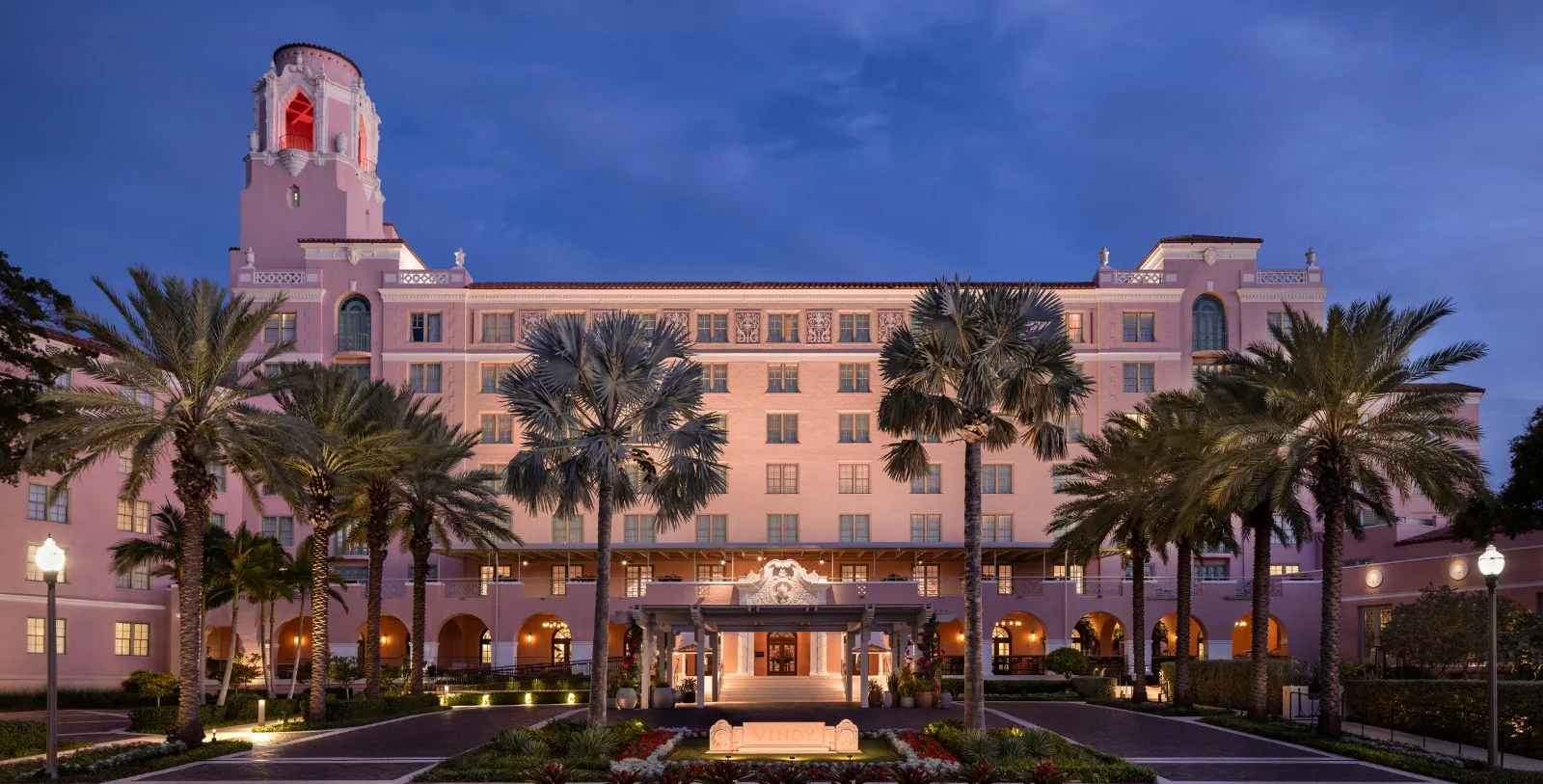
We do not need to guess at the future to plan the present. A roof installed now should be chosen for the length of time the owner expects to hold the building, and it should be documented so that a buyer or developer can see its condition. For hotel and office roofs when they arrive, we handle hotel roofing and office building roofing with the same discipline of drainage, flashing and records.
What We Record on the First Walk
We begin at the outlets and perimeter, then cover the field. We note the membrane type, seam condition, any ponding and the locations of every penetration. Core samples, moisture readings or an infrared scan follow when the surface suggests trapped water. The final written report includes photographs, a roof sketch with locations marked and a recommended scope.
- Drain and scupper function and strainer condition
- Membrane seams, laps and surface wear
- Flashing at parapets, curbs and pipes
- Coping, edge metal and sealant joints
- Rooftop equipment supports and refrigerant line penetrations
The report separates urgent items from planned ones, so a manager can fix leaks now and budget for the larger decision. It also records what we did not reach, such as areas blocked by equipment, so no one assumes a spot was cleared when it was not.
Where leaks are reported but not visible, we compare the interior stain pattern with the roof layout and look upslope for the likely entry. Water often travels along the deck or between insulation boards before dripping, so the stain may sit several feet from the opening. Tracing that route is the difference between a repair that holds and a second call.
Matching the Roof Decision to the Plan for the Site
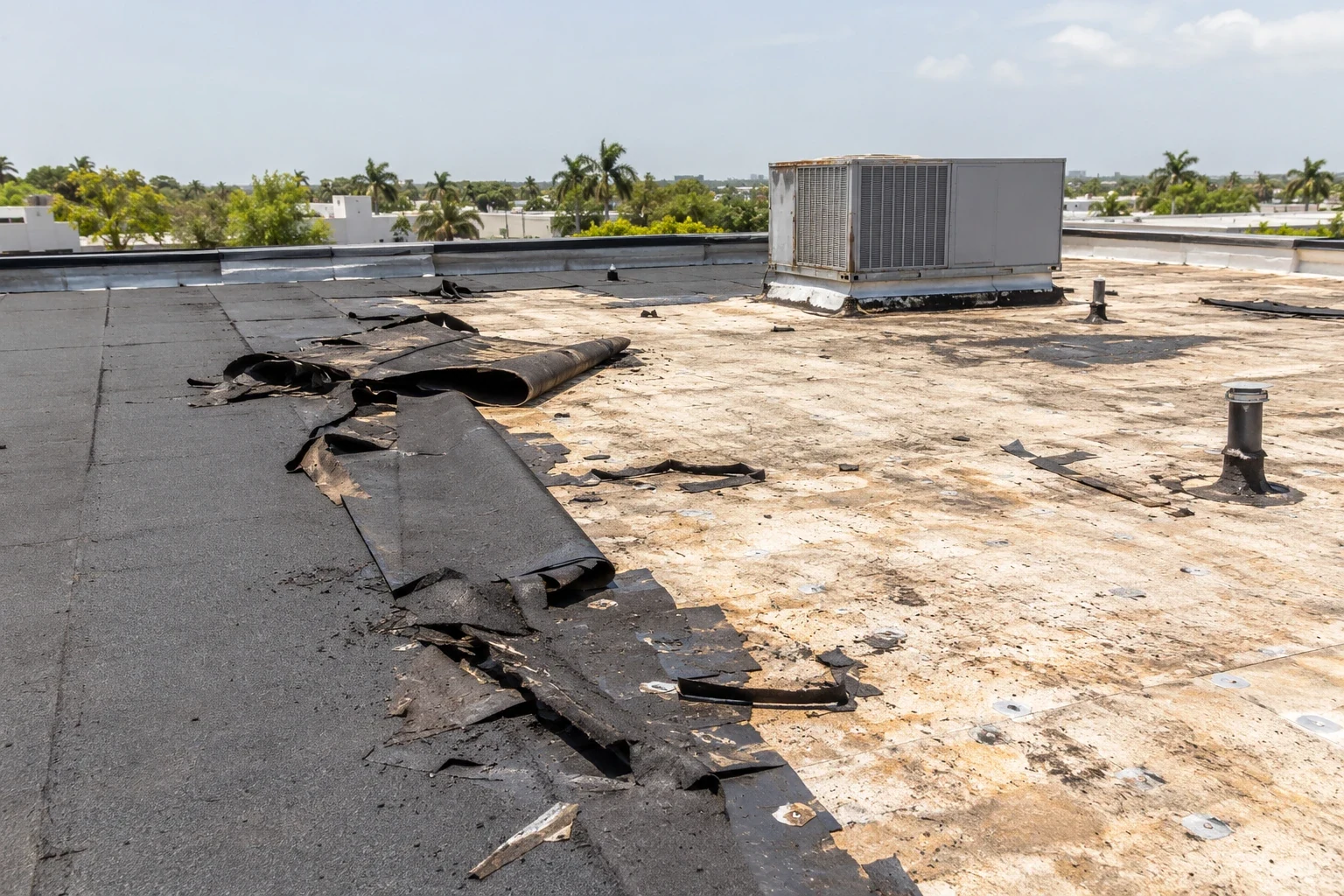
For a one-story building that may be redeveloped in some years, the cost of a long-life system may not pay back in the time the owner holds it. A repair with a new coating can bring the roof through a lease term. For a building the owner intends to keep, a full replacement with new insulation, corrected slope and a heat-welded membrane gives a longer service life and reduces annual repair calls.
The question is not which option is best in the abstract. It is which option suits the building, the lease schedule and the owner's capital plan. We write each with scope, expected performance and the conditions that would trigger the next decision, so the owner can compare them directly.
Insulation is part of that comparison. Adding a layer of polyiso or a cover board during replacement improves thermal performance and gives the membrane a firmer base, which matters in a place where daily heat and sudden downpours take turns. A cover board also resists damage from foot traffic around rooftop equipment. The added material raises the first cost, so we show the owner what it adds and what it replaces.
Access, Safety and Tenant Coordination
Surface lots next to a highway fill and empty with customers and deliveries, so we agree on lift locations, staging areas and work hours before we begin. Tear-off and fastening are scheduled for quieter periods. We protect air intakes and plan temporary dry-in at the end of each work section, since rain in this region arrives with little warning.
When rooftop equipment belongs to tenants, we contact their service companies for shutdown and restart. Electrical and refrigerant lines are protected during flashing work. Every day ends with debris cleared from the roof and the work area secured, and the manager receives photographs of the day's progress.
Hotels and offices, which this part of the city may eventually see, need quiet and clean work zones. When we reach that stage, we coordinate noise-sensitive tasks with building operations and protect lobbies and entrances from debris. For the one-story properties here today, the same discipline applies at a smaller scale.
Roofs Across the City and Beyond
Owners with several properties can use the same condition report across locations. We work in Hallandale Beach, in Gateway East and in Dania Beach, and a manager who tracks roofs across these areas gets the same layout every time. Pairing that with a seasonal maintenance visit keeps drains open and flashing tight before the wet season.
Related Roofing Topics

