Need this roof reviewed?
Warehouse and flex-space roof repair, coating, recover and replacement in the industrial parks of northwest Pembroke Pines, FL, near US-27 and I-75.
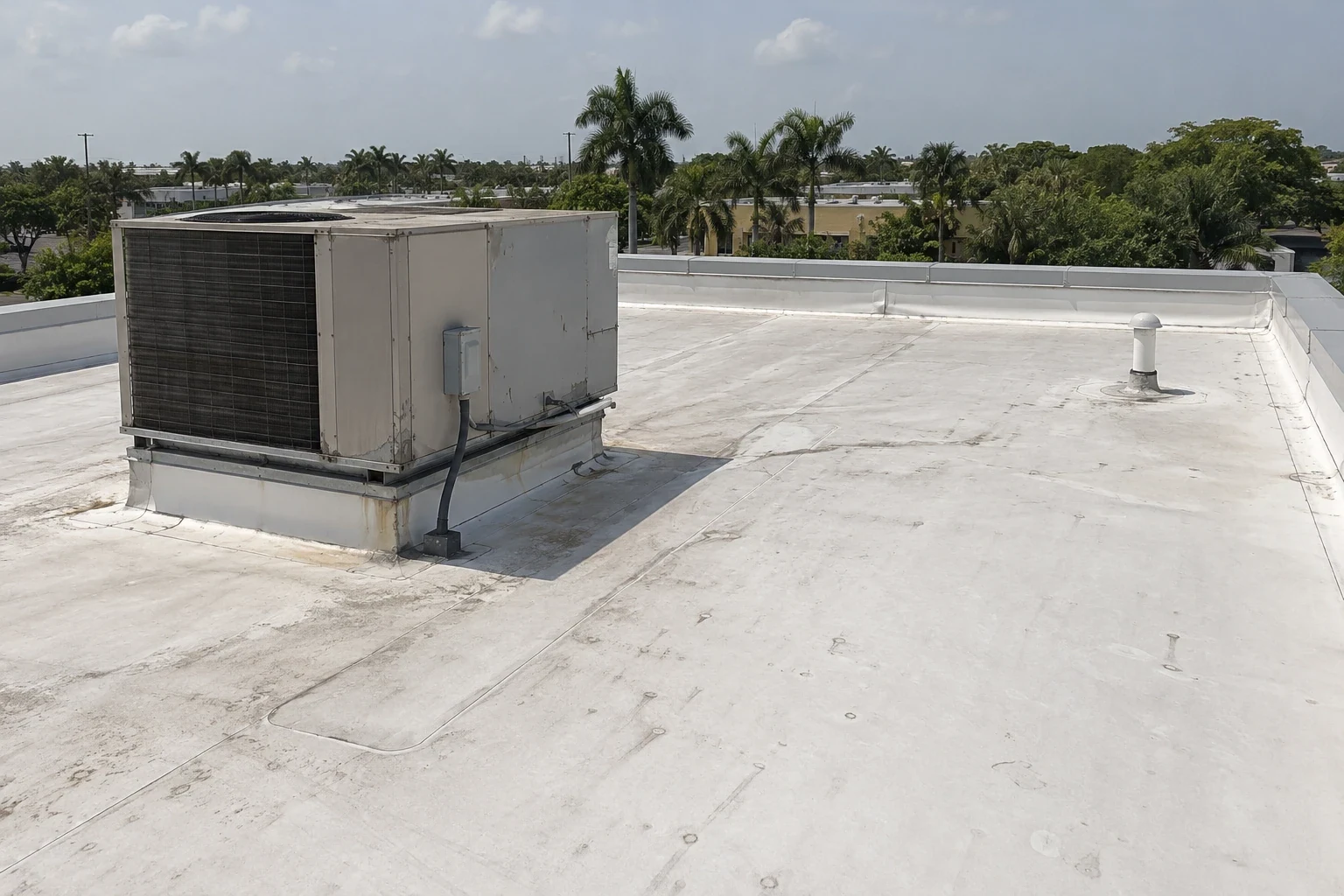
A warehouse roof spends its life doing one thing: keeping a very large floor dry. Nearly 600,000 square feet of industrial development, mostly in the northwest with access to US-27 and I-75, is what Pembroke Pines reports, and the city's industrial parks are part of that picture. We inspect, repair, coat, recover and replace low-slope and metal roofs on warehouse, flex and light-industrial buildings in these parks, and we begin by asking where water goes, how fast it leaves and what the building holds that cannot get wet.
Park Zoning and the Buildings That Result
The 300-acre Bergeron Park of Commerce and Industry carries general through limited heavy-industrial zoning, and the Chapel Trail Trade Center and Commerce Center include warehouse and flex-space uses within a planned unit development. Zoning that spans light to heavy industrial means different tenants may have different roof demands: some with ordinary storage, others with processes that produce heat, fumes or vibration.
We do not assume what any particular building has. The walk identifies the system, deck type and equipment, and the report describes conditions on the roof as they are. A flex building with offices in front and storage behind may have two different roof zones with different details, and the report treats them separately.
A planned unit development can come with shared drainage and common standards for appearance, which can affect what roof work is allowed. Owners in a planned unit development should check their governing documents for rules on rooftop equipment screening, color and drainage discharge before choosing a system. We write the roof scope so it answers those questions and can be handed to an association or property manager for approval.
Heat, Rain and Large-Area Drainage
Using Hollywood as the market city, NOAA normals give August an average high of 89.9 degrees and June and September rainfall of about 8.8 and 8.7 inches. On a large roof, those numbers have consequences. Heat produces significant thermal movement across long spans, loading seams, expansion joints and edge details. Rain concentrates quickly and must reach outlets before it ponds.
National Weather Service guidance puts the worst of South Florida's wet season between mid-May and early July, the stretch when damaging winds and tornadoes, lightning, hail and flooding are most likely. For a big roof, a clogged drain on that kind of day can leave a pond that stresses the structure and finds every weak seam. We count outlets against roof area, test flow and recommend added drains or overflow scuppers where the layout is thin.
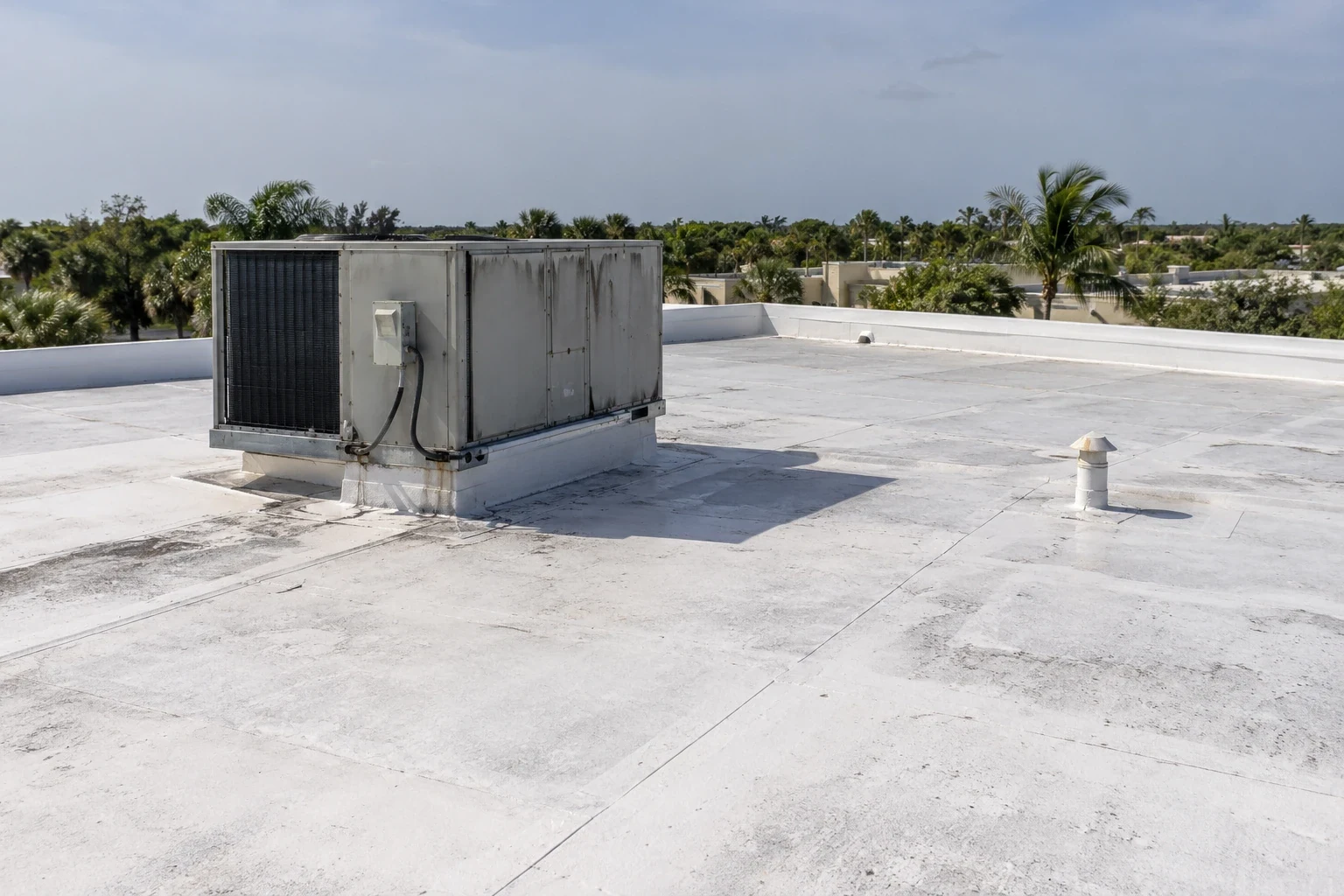
Heat also affects the people and goods under the roof. A warehouse with a dark, aging membrane can run noticeably hotter inside, which strains cooling equipment and, for stored products, raises temperature-related risk. A reflective membrane or coating lowers roof surface temperature, and added insulation slows the heat that gets through. We include those effects in the written options whenever the building holds temperature-sensitive stock.
Ponding Depth, Deflection and Tapered Fixes
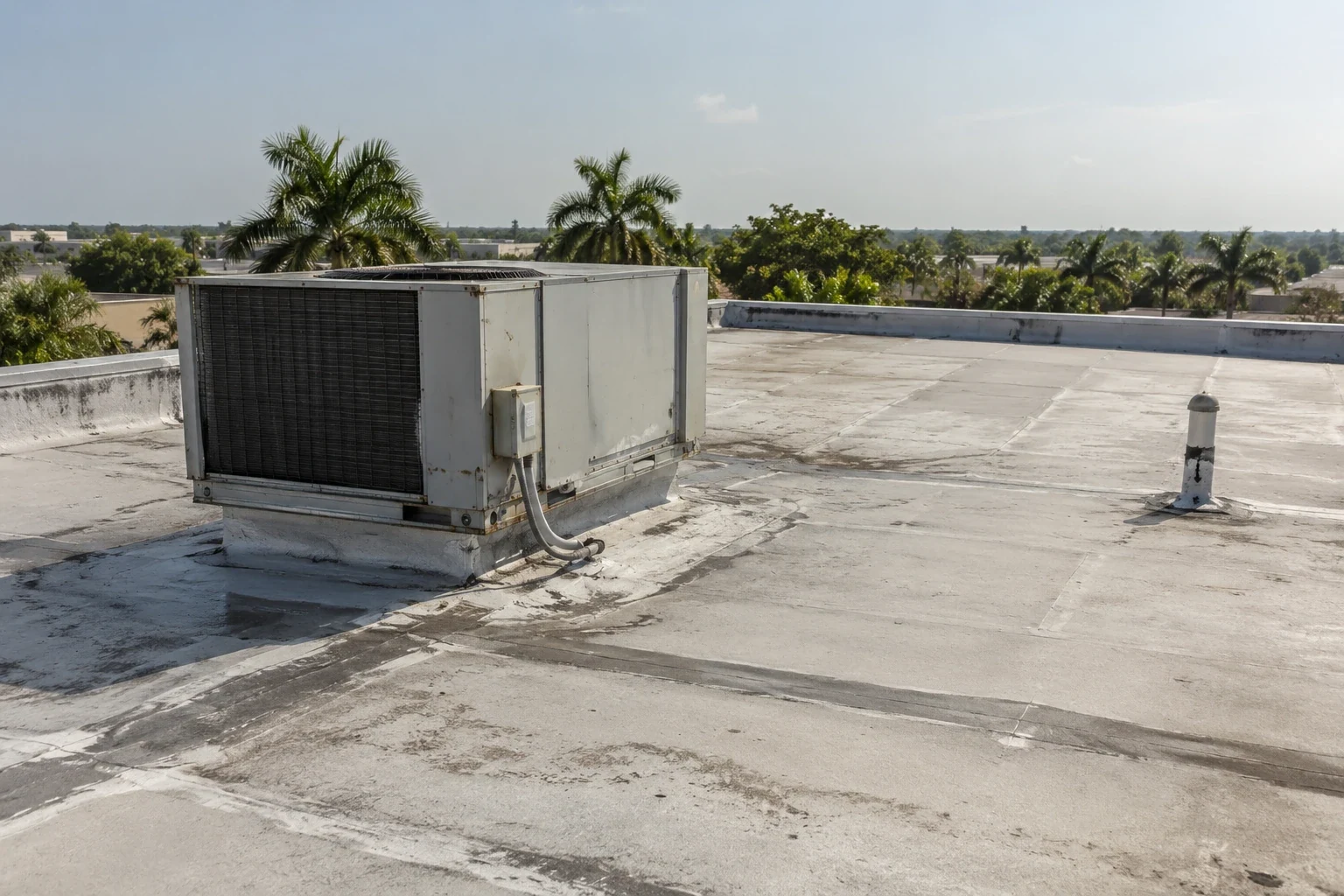
Long-span roof decks deflect slightly under their own load, and that can create shallow bowls between supports. Water that stands in those bowls adds weight and increases the deflection. We measure ponding depth and duration after rain and compare it with the deck layout.
Fixes range from cleaning and adding drains to tapered insulation that rebuilds slope over low areas. Tapered insulation is installed as part of a recover or replacement, and it can eliminate chronic ponding that no patch could. Where the structure itself is the issue, we say so and recommend that a structural engineer review the deck before any new load goes on it.
Drains deserve their own inspection on a roof this size. Internal drains connect to piping inside the building, and a blocked or cracked line can leak into the space below long after the roof surface looks dry. We check strainer condition, drain bowl seal and clamping ring, and where piping is accessible we note signs of past leaks. Cleaning and re-sealing a drain bowl is inexpensive compared with the damage from a water-filled line.
Membranes and Metal for Warehouse and Flex Roofs
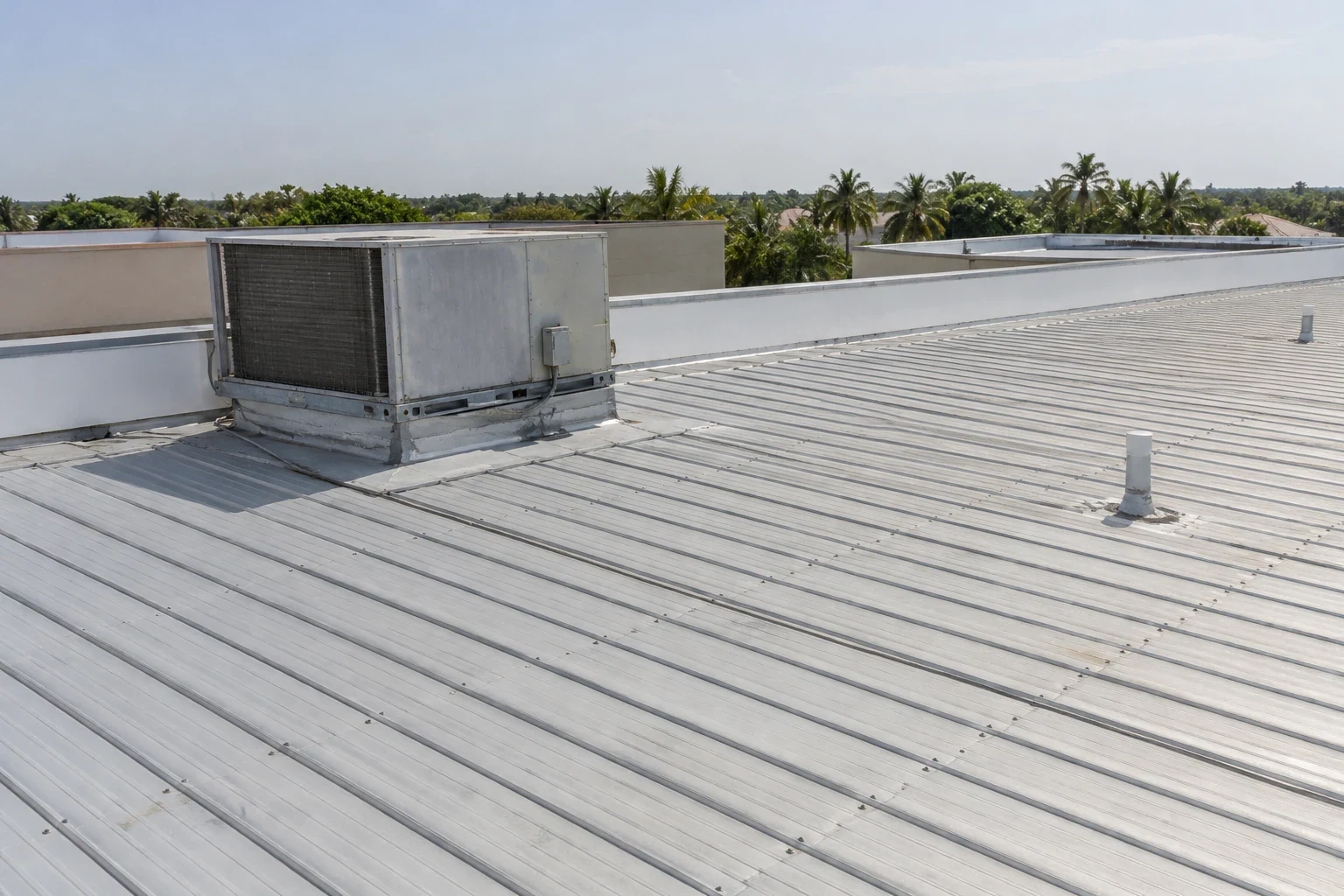
Single-ply membranes such as TPO are a common fit for large, simple roofs because heat-welded seams are fast to install and the white surface reflects sunlight. Modified bitumen and built-up roofs offer layered redundancy for roofs with heavier foot traffic. Standing seam metal sheds water quickly and handles long runs, but its life depends on fasteners, clips and seam condition. A metal roof retrofit can place new panels over an existing roof without tear-off when structure and clearances allow.
Choice depends on the existing deck, insulation, equipment layout and the owner's holding period. We compare options on cost, performance and what each leaves open, and we choose with the building's use in mind, such as stored goods that suffer if water enters.
Keeping Docks and Interiors Dry During Work
Inside a warehouse, stored goods and equipment cannot always move. We plan the work in sections so each area is dried in before we leave, and we arrange temporary protection over sensitive storage when the schedule demands it. Tear-off is sequenced so rain forecasts are checked each morning and the open area is limited to what can be closed that day.
Dock hours and truck routes shape staging. Lifts, dumpsters and material storage are placed away from active doors, and we coordinate with the property manager so tenants know the plan in advance. Rooftop equipment is shut down, protected and restarted in cooperation with the tenants' service companies.
Safety planning is part of the work on large roofs. Skylights, hatches and open edges are fall hazards, and we mark them, install guarding and brief the crew before the first day. Skylights that are old or cloudy may have lost strength, so we treat them as unsafe to step on and cover or guard them during work.
Repair, Coat, Recover or Replace
A repair suits a sound roof with a few defects. A coating renews a dry, weathered membrane. A recover adds a new membrane without tear-off when insulation is dry. A replacement suits roofs with widespread moisture or end-of-life seams. Cost scales with area, insulation, tear-off and penetrations, and large roofs reward careful scoping.
Owners with several buildings in these parks can build a multi-year plan, starting with the roofs at greatest risk. Our multi-site roof programs are organized that way. We also cover Pembroke Pines as a whole and the Pines Boulevard corridor, and a seasonal maintenance visit keeps drains open.
Insulation level is worth a separate decision. Adding thickness during a replacement raises thermal resistance and gives the owner a lower cooling load for the life of the roof. A cover board over the insulation protects against foot traffic and hail-like impact. We price those options as separate lines.
Related Roofing Topics

