
Need this roof reviewed?
Roof work for gyms, rec centers, and fitness facilities in Hollywood, FL: condensation diagnosis, rooftop unit curbs, drainage, and phased scheduling.
A ceiling stain over a spin studio does not always mean the roof leaks. A gym generates heat, breath, and moisture all day, and humid South Florida air presses on the building from outside as well. When a cold supply duct or an under-insulated deck meets that humid air, water forms on the underside of the assembly and drips as convincingly as a roof leak. The first job is separating condensation from water entry, because the cure for one is a drying path and the cure for the other is a membrane repair.
We inspect and repair roofs on fitness centers, gyms, and recreation facilities in Hollywood, FL, where summer heat and heavy rainy-season downpours test both the exterior skin and the interior climate control. A big box retail roof shares the long spans and heavy rooftop equipment, but a fitness building adds a humidity load and an occupancy pattern that change how we diagnose and schedule.
Interior humidity and the drying potential of the assembly
A fitness floor moves a lot of moist air. Treadmills, group classes, showers, and locker rooms add water vapor, and the mechanical system works hard to remove it. If that vapor reaches a cold surface inside the roof assembly, it condenses, and insulation that is wet from the inside looks the same on a moisture scan as insulation that is wet from the outside.
We separate the two by pattern. Water entry from the roof tends to line up with seams, curbs, drains, and penetrations, and it grows after rain. Condensation tends to follow ducts, cold spots along the deck, and the building's mechanical operating schedule, and it appears on dry days. We compare ceiling marks, the air handler layout, and weather records, then take cores where the pattern is unclear. Knowing the cause decides whether the owner needs a roof repair, a vapor retarder correction, a duct insulation fix, or a combination.
Rooftop units, curbs, and exhaust penetrations
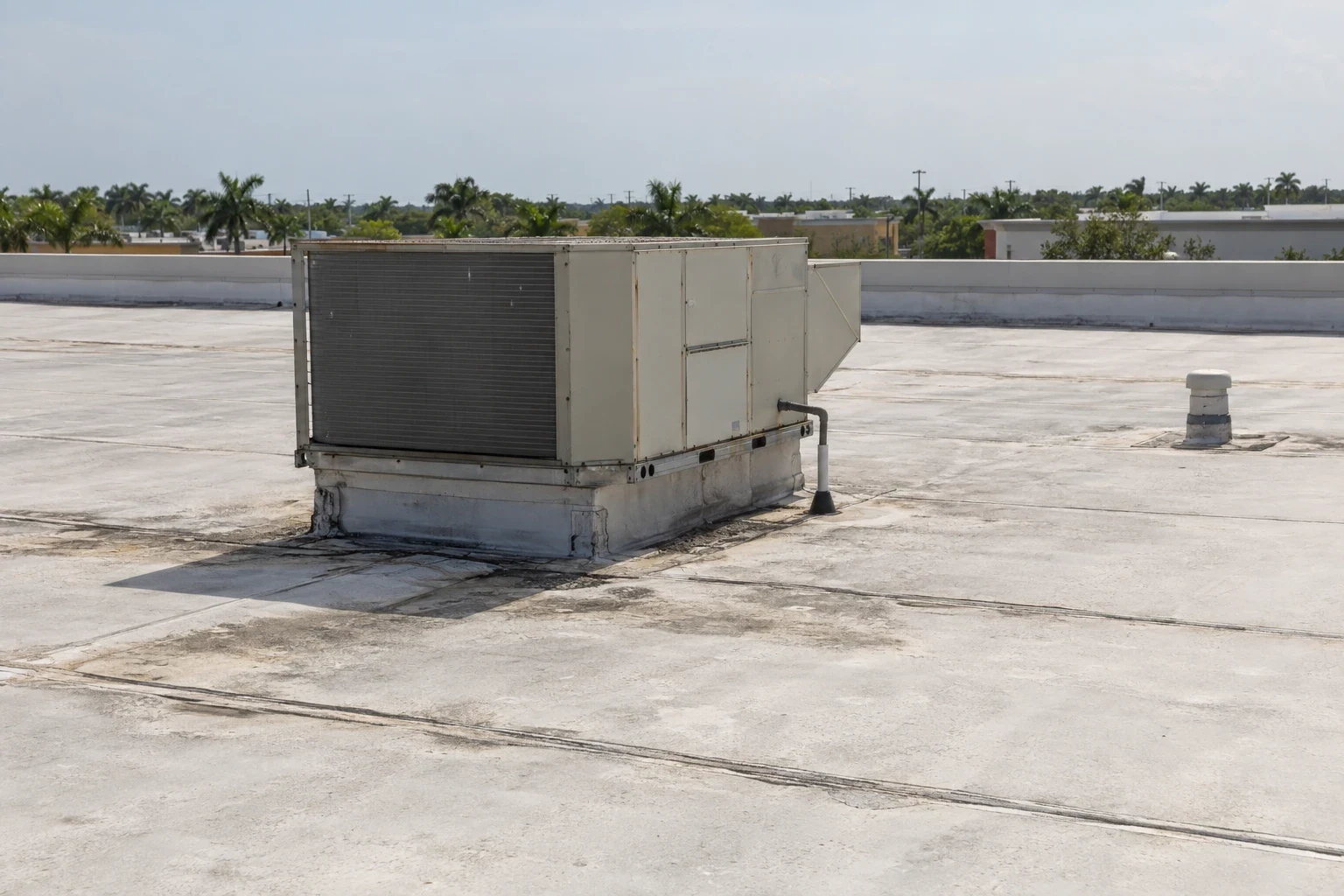
Fitness buildings run large air handlers, and many carry separate exhaust for locker rooms and showers. Every unit sits on a curb, every curb has flashing, and every refrigerant line, condensate drain, and electrical conduit crosses the membrane. The edge condition of those details is where thermal movement and rain meet. NOAA normals show an August average daily maximum near 90 degrees at the Hollywood station, and surface temperatures on a roof run far above the air, so flashing at a curb is stretched and relaxed every day.
We check the sealant at each curb, the fasteners on the counterflashing, and the pitch of the condensate line so it does not discharge onto the membrane. Locker-room exhaust that vents at the roof surface can leave staining or soften some membranes, so we look at the surface near each outlet. When a unit has to be lifted for a curb repair, the mechanical contractor and the facility manager agree on a time when the floor can tolerate reduced cooling. The same planning applies to rooftop equipment curbs and supports, where the unit comes off and goes back in one agreed window.
Rainy-season drainage on wide, low-slope roofs
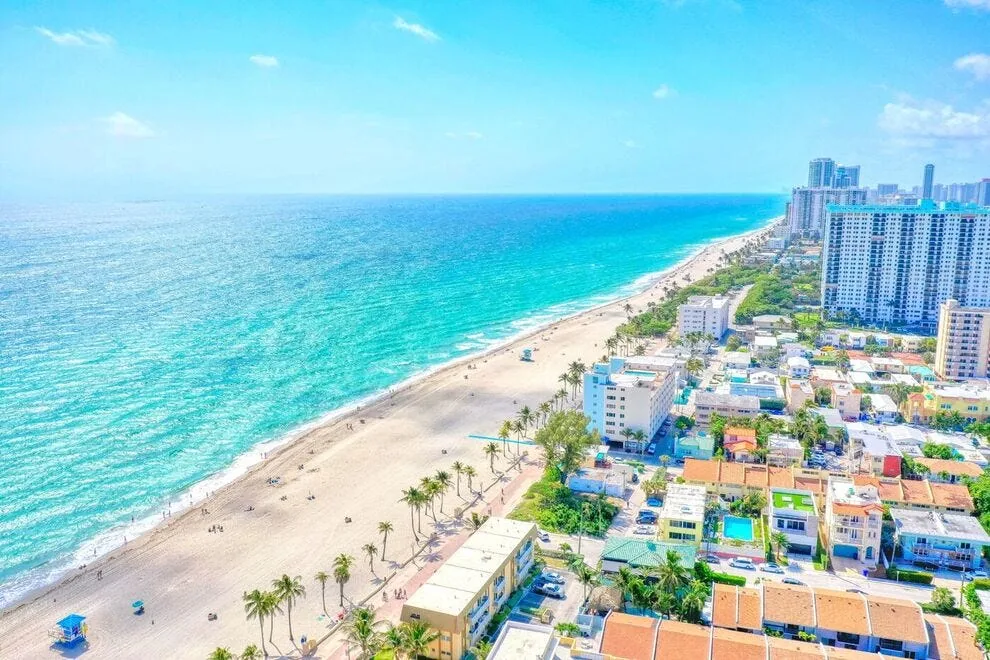
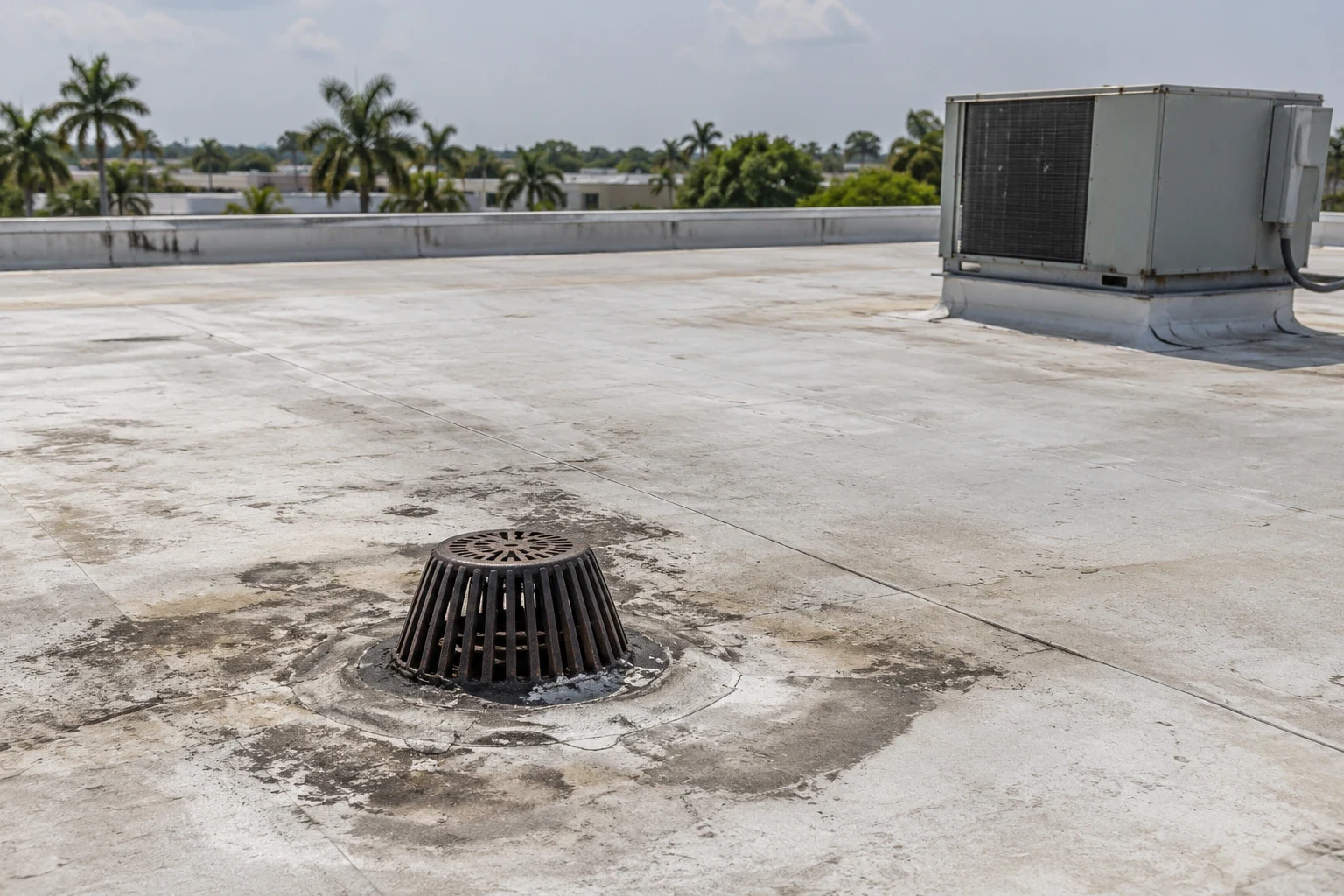
June and September rainfall each passes eight and a half inches in Hollywood, and the stormiest weeks of South Florida's wet season fall between mid-May and early July according to the National Weather Service, so a fitness center with rooftop condensers should have its drains cleared and its curbs sealed before May. A recreation center or gym with a wide roof, whether in Downtown Hollywood or near the Hollywood Beach business district, moves that water to a small number of drains, and a blocked outlet can raise the ponding depth within a single afternoon.
We measure standing water after rain, open the drain bowls, check the strainers, and confirm scuppers discharge freely. Ponding that clears soon after the rain is a smaller concern. Ponding that remains points to a drain set above the low point, a deck that has deflected, or compressed insulation. Where a roof holds water over a pool deck, a weight room, or a gym floor, we watch seams and flashing nearby, since long exposure speeds wear. A correction might be as simple as cleaning, or it might call for tapered insulation and a new drain at the low point.
Class schedules, noise, and phased roof work
A fitness facility has a daily rhythm. Early morning and early evening are the busiest times, with a quieter middle of the day. Roof work is planned around those peaks. Tear-off, fastening, and equipment lifts make noise and vibration that carry through a steel deck, and a yoga room or a childcare area is more sensitive than a weight floor. We ask which rooms below the work are most affected, and we schedule loud steps for the hours the manager picks.
The roof is worked in sections so that each area is dried in before members arrive the next day. Parking and entry stay open, and in the Downtown Hollywood event area, where closures can affect deliveries and parking, we confirm lift and truck timing against the city calendar, debris goes into covered containers away from the entrance, and the lift is set where members do not walk. The approach is the same one used for occupied building reroofing on a hotel roof, adapted to a facility where the public is inside throughout the day.
Flood-map context and the building's exposure
Hollywood's vulnerability assessment weighs tidal flooding, storm surge and compound flooding, and the city places over 11,000 properties in a FEMA Special Flood Hazard Area. That is area context rather than a finding about a particular gym, but equipment placement, drainage and a recovery plan deserve a look when a roof project is planned.
For a fitness facility the practical issue is where critical equipment sits. If air handlers or electrical gear are on the roof, the curbs and supports carry both the weather and the operation of the building. We note how that equipment is secured, whether the supports are corroded or loose, and what an owner would need to do to restore service quickly after a storm. A written roof condition report keeps those findings with the property.
Repair, recover, or replace for fitness buildings
The findings guide the choice. A local leak at a curb with dry insulation is a repair. A tired membrane with sound insulation can often take a coating restoration. Widely wet insulation, repeated patches, or a system at the end of its service life leads toward replacement. Hollywood's Building Division reviews reroof permits under the Florida Building Code, 8th Edition (2023), so the scope is confirmed with the city before work begins.
Cost drivers include access equipment, tear-off depth, insulation replacement, the number of rooftop units to disconnect, and the phasing needed to keep the facility open. We present options with those drivers so the owner can compare.